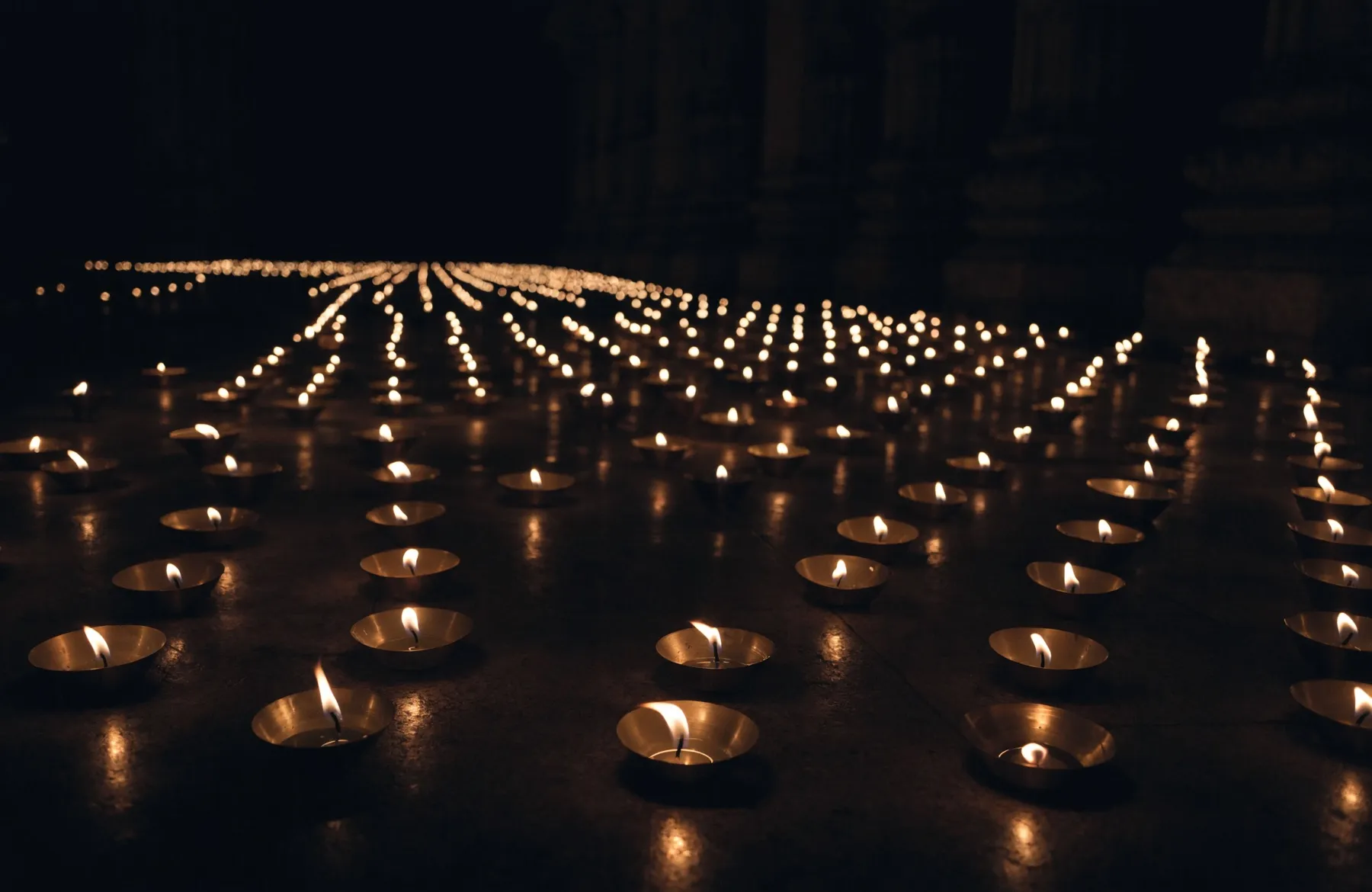
Kali Puja — the Mother's night at Diwali
Kali Puja is the great annual worship of Maa Kali, held on the new-moon (amavasya) night of Kartik — the same night as Diwali. It is observed most intensely in Bengal, Assam, Odisha and among Kali devotees everywhere, with worship reaching its height at midnight.
Diwali is the festival of lights. Millions of lamps, Lakshmi welcomed into every home, the darkness pushed back.
Kali Puja happens on the very same night — and it does something different. It goes into the dark.
The same night, a different worship
Diwali falls on the amavasya — the new moon — of the month of Kartik. It is the darkest night of the darkest fortnight of the year.
Most of the Hindu world responds by lighting it up for Maa Lakshmi, goddess of prosperity and auspiciousness, inviting her over a threshold of lamps.
Kali’s devotees respond differently. On the darkest night, they worship the Mother who is the dark — Kali, black as the night sky, beyond all form. Worship reaches its peak around midnight, in the nishita hour.
Both are true. Both happen in our mandir. There is no contradiction in a tradition that can hold the lamp and the darkness on the same night.
What happens at Kali Puja
The shape varies between temples and homes, but you can expect:
- Shringar — Maa is bathed and dressed in her finest, garlanded with red hibiscus, her favourite flower.
- Deep daan — the lighting of lamps, as at any Diwali.
- Devi paath — recitation of the Durga Saptashati (Chandi Path), the scripture of the Goddess’s glory.
- Midnight worship — the heart of the night; offerings of fruit, sweets, and the red chunni.
- Aarti — the offering of light before the Mother, sung by everyone present.
- Prasad and langar — the night ends the way the mandir’s great nights always end: everybody eats.
Many devotees keep vigil until dawn. A jagran — an all-night singing of Maa’s praises — is a natural form for the night to take.
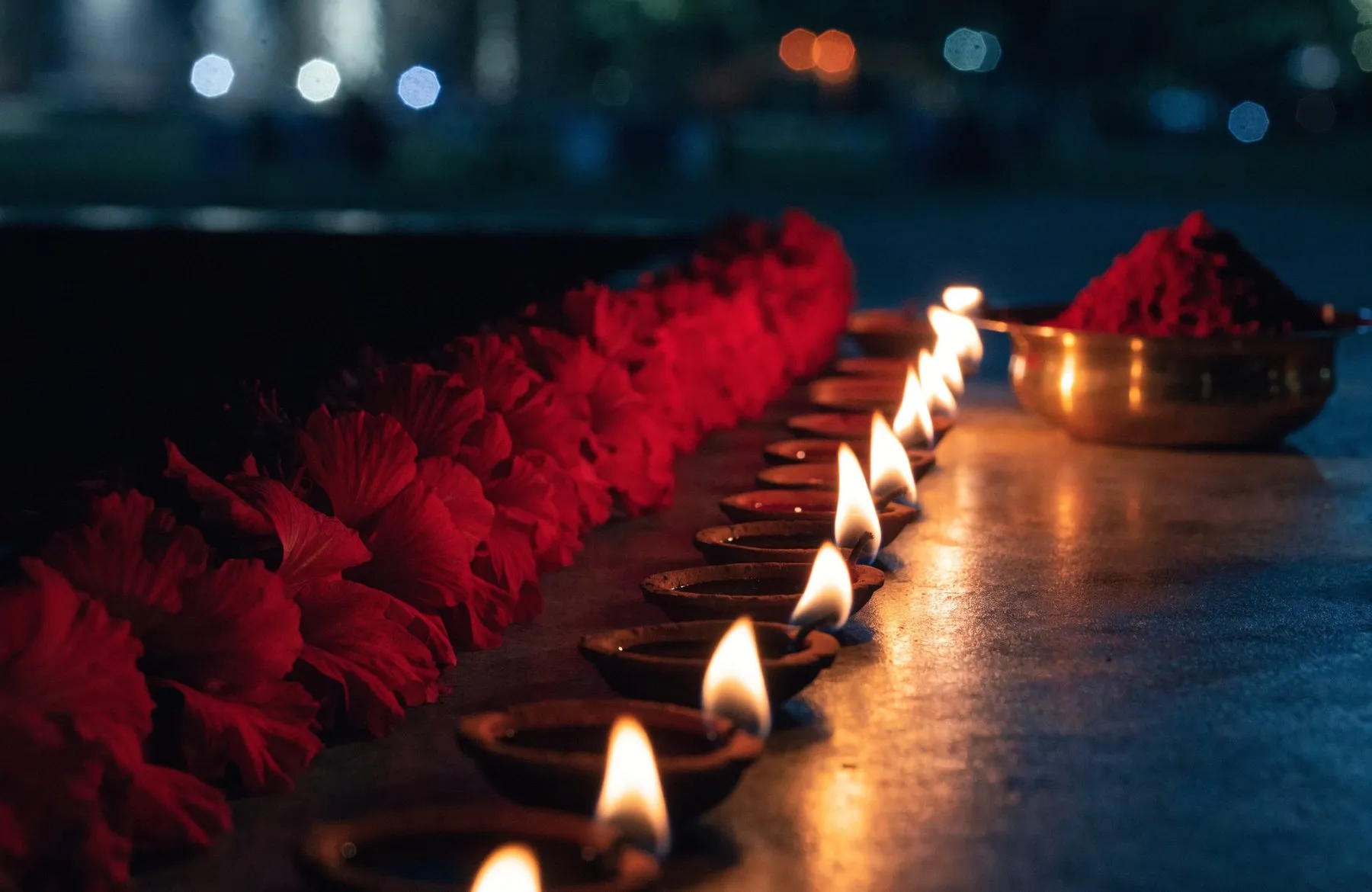
The same night as Diwali — but it is hibiscus, not sweets, that Maa is given.
About animal sacrifice
It comes up, so let us be direct. Historically, some Kali temples in India — particularly in Bengal and Assam — have practised animal sacrifice at Kali Puja, and a few still do.
That is not our practice, and it is not the practice of Hindu temples in Britain. At our mandir the offerings are flowers, fruit, sweets, cloth and light. All food served here — langar, bhog and prasad alike — is strictly vegetarian, without exception.
If you have read something alarming about Kali worship, this is usually what it refers to. It is not what you will find in Willenhall.
When Kali Puja falls in the UK
Because the Hindu calendar is lunar and its sacred hours are calculated from local sunrise and moonrise, dates and timings for the UK are not always identical to those printed in Indian calendars.
Kali Puja and Diwali 2026: Sunday 8 November. The midnight nishita window for London falls around 11:15pm–12:15am — later than the timing an Indian panchang would give you.
Our observances are confirmed by the mandir’s pandit before each festival. See our events calendar for what is happening, and why UK festival dates differ if you want to understand the reckoning.
Everyone is welcome. You do not need to be a Kali devotee, or a Hindu, to come and see the Mother’s night at our mandir in Willenhall. Plan your visit.