Darshan

The deities of the mandir

To stand before a murti is darshan — to see the divine, and to be seen. These are the deities who preside over our mandir, and a little of what they mean.

The main altar

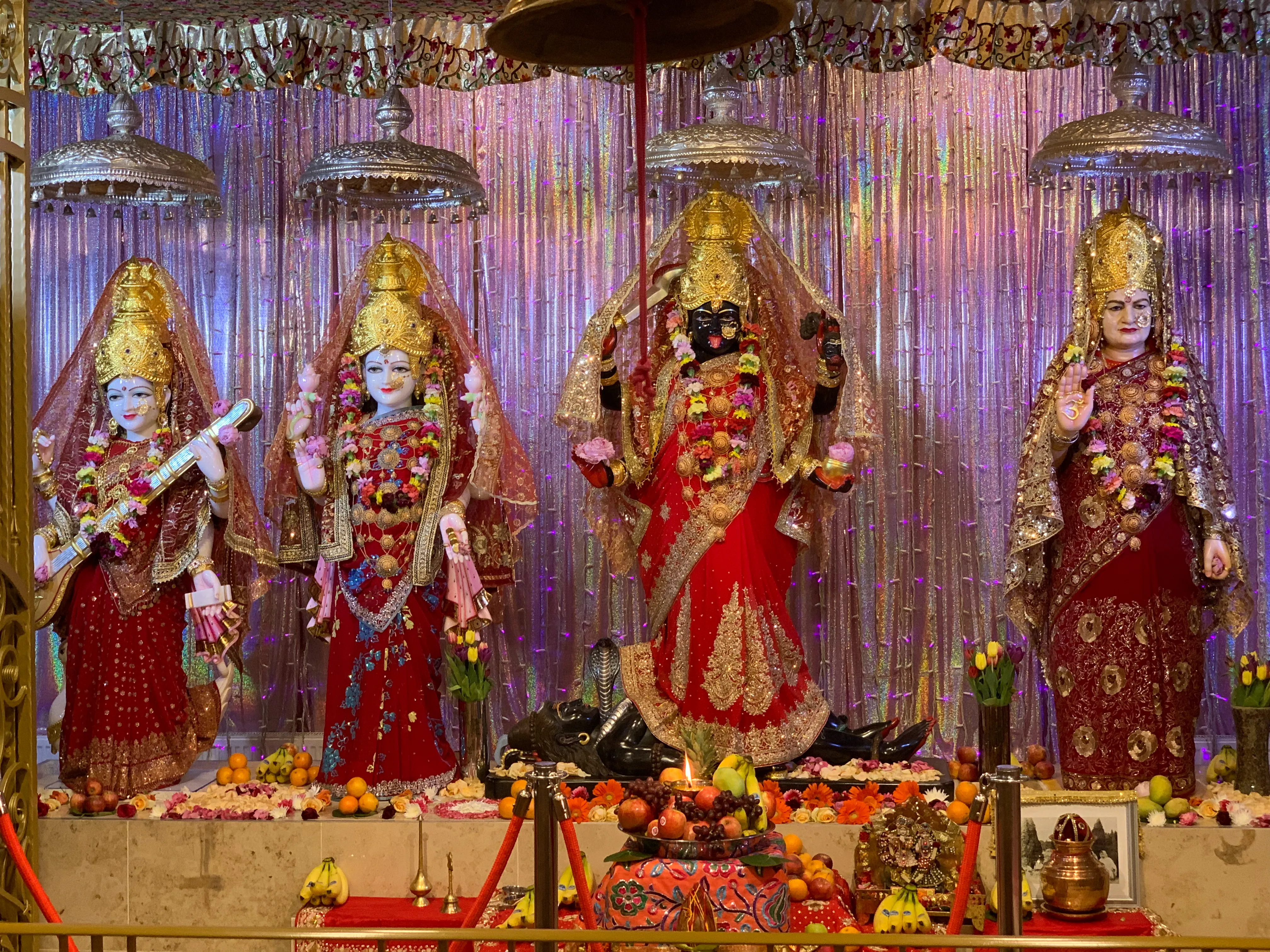
Four murtis stand together beneath their silver chhatras, with Maa Kali at the centre.

The main altar of the mandir — from left to right: Maa Saraswati, Maa Lakshmi, Maa Kali at the centre, and Maa Bhameshwari, each beneath a silver chhatra
Left Maa Saraswati & Maa LakshmiCentre Maa KaliRight Maa Bhameshwari
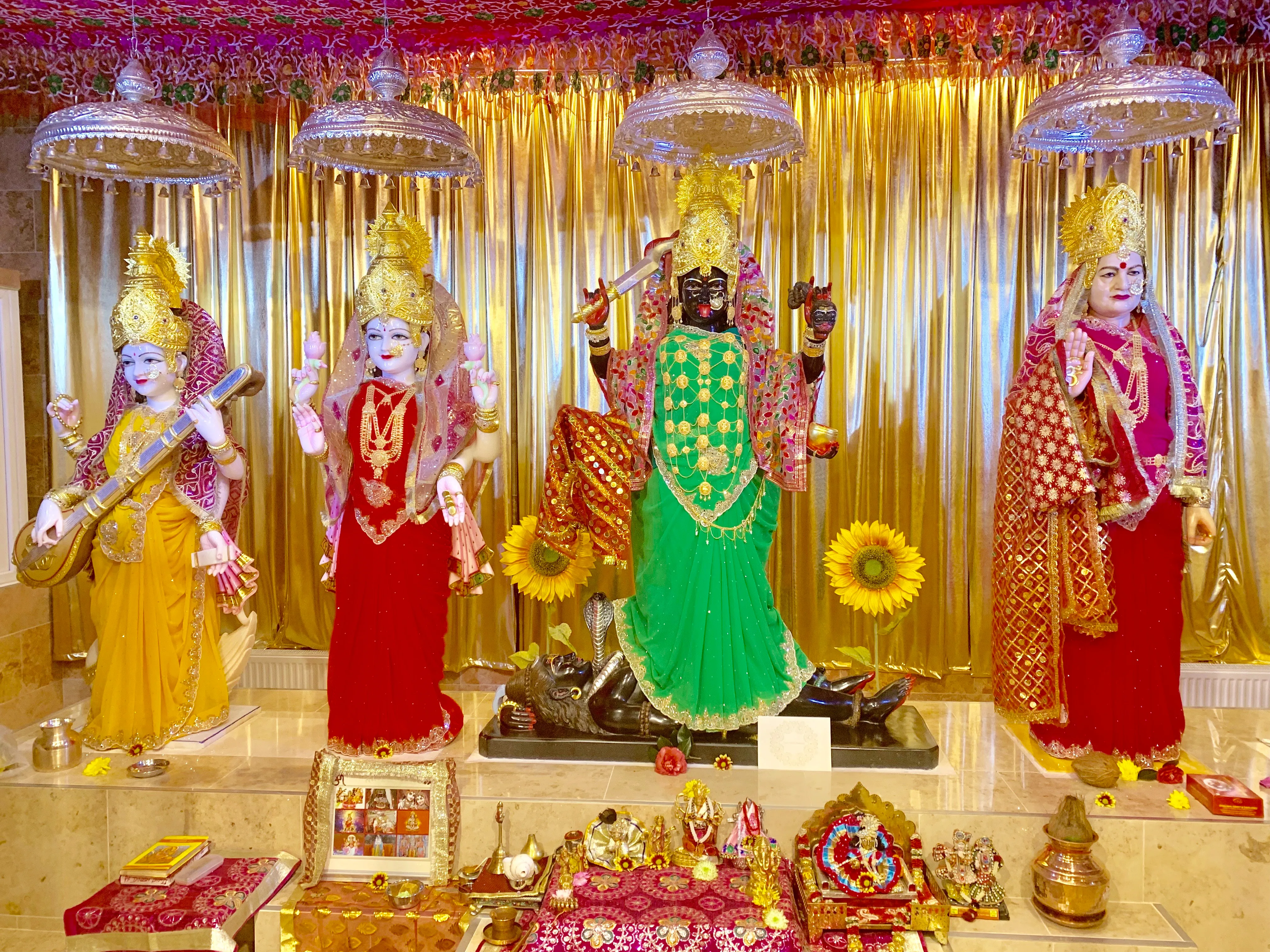
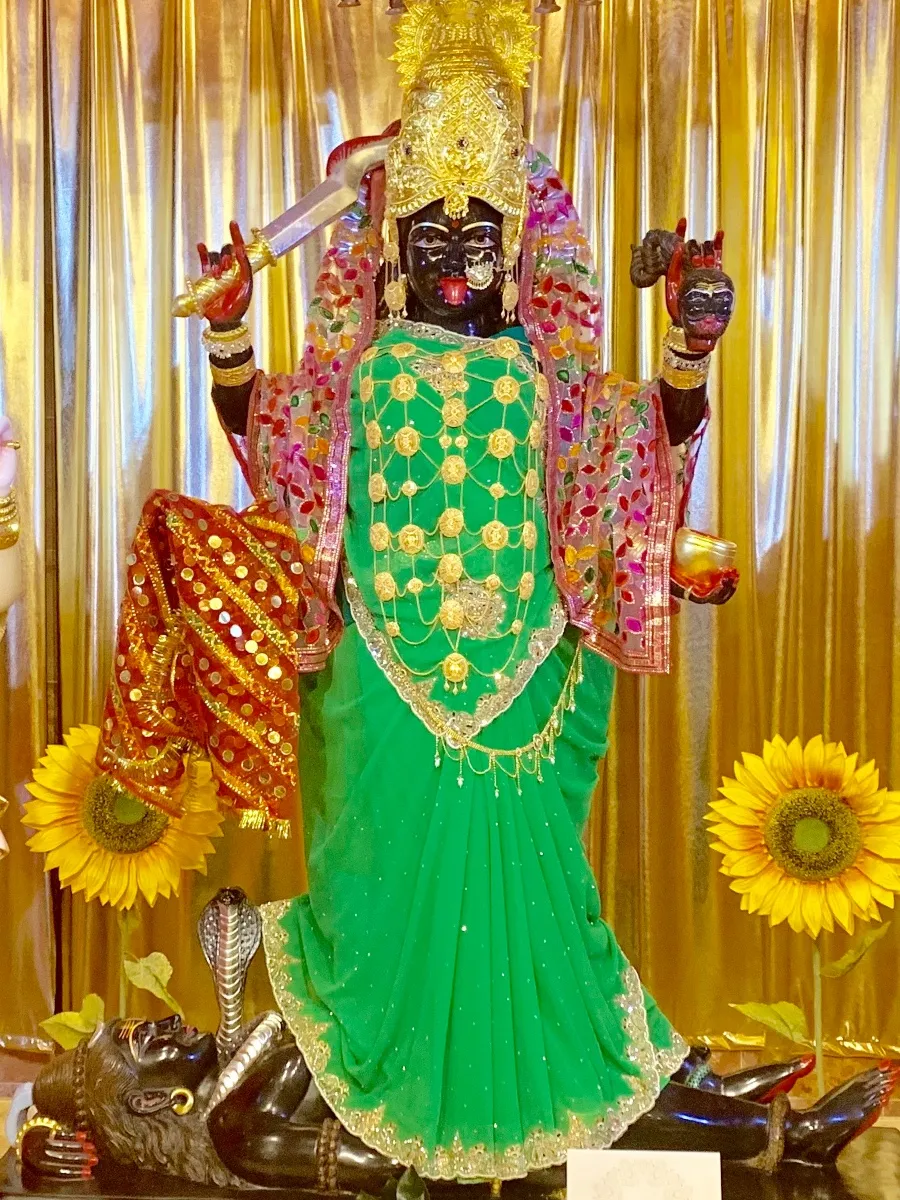
The murti of Maa Kali at the centre of the main altar — dark-skinned, sword raised, dressed in green and gold

Centre of the main altar

Maa Kali माँ काली

The presiding Devi of our mandir, and the reason it stands. Kali is the Divine Mother in her most intense form — dark as the night sky, fierce against evil, and boundlessly tender to her children. She stands upon Shiv Ji: the living power (shakti) of the universe moving upon still consciousness. Her extended tongue is understood in several ways — her all-consuming power in battle, passion restrained by calm, and, in a beloved tradition, a mother's startled modesty. To her devotees she is simply Maa — the remover of fear.

Great night: Kali Puja, on Diwali night · also worshipped through Navratri · Who is Maa Kali? →
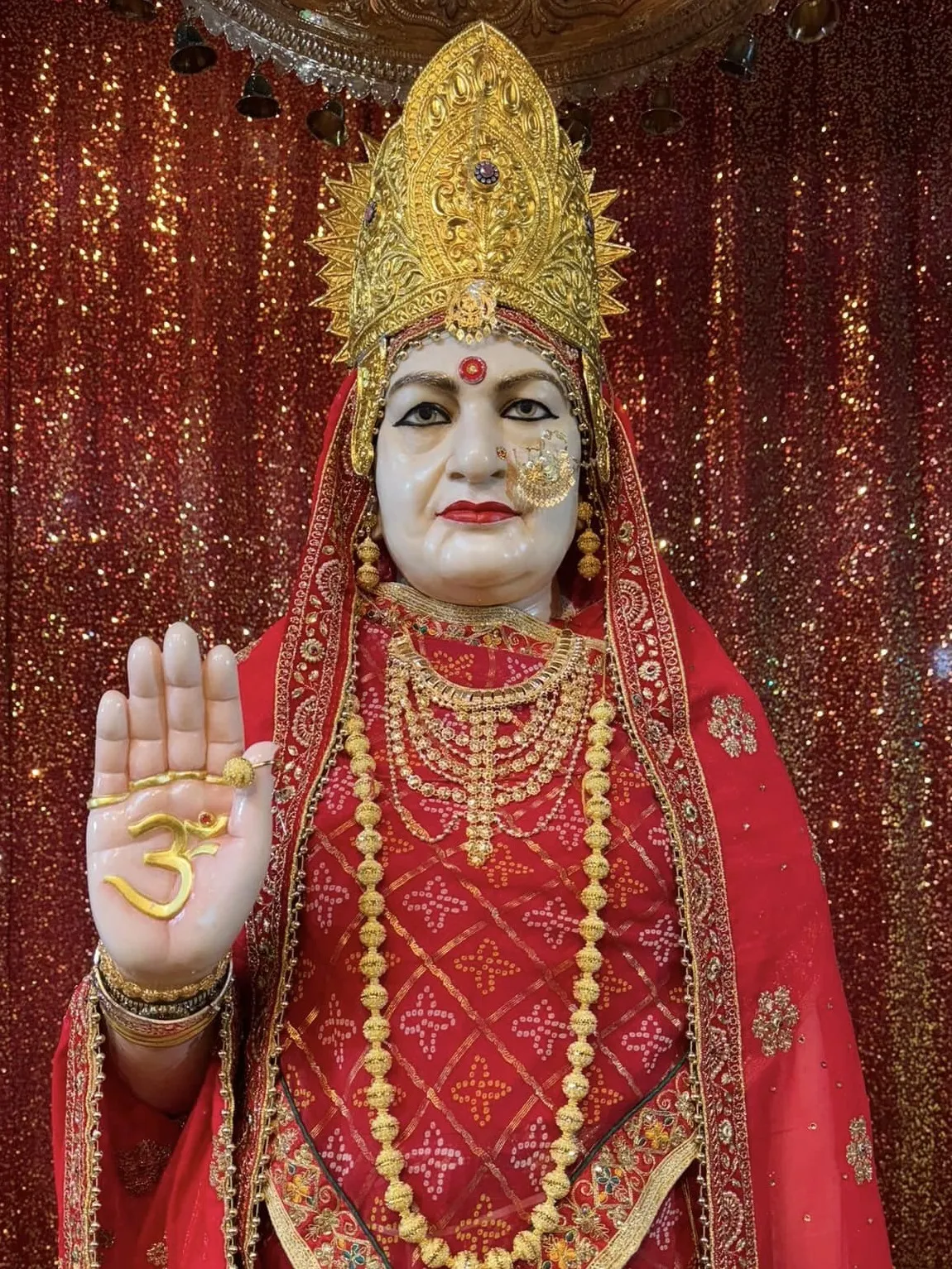
The murti of Maa Bhameshwari on the right of the main altar, dressed in red and gold with her right hand raised in blessing

Right of the main altar

Maa Bhameshwari माँ भमेश्वरी

In the tradition of the Bham lineage, Maa Bhameshwari is venerated as an avatar of Kali Mata who took human birth in the village of Bham, Hoshiarpur (Punjab), where her temple was founded in 1958. Ours is the first Maa Bhameshwari mandir in the United Kingdom, carrying her tradition of seva, langar and the Mother's open door. Her hand is raised in blessing over everyone who comes.

Honoured daily · our story & the Bham lineage →

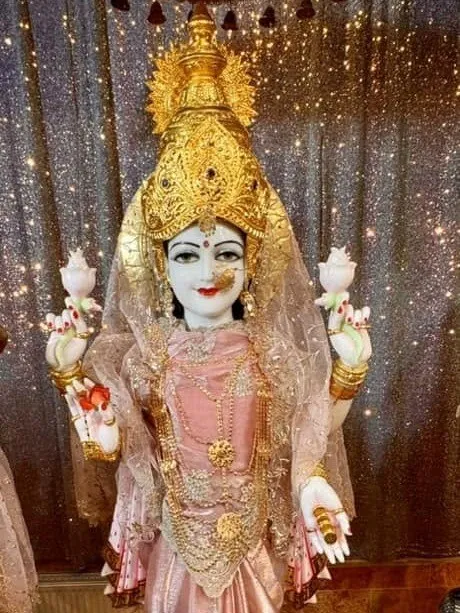
The murti of Maa Lakshmi, seated with lotuses in her raised hands

Left of the main altar

Maa Lakshmi माँ लक्ष्मी

To Maa Kali's left stands Maa Lakshmi, goddess of prosperity, fortune and auspiciousness — a lotus in each raised hand. Her blessing is broader than money: shri, her older name, means well-being and grace in every part of a life. It is Maa Lakshmi whom families welcome across the threshold at Diwali, and to whom they pray for the health of a home, a marriage and a livelihood.

Great night: Diwali / Lakshmi Puja · also honoured through the middle nights of Navratri

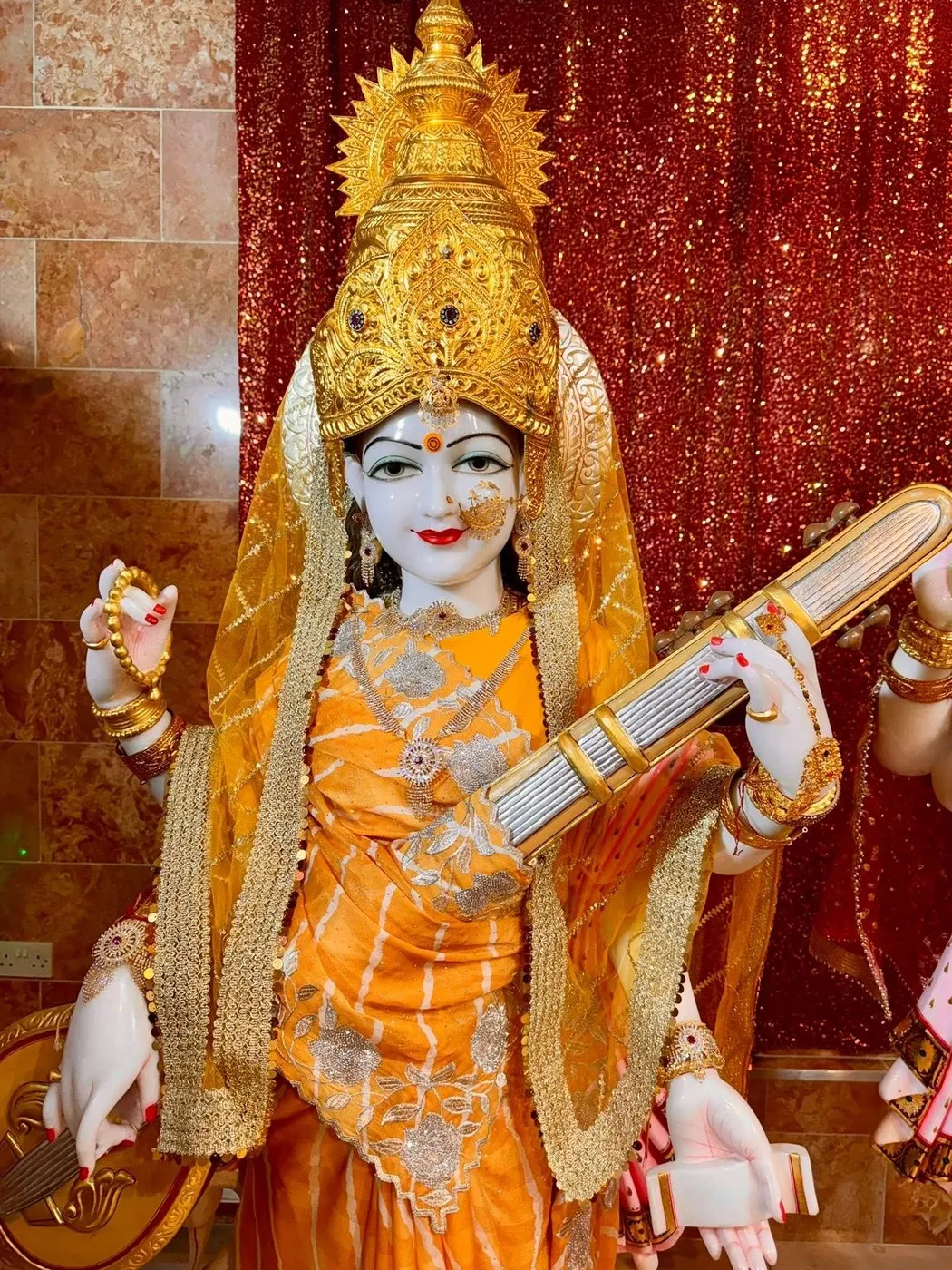
The murti of Maa Saraswati holding her veena, dressed in orange and gold

Far left of the main altar

Maa Saraswati माँ सरस्वती

At the far left stands Maa Saraswati, her veena never out of her hands — goddess of knowledge, music, the arts and speech itself. She is the Mother students come to before an exam, and musicians before they play. At our mandir children write their first letters before her at Vidyarambh, which is as fitting a beginning as a Hindu childhood has.

Festival: Vasant Panchami (Saraswati Puja, Jan–Feb) · the final nights of Navratri · Vidyarambh for your child →

The shrines of the mandir

Around the main altar stand the deities of the wider Hindu family.

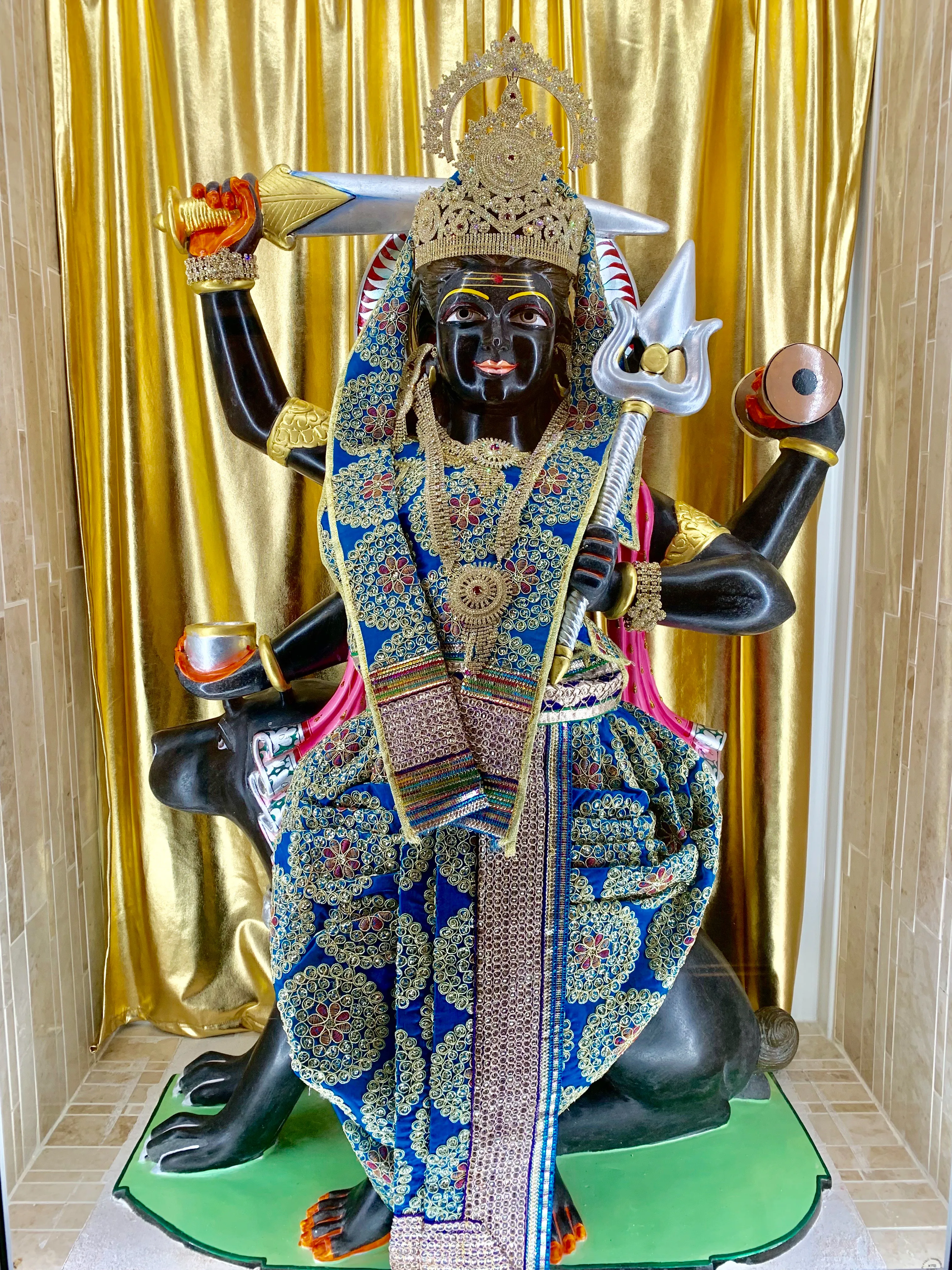
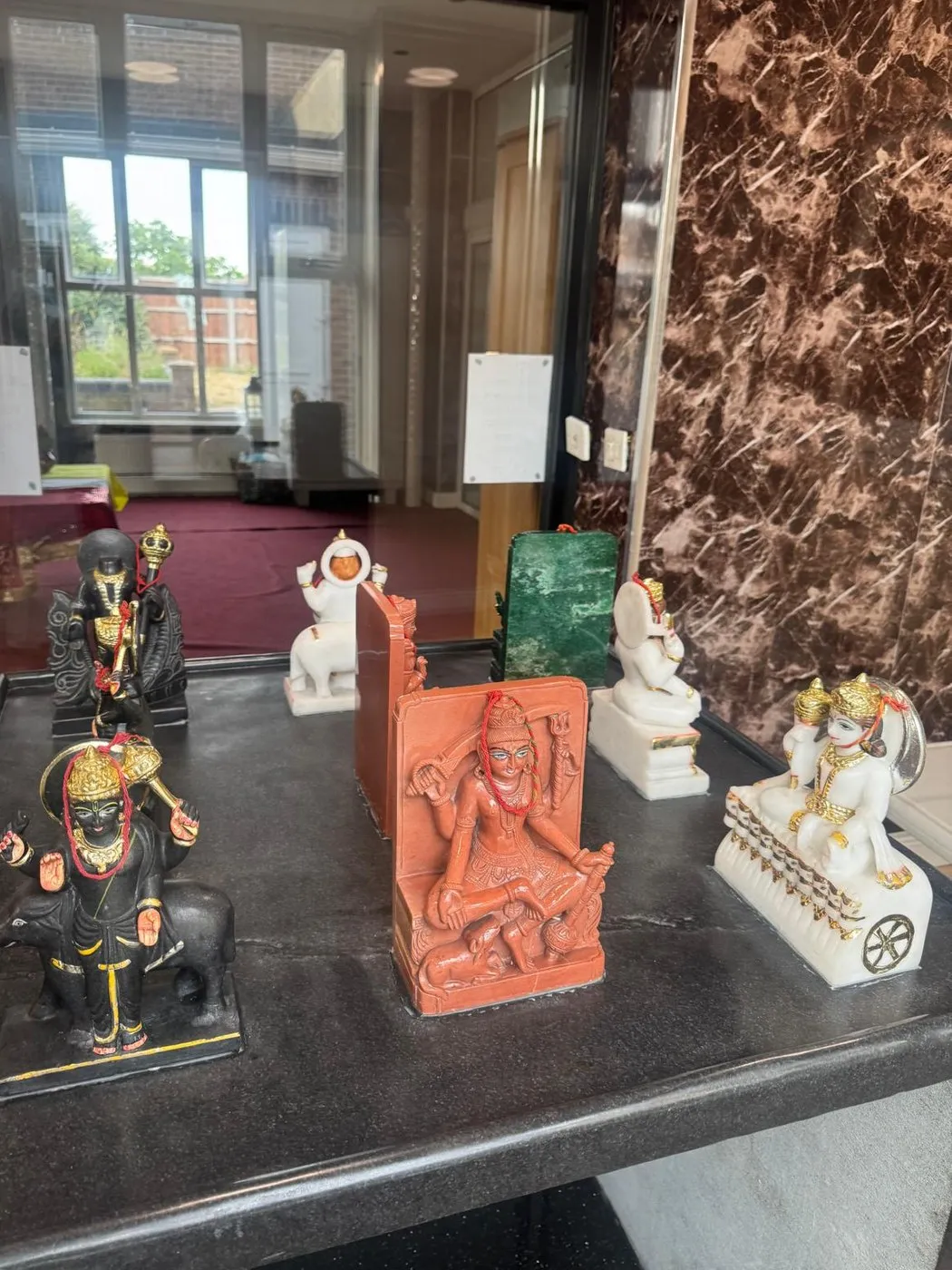
The murti of Bherunath — dark-skinned and many-armed, standing upon his dog, holding a trishul

Bherunath भैरोंनाथ

Bherunath — Bhairon Nath, the fierce form of Shiv Ji — stands as the guardian of the Devi's shrine. Dark and many-armed, bearing the trishul and damaru, he is attended by his vahana, the dog. In the Devi tradition of North India his darshan belongs with the Mother's own: he is her protector and her doorkeeper, and devotees honour him alongside her.

Honoured especially on Sundays and Tuesdays

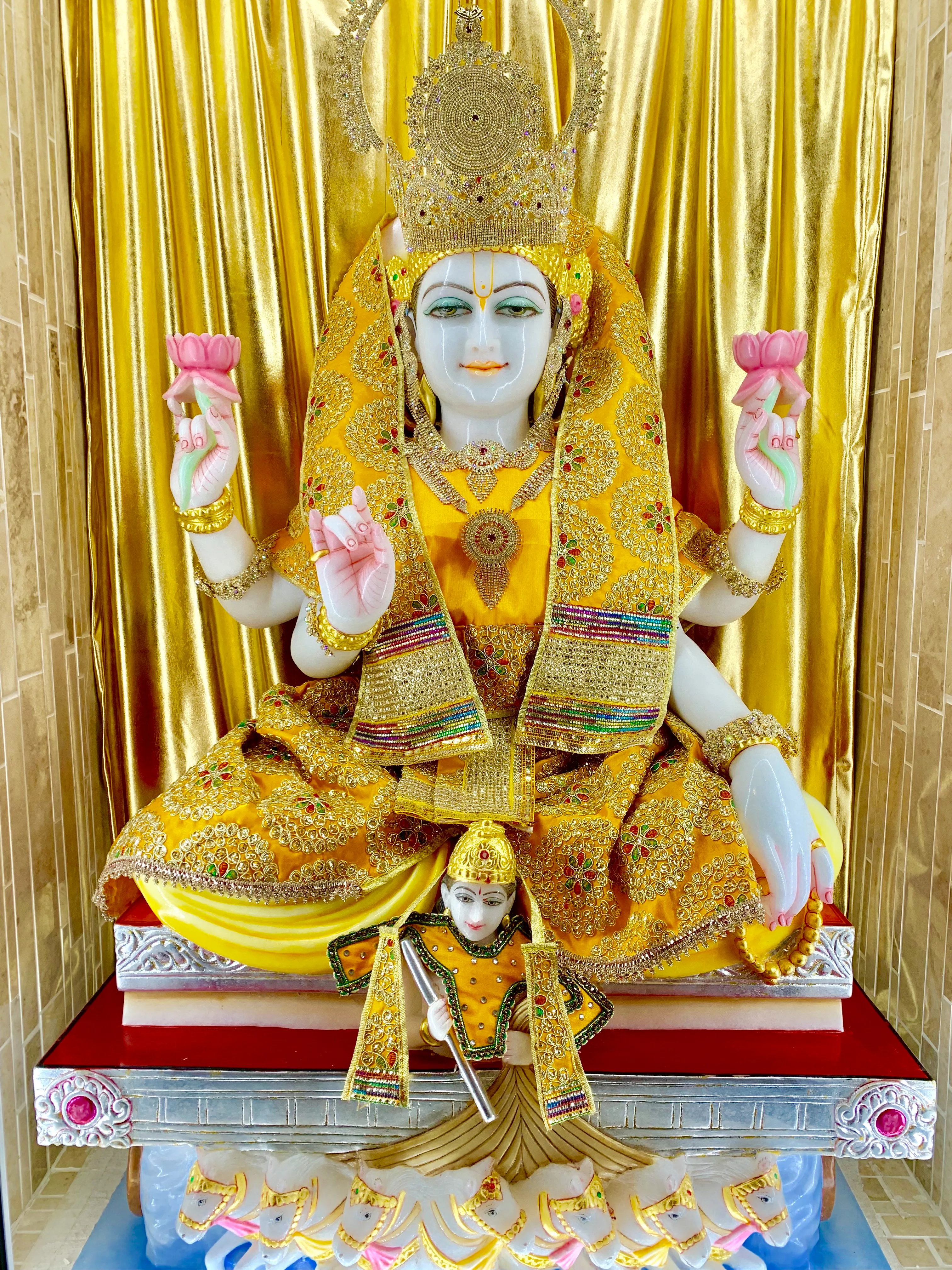
The murti of Surya Dev, the Sun God — seated in gold, holding lotuses, with a radiant sun disc behind him and his charioteer below

Surya Dev सूर्य देव

Surya Dev — the Sun himself, worshipped as God visible in the sky. Seated in gold with a lotus in each raised hand and the radiant disc behind him, he rides his chariot across the heavens, drawn by seven horses and driven by his charioteer Aruna. Surya is honoured for health, vitality and clarity — and devotees offer water to the rising sun at dawn.

Honoured on Sundays · Makar Sankranti · Chhath

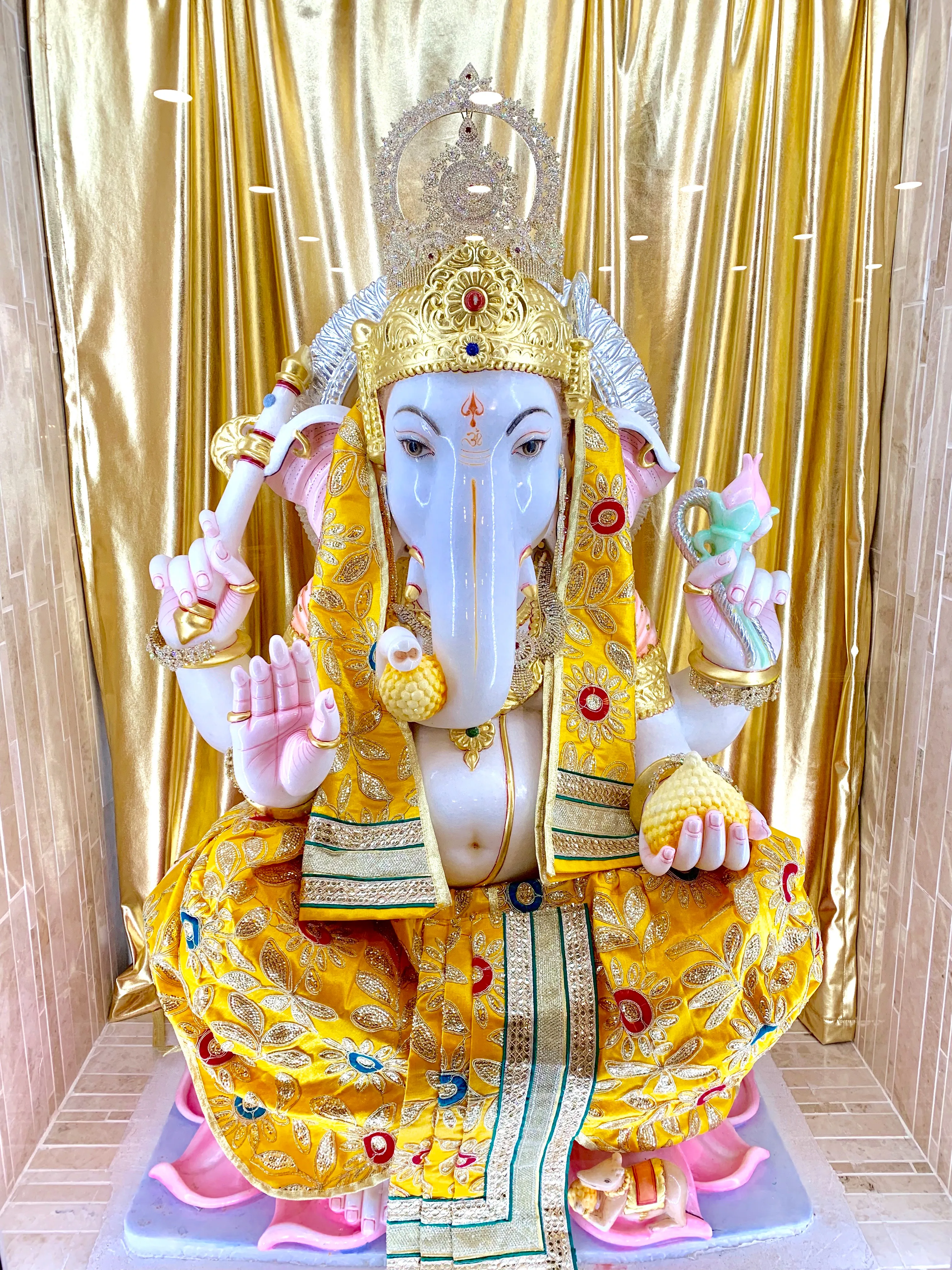
The murti of Ganesh Ji seated in yellow silk

Ganesh Ji गणेश

The elephant-headed lord of beginnings, worshipped first in every pooja. Ganesh Ji is the remover of obstacles and patron of wisdom and learning — which is why every ceremony at the mandir, from a wedding to a griha pravesh, opens by invoking him.

Festival: Ganesh Chaturthi (August–September)

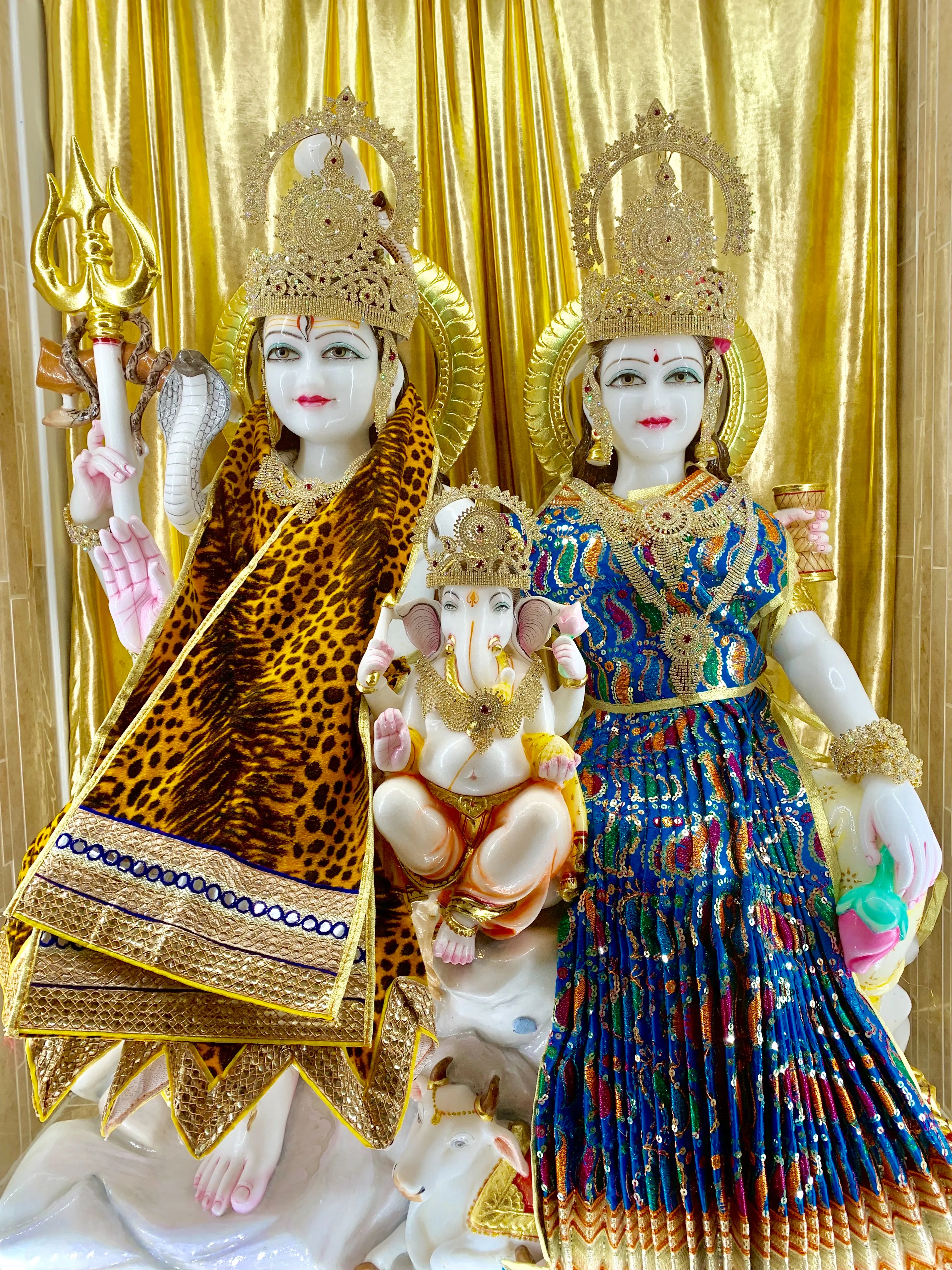
Shiv Ji and Maa Parvati with the infant Ganesh, and Nandi

Shiv Parivar शिव परिवार

Shiv Ji with Maa Parvati and their son Ganesh — the divine family — together with Nandi and the sacred Shivling, the aniconic emblem of Shiva as the formless Absolute. In the Shakta understanding of our mandir, Shiv and Shakti are inseparable: consciousness and its living power. Milk may be offered on the Shivling at all times.

Great night: Maha Shivaratri (February–March) · Mondays and the month of Sawan

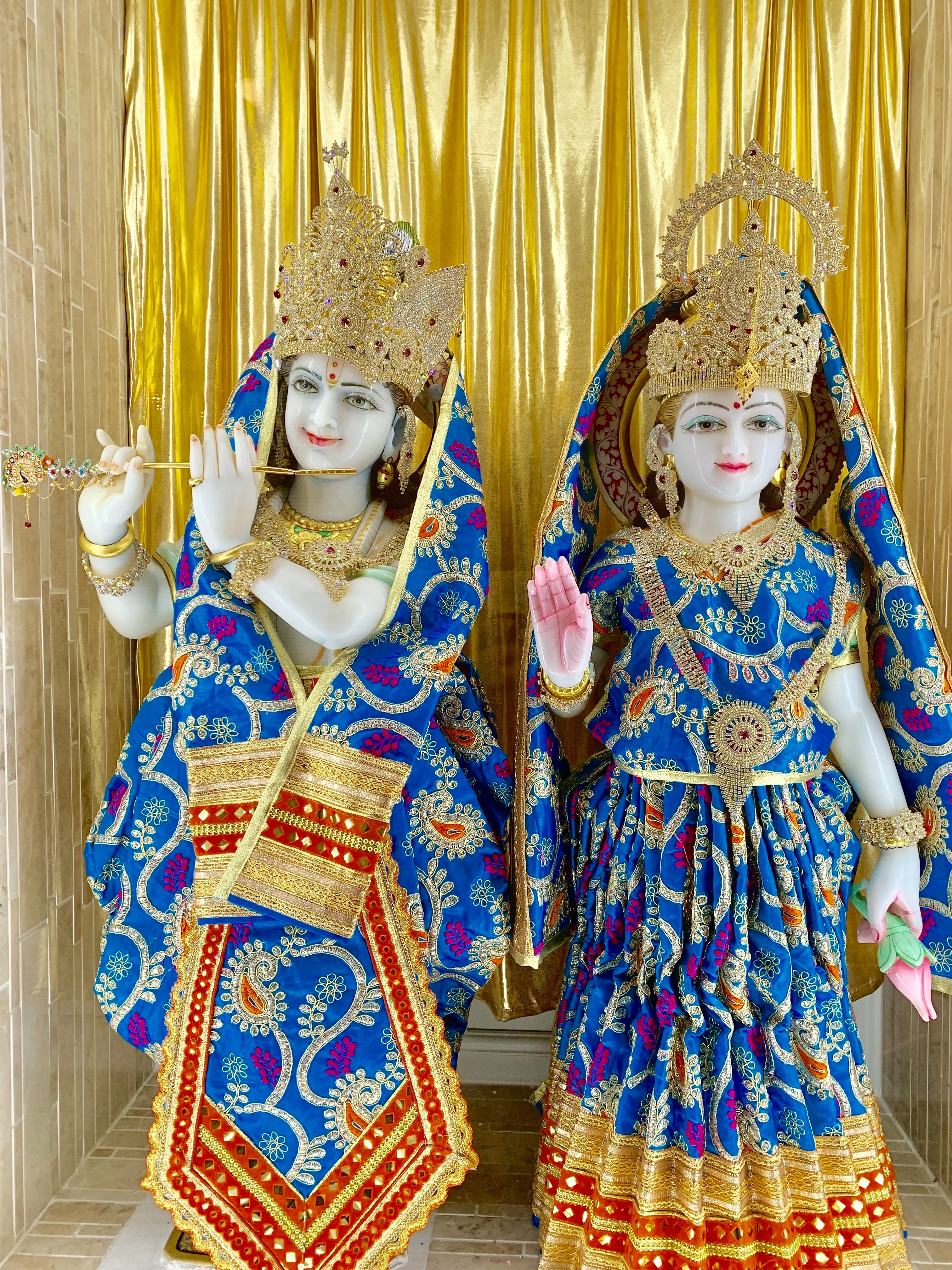
The murtis of Radha and Krishna dressed in blue

Radha–Krishna राधा कृष्ण

Krishna, the divine cowherd with his flute and peacock-feather crown, and Radha at his side — the eternal image of divine love, in which the soul (Radha) and God (Krishna) are inseparable. Their shrine fills the mandir with the sweetness of bhakti — devotion as love.

Festivals: Janmashtami · Radhashtami · Holi

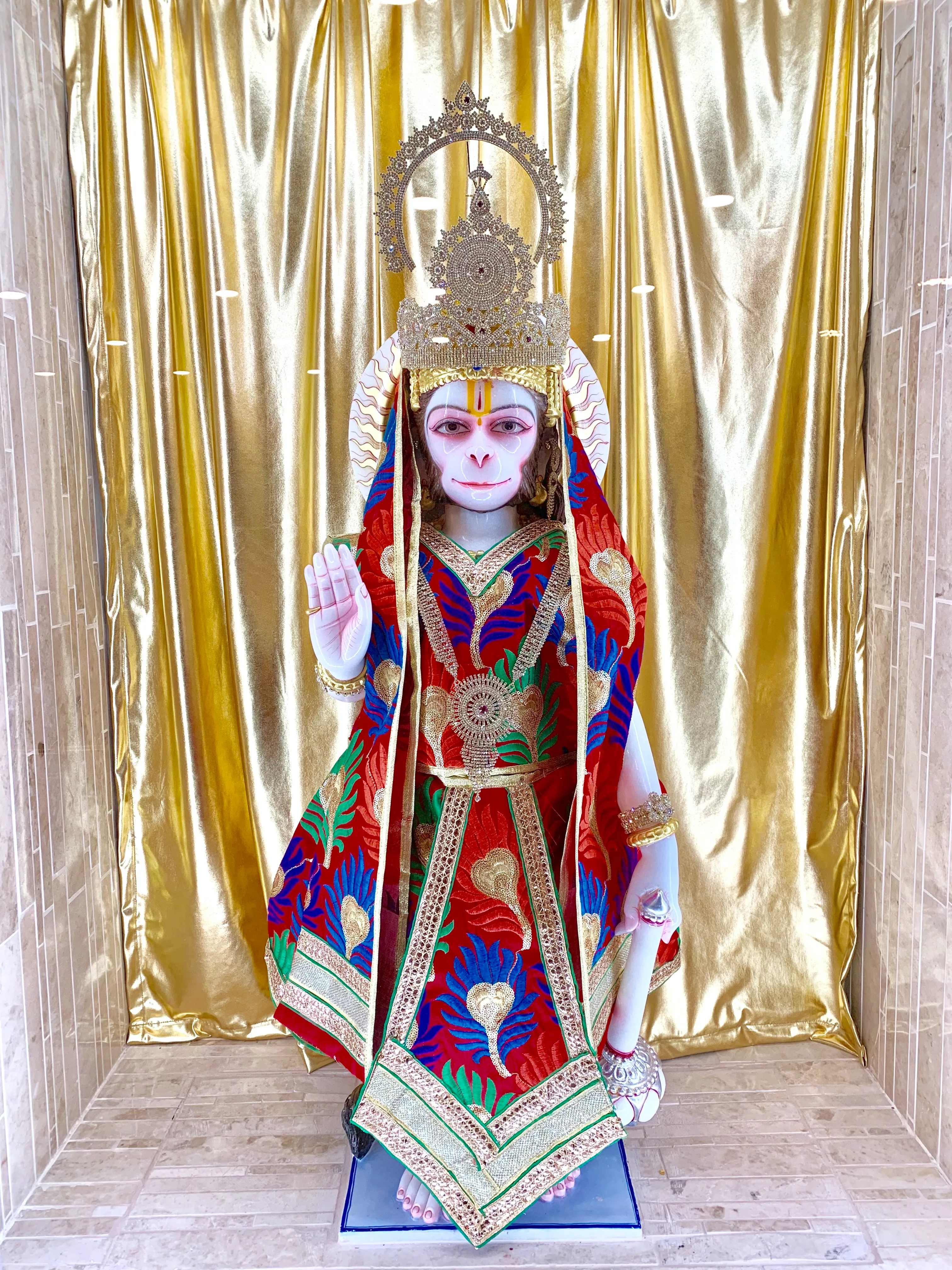
The murti of Hanuman Ji standing in red and blue

Hanuman Ji हनुमान

The greatest of devotees — Hanuman, son of the wind, whose strength is boundless because his devotion to Shri Ram is total. Devotees recite the Hanuman Chalisa before him for courage and protection; his image tearing open his chest to reveal Ram and Sita in his heart is bhakti itself.

Festival: Hanuman Jayanti (date varies by regional tradition) · Tuesdays and Saturdays

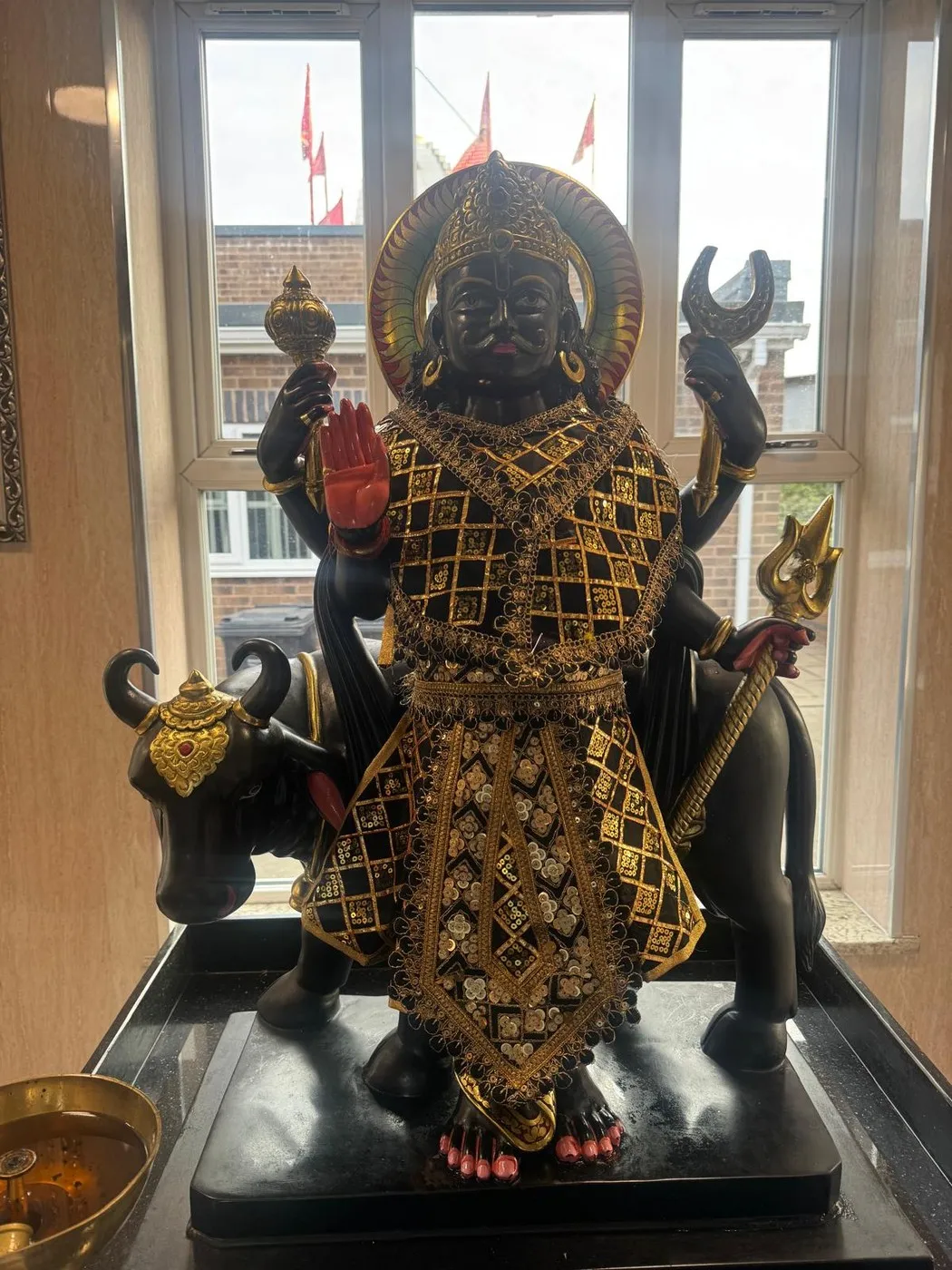
The murti of Shani Dev — dark-complexioned and four-armed, crowned, with a mace and trishul and his buffalo beside him

In his own shrine

Shani Dev शनि देव

The graha of Saturn, and the most misunderstood of the nine. Shani is not cruel — he is exact. He returns to each soul precisely the fruit of its own actions, which is why he is feared, and why the wise love him: no god in the tradition is more perfectly fair. Even so, his palm is raised in abhaya — do not be afraid.

His day: every Saturday · Shani Amavasya · son of Surya Dev →

Want to go deeper? Our Learn library explores Maa Kali, the meaning of darshan, aarti and prasad, and the festivals of the Hindu year.