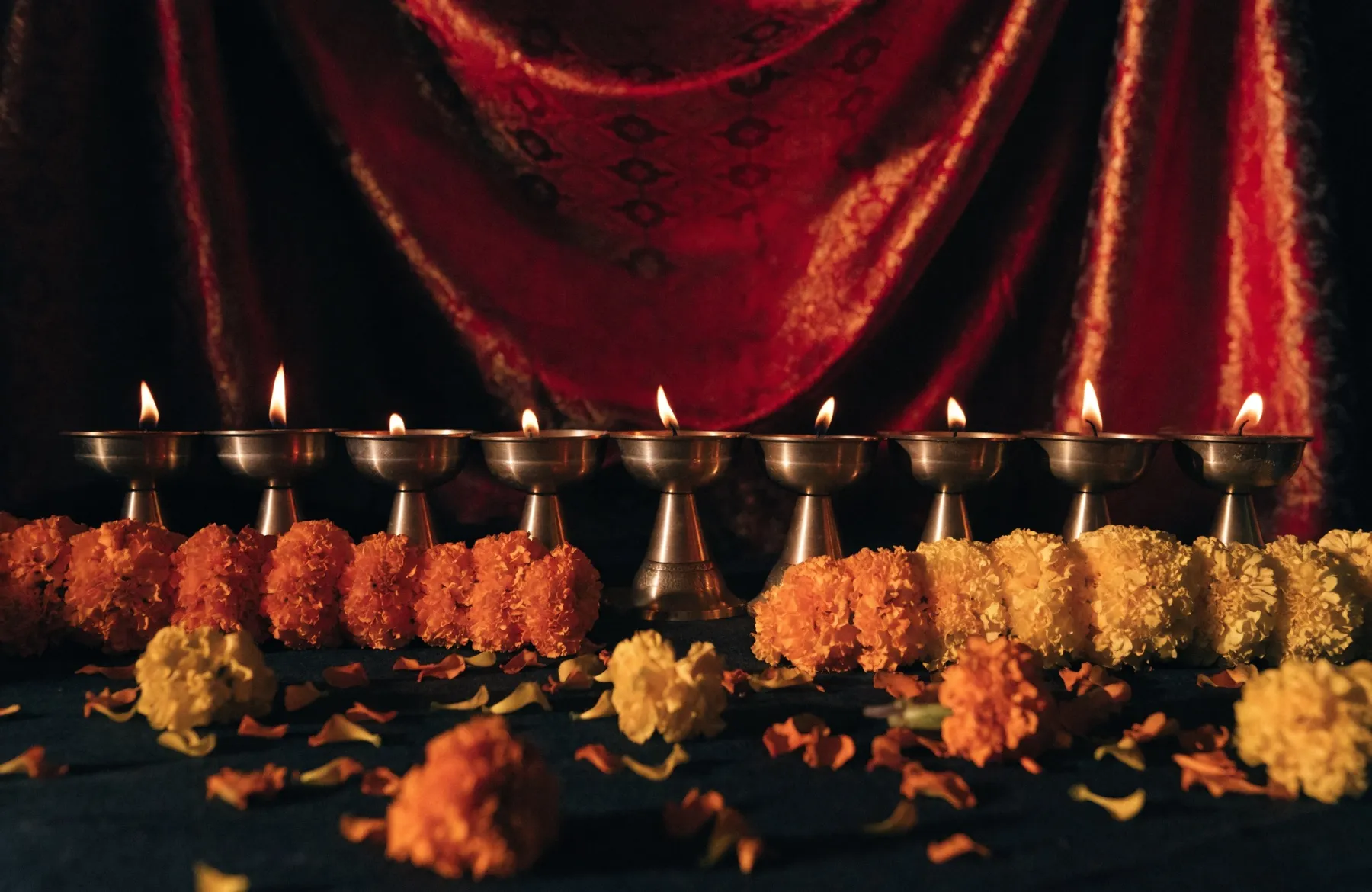
Navratri — nine nights of the Mother
Navratri means 'nine nights' — the festival of the Divine Mother, observed over nine nights and ten days. The main autumn observance (Sharad Navratri) culminates in Ashtami, Navami and Vijayadashami. It is the most important festival of the year for a Devi temple.
For a Devi temple, Navratri is the year’s summit. Nine nights of the Mother — worship, fasting, singing, and a house that doesn’t really sleep.
The name
Nav — nine. Ratri — nights. Nine nights of the Goddess, ending on the tenth day, Vijayadashami (“the victorious tenth”).
Navratri actually occurs four times a year, but two are observed only by specialists (Gupt — “hidden” — Navratri). The two everyone keeps are:
- Chaitra Navratri (March–April), ending in Ram Navami
- Sharad Navratri (September–October) — the great one
What it’s for
Navratri celebrates the Devi’s victory over the buffalo-demon Mahishasura — the demon no man or god could kill, whom the Mother destroyed after nine nights of battle. The story is told in the Devi Mahatmya.
Read inwardly, as the tradition does: Mahishasura is the brute ego, immune to reason. Nine nights is what it takes. And it isn’t your strength that wins — it’s hers.
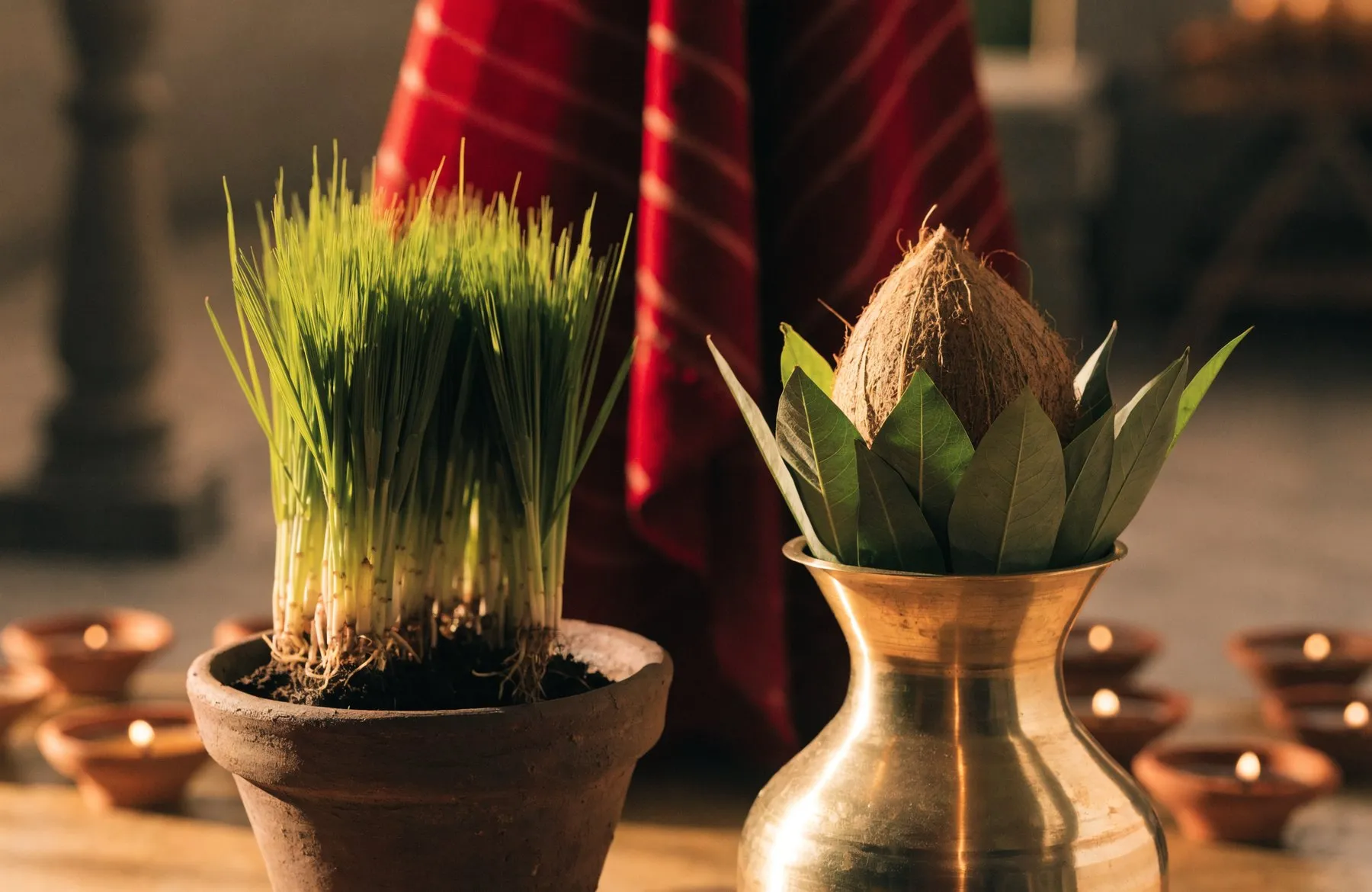
Barley sown as the nine nights begin, and grown through them — a small, living calendar.
The nine nights
Practice varies by region, and honest sources say so rather than pretending one pattern is universal. Broadly:
- Nights 1–3 — the Mother as Durga: the warrior. What must be destroyed is destroyed.
- Nights 4–6 — the Mother as Lakshmi: what is cleared makes room for abundance.
- Nights 7–9 — the Mother as Saraswati: and out of that space comes wisdom.
Many devotees also honour the Navadurga — nine forms of the Mother, one per night, from Shailaputri to Siddhidatri. The seventh is Kalaratri — “the night of Kali” — which for our mandir is a night of particular intensity.
What happens at the mandir
- Ghatasthapana — a kalash is established on the first day; the Mother is invited to stay.
- Akhand jyot — an unbroken flame, kept alight for all nine nights. Families sponsor it.
- Durga Saptashati — the 700 verses, recited across the festival.
- Shringar — Maa dressed afresh each day.
- Bhents and jagrans — the singing goes late; some nights it goes all the way through. What happens at a jagran.
- Kanya pujan — see below.
- Vijayadashami — the tenth day; the victory.
Fasting
Many devotees keep a vrat through the nine days — commonly no grains, no onion or garlic, no meat or alcohol; some eat only fruit, some one meal a day, some fast fully on Ashtami.
There’s no single rule, and nobody polices anybody else’s. Do what your family does, or what you can manage honestly.
Kanya Pujan — the best thing in the festival
On Ashtami or Navami, young girls — traditionally aged around two to ten — are worshipped as living forms of the Devi.
Their feet are washed. They’re given mauli on the wrist, a tilak, a chunni, and fed puri, chana and halwa. Then they’re given gifts, and the adults touch their feet.
It is exactly as lovely as it sounds. And it makes a real theological claim: the Mother is not an abstraction. She is present, right now, in the ordinary girls of your own family.
If you’d like your daughters to take part in kanjak at our mandir, please register with us in advance so we can prepare properly.
Navratri in the UK
Nine nights of late worship in a country where Wednesday is a school night takes some doing. British families manage it — coming for what they can, keeping the vrat around work, arriving at 9pm because that’s when the shift ended.
Maa doesn’t keep a register. Come when you can.
Sharad Navratri 2026: Sunday 11 – Monday 19 October, with Ghatasthapana on the 11th, Maha Ashtami on the 18th, Maha Navami on the 19th and Dussehra on the 20th. These are the UK dates — and here’s why that matters.
Join us for Navratri. See the events calendar for this year’s programme at our mandir in Willenhall — everyone is welcome, every night.