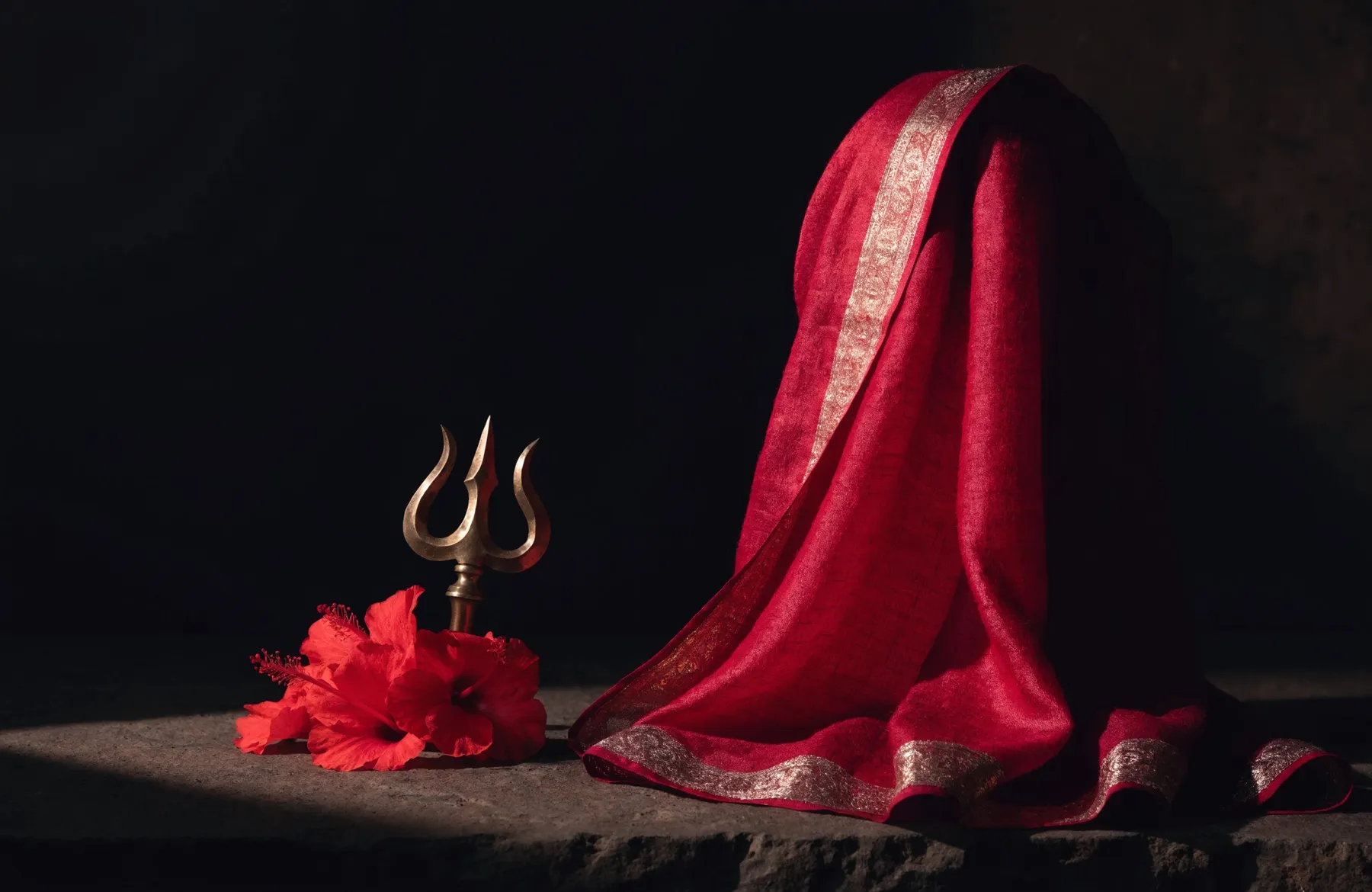
Shaktism — worshipping God as Mother
Shaktism is the Hindu tradition that worships God as Mother — holding the Devi (Shakti) to be ultimate reality itself, not a consort or a lesser power. It is one of Hinduism's four great streams, and it is the tradition of this mandir.
Most people know that Hindus worship goddesses. Fewer know that there is an entire tradition — one of Hinduism’s four great streams, followed by many millions — which holds that the Goddess is not a deity but the Absolute.
That tradition is Shaktism, and it is ours.
The claim
Shaktism holds that ultimate reality is the Divine Mother.
Not a goddess alongside gods. Not a god’s wife. Adi Parashakti — the primordial power — identified with Brahman itself: the source, sustainer and dissolution of everything that exists, understood as feminine.
Everything else — including the male deities — arises within her.
Shakti and Shiva
The central insight is the relationship between power and consciousness.
Shiva is pure consciousness: infinite, perfect, and utterly still. Shakti is power: everything that moves, creates, sustains, destroys. Every atom of the universe is Shakti in motion.
Neither is complete alone. Consciousness without power cannot act; power without consciousness has no ground to act upon. As the tradition says: Shiva without Shakti is shava — a corpse.
That is what our murti of Maa Kali is teaching: she stands upon Shiva because the living power of the universe moves upon the ground of pure awareness. Not a conquest. A partnership, in which the Mother does the work.
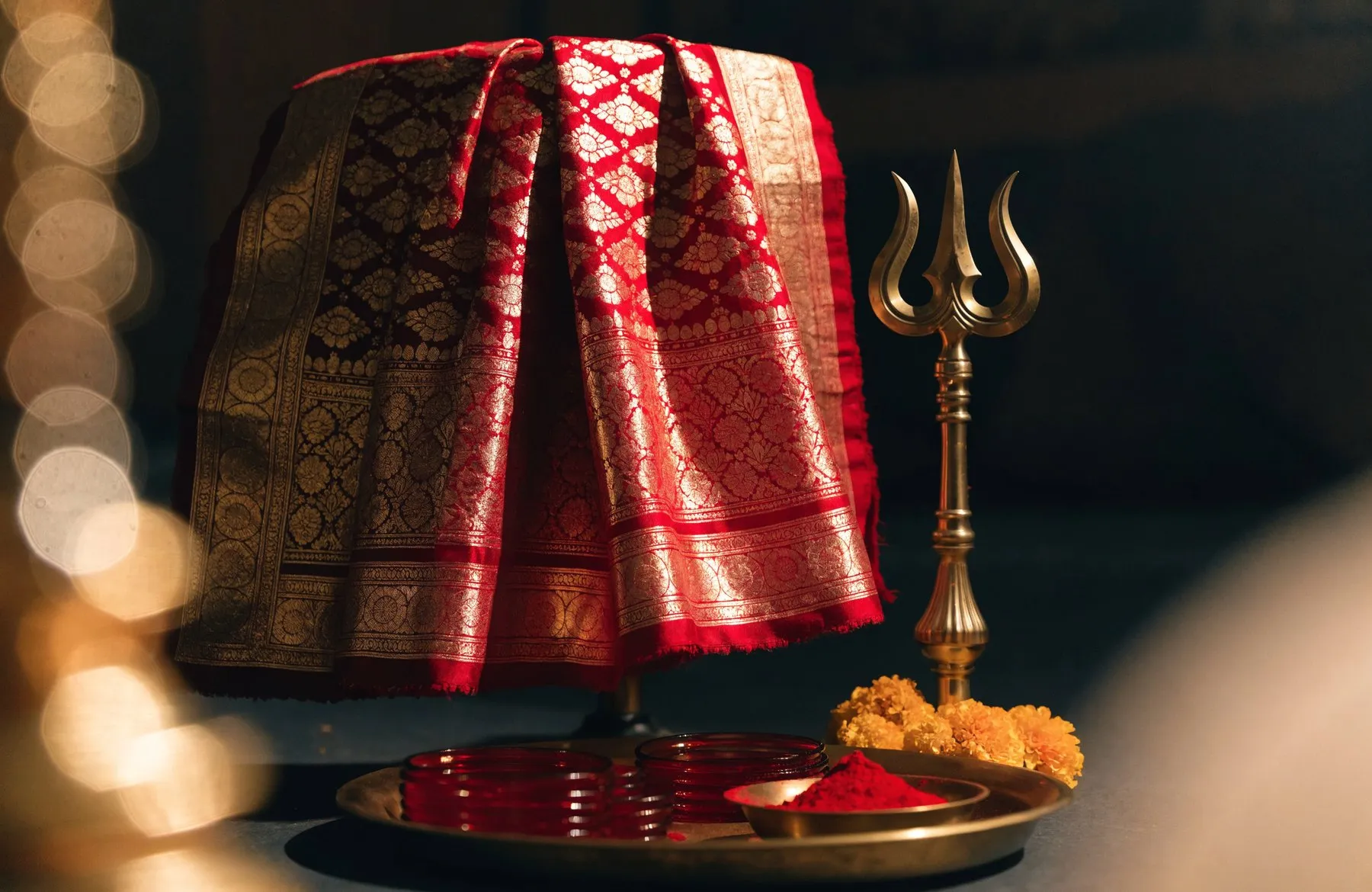
The chunri, the bangles, the sindoor — what a devotee brings to the Mother.
Where it comes from
Goddess worship in India is very old — arguably older than the Vedic religion, with figurines from the Indus Valley suggesting Mother worship on that soil thousands of years ago.
Its great scriptural moment is the Devi Mahatmya — 700 verses within the Markandeya Purana, composed around the 5th–6th century CE. It is the text where the Goddess steps forward as supreme in her own right: not consort, not helper, but the power before whom the gods themselves are helpless.
Every Navratri, in temples across the world, those verses are still recited. That is how load-bearing it is.
The many faces of the Mother
Shaktas worship the one Devi in many forms:
- Kali — the destroyer of ego and evil; first of the ten Mahavidyas, the great wisdom-goddesses.
- Durga — the invincible warrior who slays Mahishasura.
- Parvati — the gentle consort of Shiva.
- Lakshmi — prosperity and auspiciousness.
- Saraswati — knowledge, music, speech.
Broadly, Shaktism runs in two great streams: Srikula, centred on Lalita Tripurasundari, strongest in the south; and Kalikula, centred on Kali and Durga, strongest in Bengal, Assam, Odisha — and in the Devi traditions of Punjab, from which our mandir comes.
What it feels like in practice
Theology aside, the lived reality of Shaktism is simpler than any of the above: you have a mother.
Not a judge. Not a distant king. A mother — who will hold you, and who will absolutely destroy what is hurting you.
Devotees don’t approach Maa Kali with theological propositions. They come with what’s actually wrong. They cry in front of her. They tell her things they can’t tell anyone. They ask for help bluntly, the way a child asks.
That is what a Shakta temple is for.
Shaktism in Willenhall
Our mandir stands in the Devi tradition of Bham, in the Hoshiarpur district of Punjab, whose temple was founded in 1958. Maa Kali presides here, and beside her stands Maa Bhameshwari, venerated in our lineage as an avatar of Kali Mata. This is the first Maa Bhameshwari mandir in the United Kingdom.
Everyone is welcome — of any faith, or none. The Mother’s door does not have a lock on it.
Come and meet her. Plan your visit to our mandir in Willenhall, or read about Maa Kali and the Devi Mahatmya.