Shrine of the mandir
Surya Dev सूर्य देव
The Sun himself — God made visible, honoured for health, vitality and clarity.
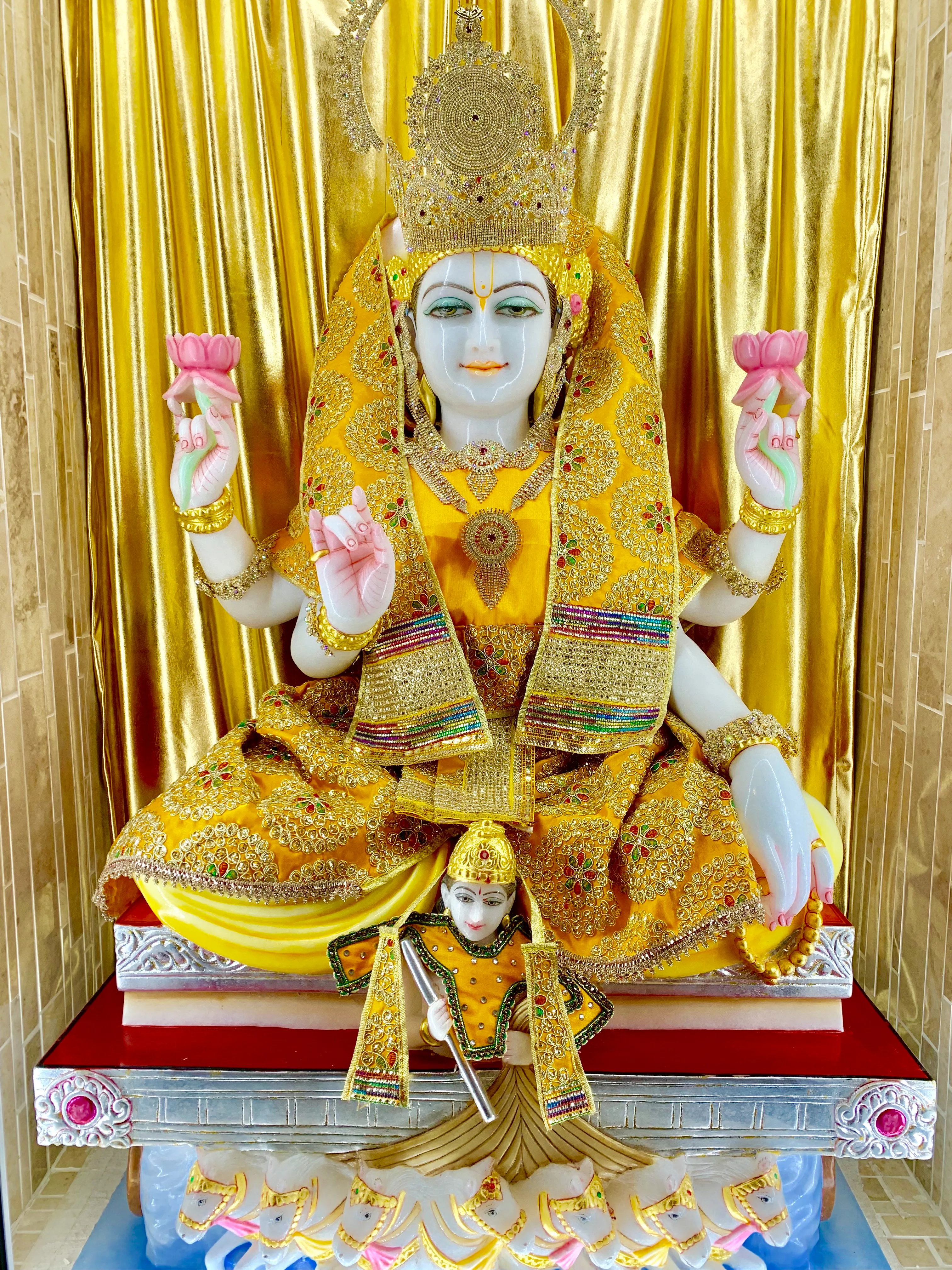
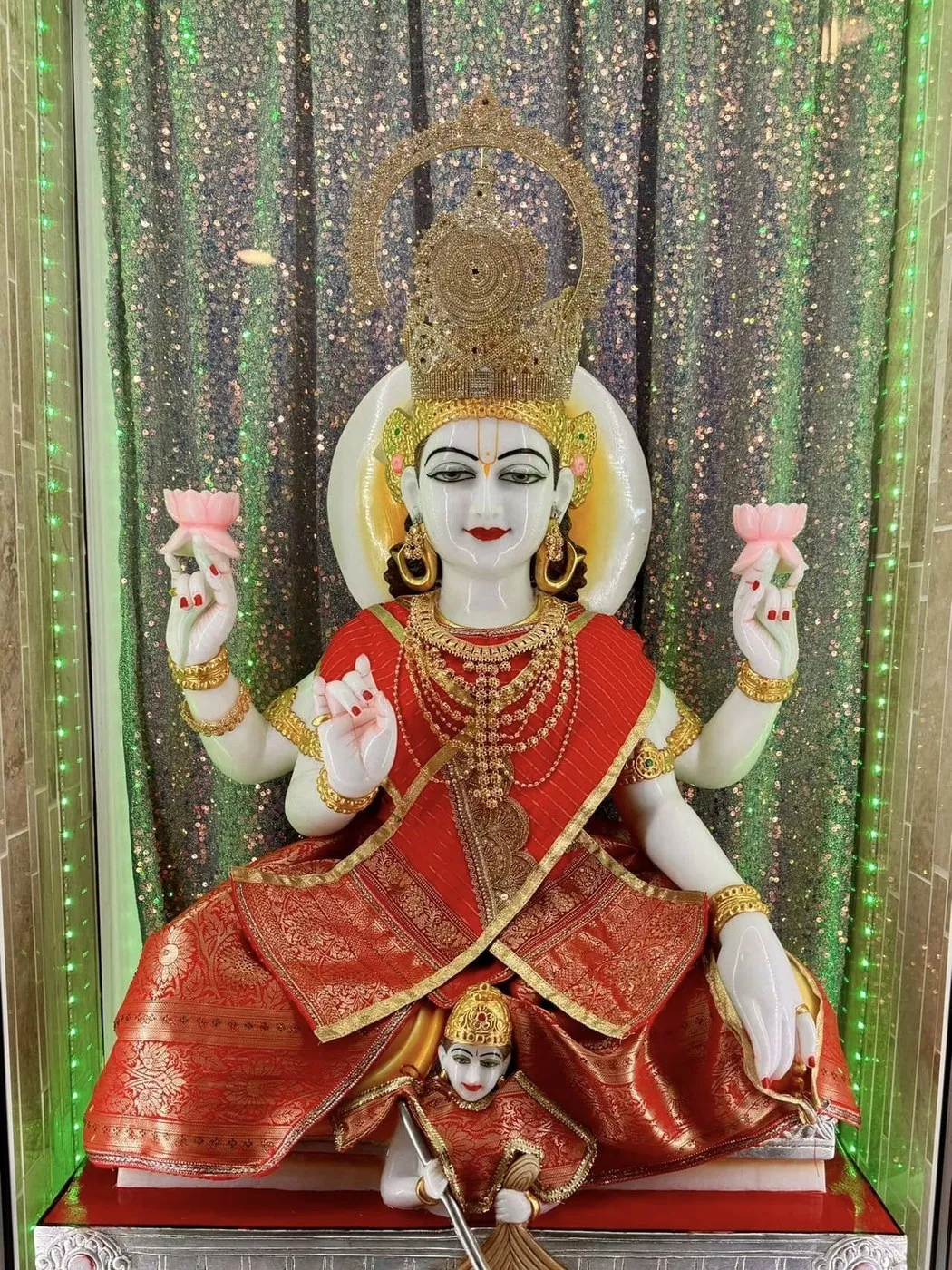
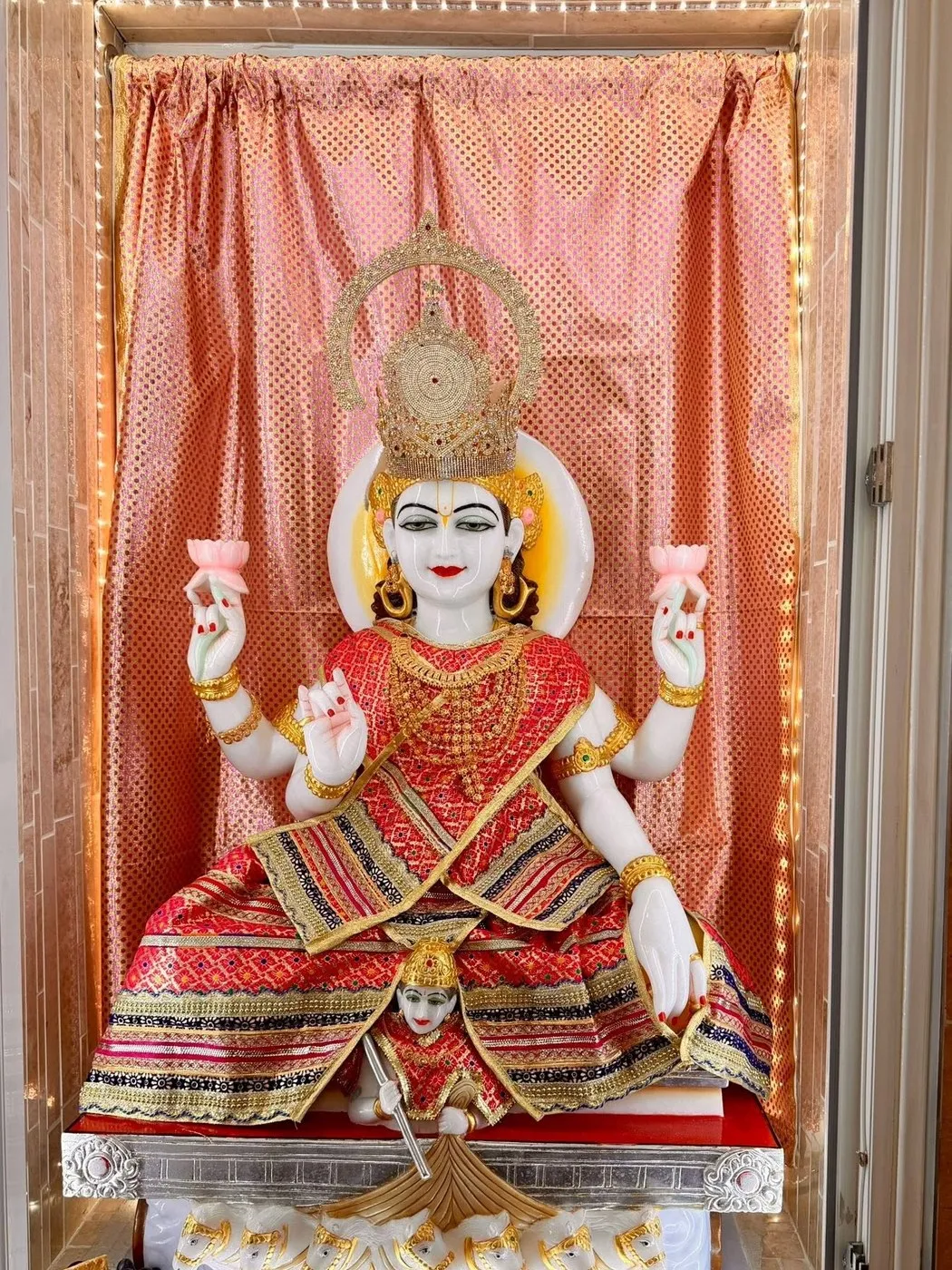
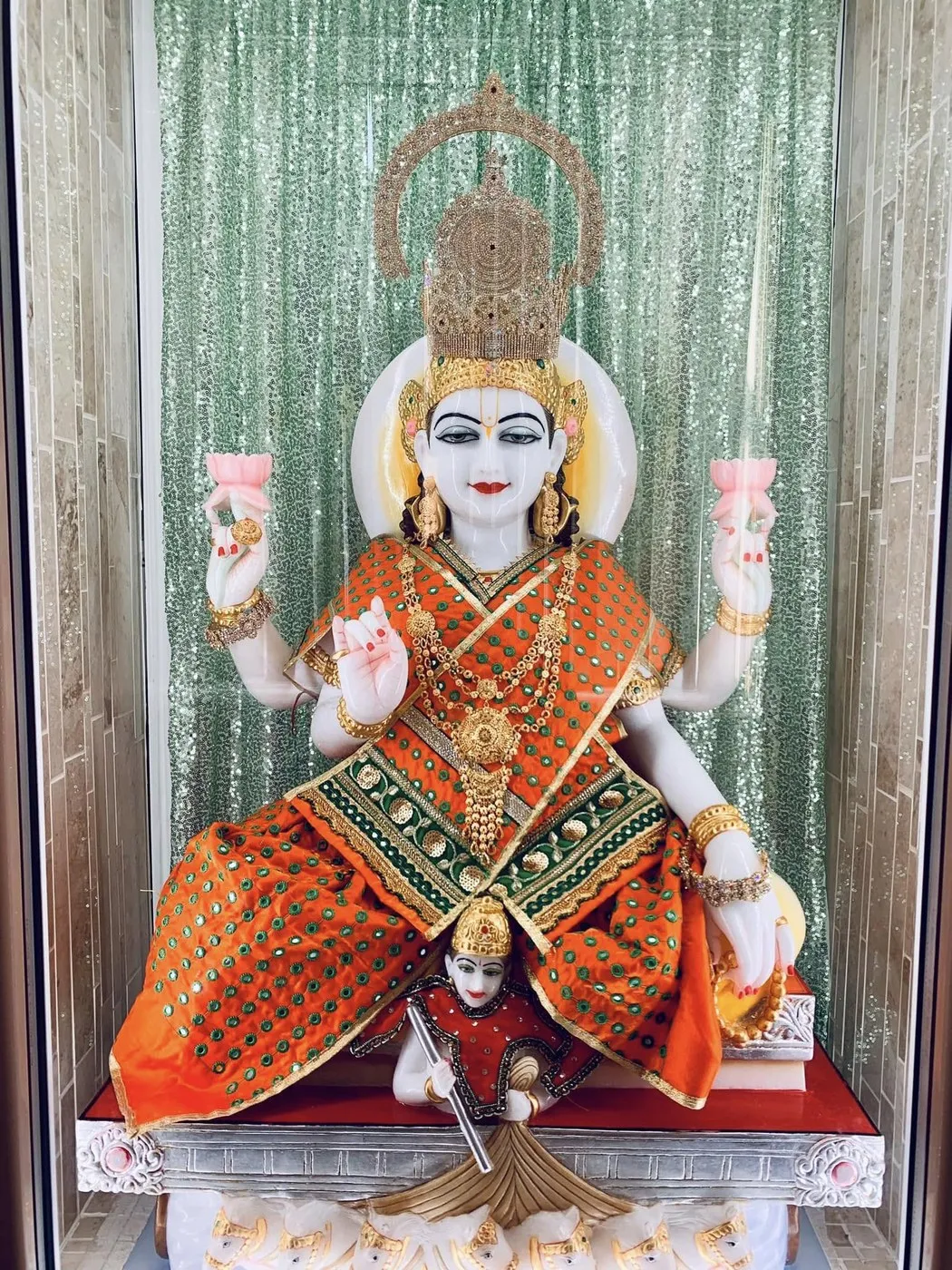
Seated in gold, lotuses in his raised hands, the sun-disc blazing behind him and his charioteer at his feet — Surya Dev, the Sun himself, shines in his shrine at our mandir.
Who he is
Surya is the deity you have already seen today. He is God made visible — the light by which every other thing is seen, honoured since the oldest hymns of the Rig Veda. Hindus turn to him for health, vitality and clarity: of body, of mind, of purpose. He is the witness of all deeds, before whom nothing is hidden, and the giver of the day itself.
The tradition pictures him crossing the sky in a golden chariot drawn by seven horses — the seven days, the seven colours folded inside white light — driven by Aruna, the red glow of dawn who always goes ahead of the sun.
Reading his form
- The radiant disc behind him — the sun’s own corona, his unmistakable sign.
- A lotus in each raised hand — life opening to the light; the lotus follows the sun across the sky.
- The charioteer at his base — Aruna, dawn himself, reins in hand. Look for him: he is the surest way to know Surya from every other golden murti.
- Gold upon gold — the colour of the light he is.
Surya at our mandir
His day is Sunday — the sun’s day in the Hindu week as in the English one — and devotees honour him especially at Makar Sankranti in mid-January, when he turns northward and the days begin to grow, and at Chhath (October–November), the great fast offered to the rising and the setting sun.
The simplest of all his observances needs no temple at all: surya arghya, water poured toward the rising sun with folded hands. Many of our sangat keep it every morning, in Willenhall as their grandparents did in Punjab. See Surya Dev’s shringar — dressed through the seasons like every murti in the mandir.
Shringar
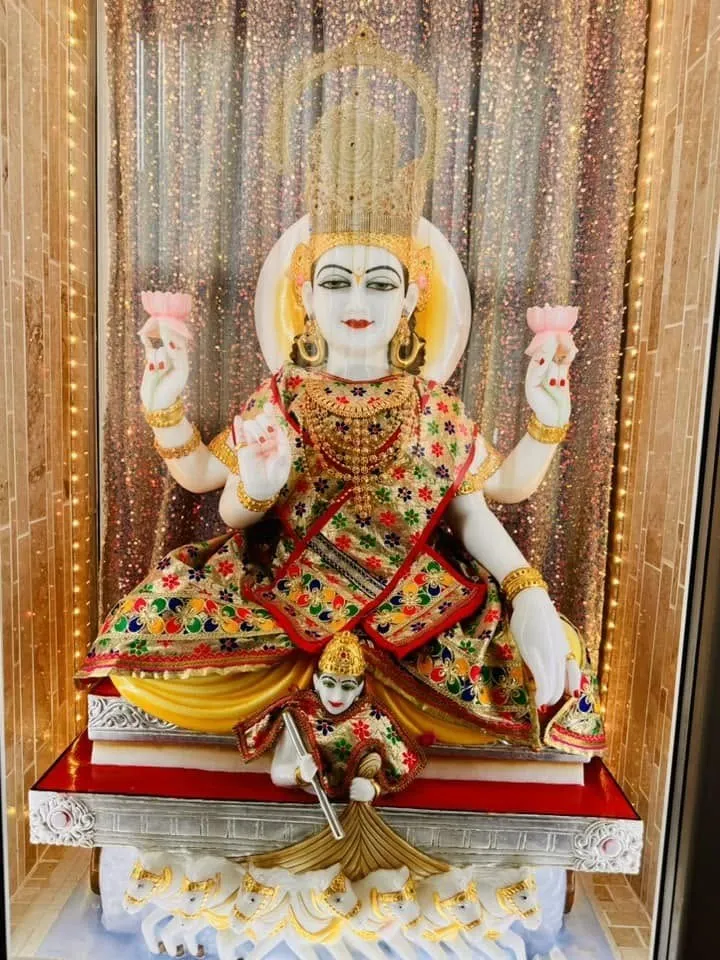
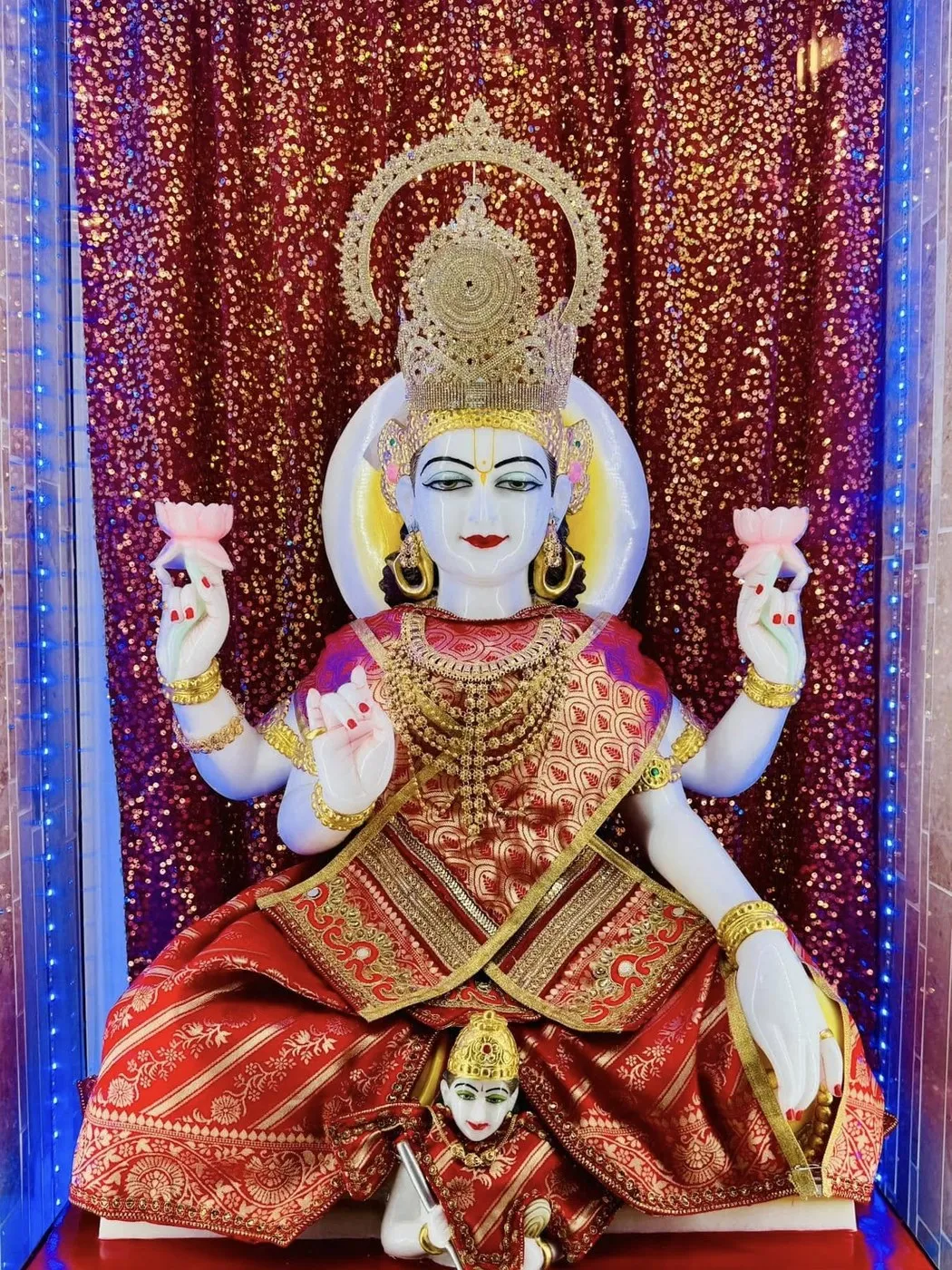
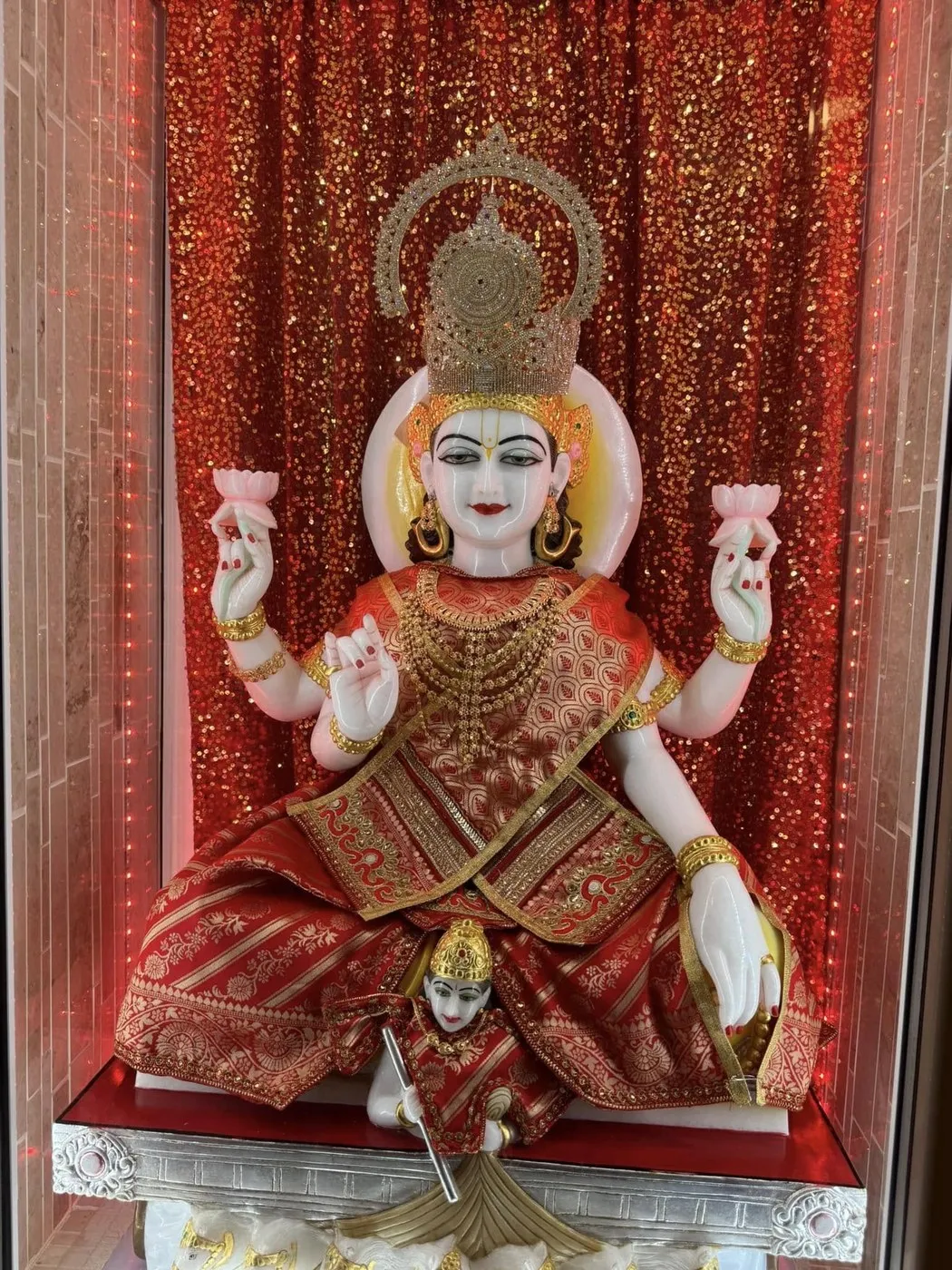
Surya Dev through the year
The same murti, dressed anew through the year. See the full gallery on Maa's Shringar.
6 shringar
Questions people ask
Why worship the sun?
Surya is the one deity everyone can see: the visible face of the divine, whose light every living thing depends on. Hindus have honoured him since the Vedas — for health, vitality and clarity of mind — and the daily offering of water to the rising sun remains one of the simplest and oldest practices in the tradition.
What is the chariot with seven horses?
Tradition pictures Surya crossing the sky in a golden chariot drawn by seven horses — often read as the seven days of the week and the seven colours held inside sunlight — driven by his charioteer Aruna, the red glow of dawn who goes ahead of him. Our murti shows the charioteer at his base: one of the surest ways to recognise Surya.
How is Surya honoured at home?
Most simply of all: surya arghya — water poured from a small vessel toward the rising sun, with folded hands. Many of our devotees keep it daily. The Gayatri mantra, recited at dawn, is likewise addressed to the light of which the sun is the visible sign.
Go deeper
One God, or many? Understanding Hindu deities
Are Hindus polytheistic? The honest answer to the question every visitor asks — and why the question itself is shaped by the wrong assumptions.
Read →Why Hindu festival dates are different in the UK
Your Indian calendar says one date; the UK mandir says another. Neither is wrong — here's why Hindu festival dates and timings genuinely differ in Britain.
Read →