Shrine of the mandir
Radha–Krishna राधा कृष्ण
The divine couple — God and the soul that loves him, inseparable.
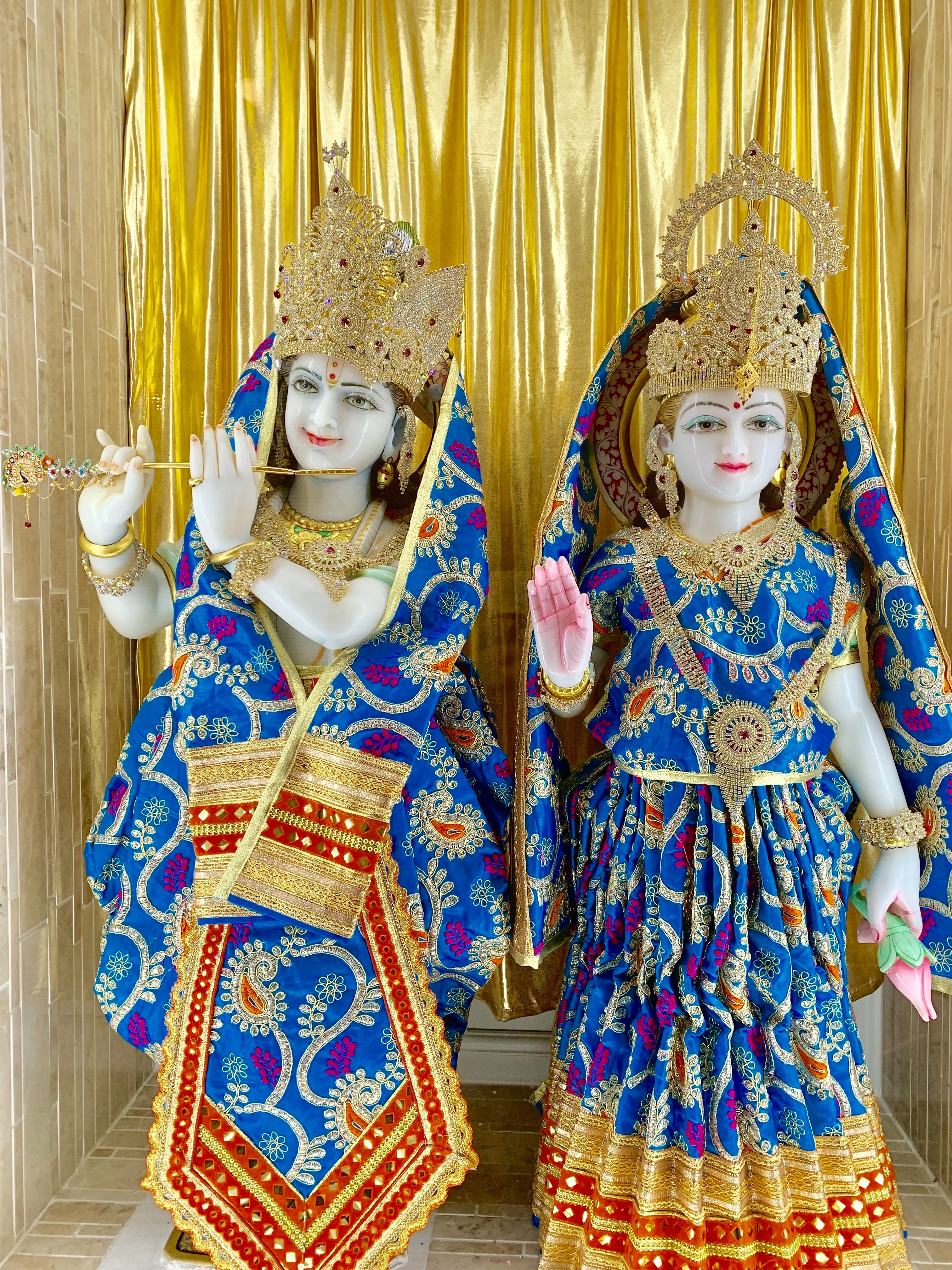
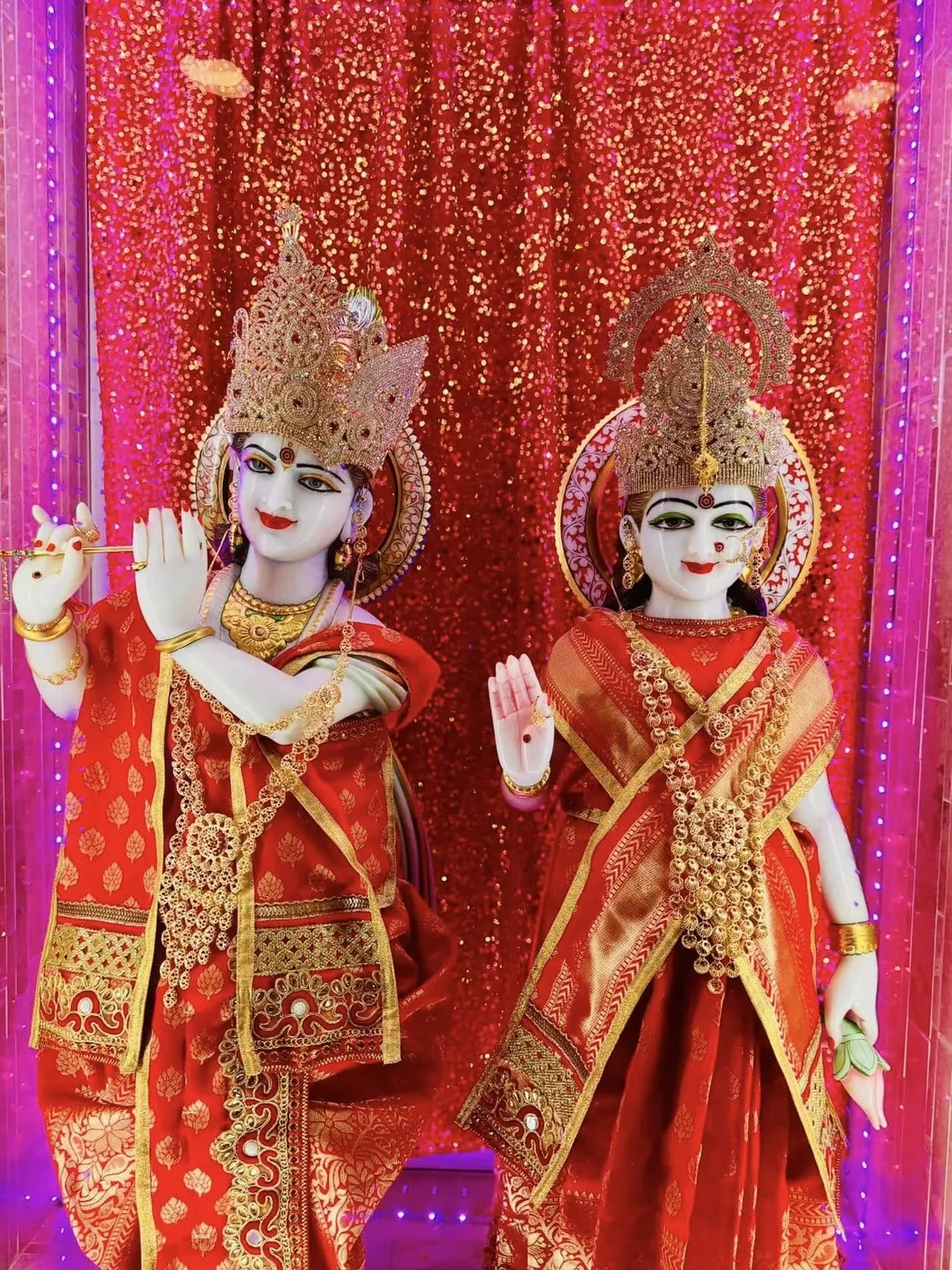
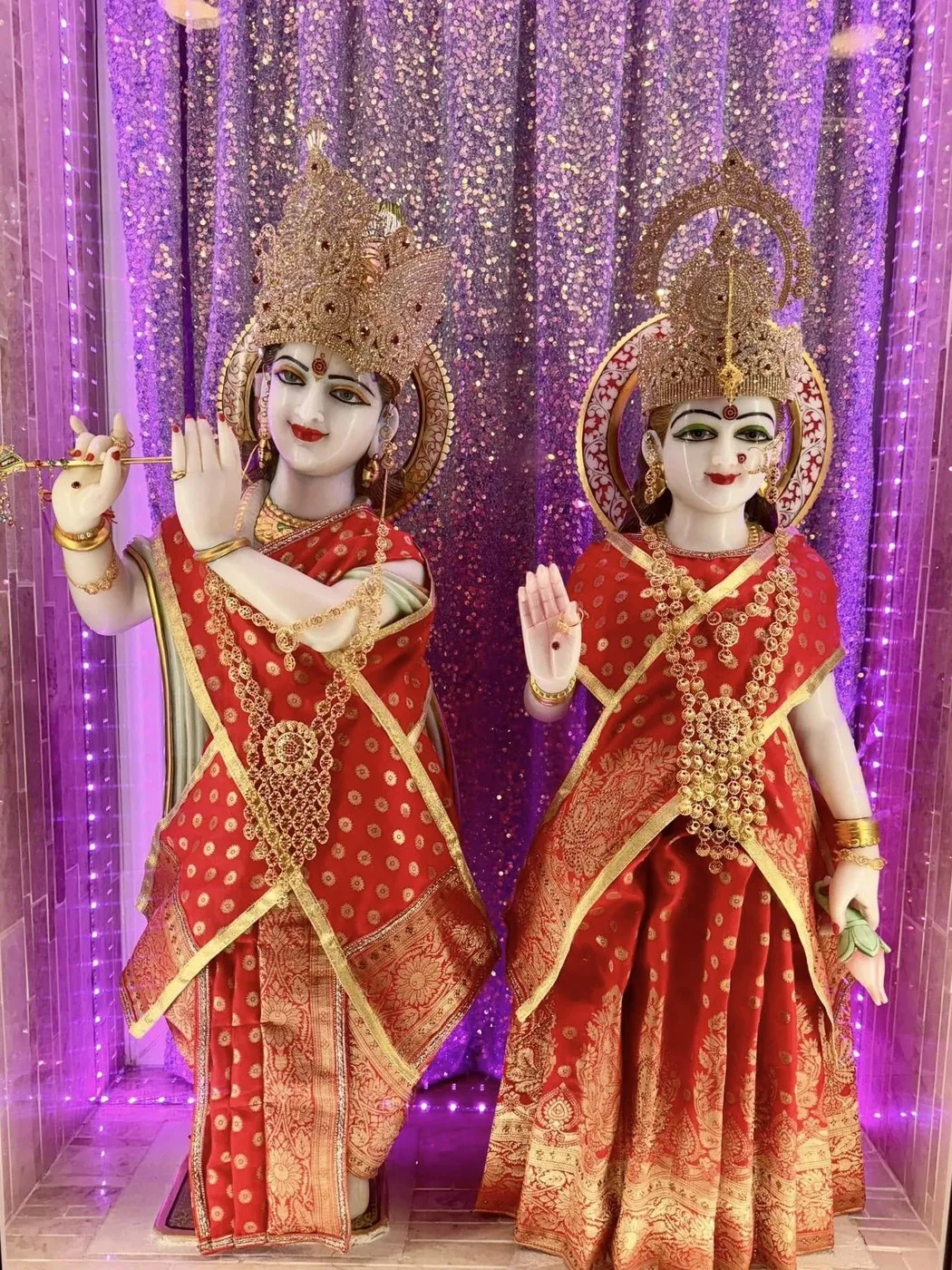
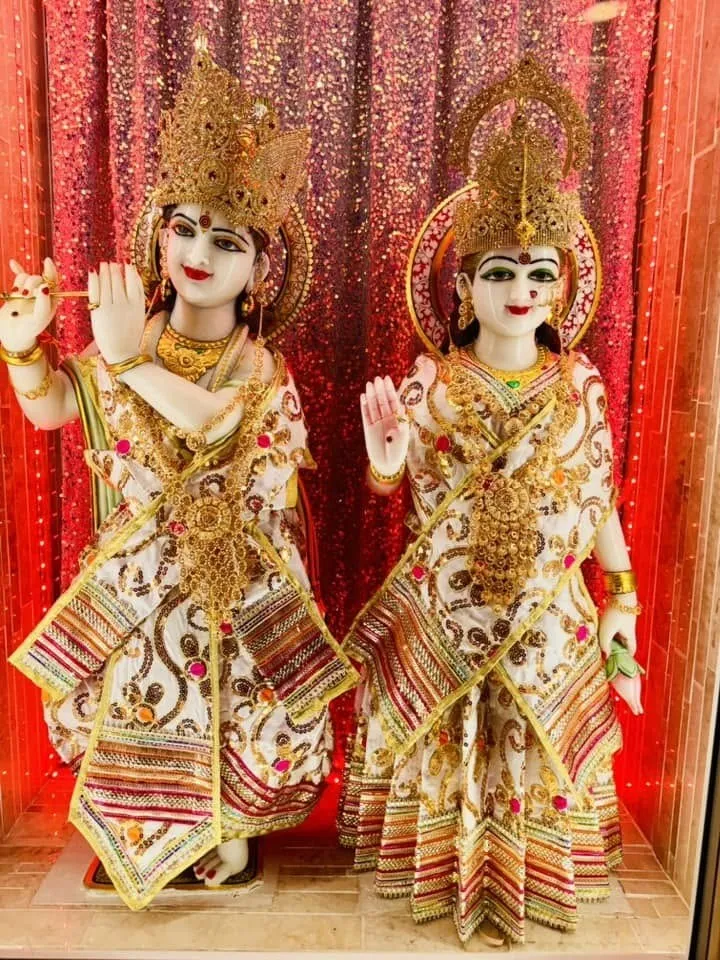
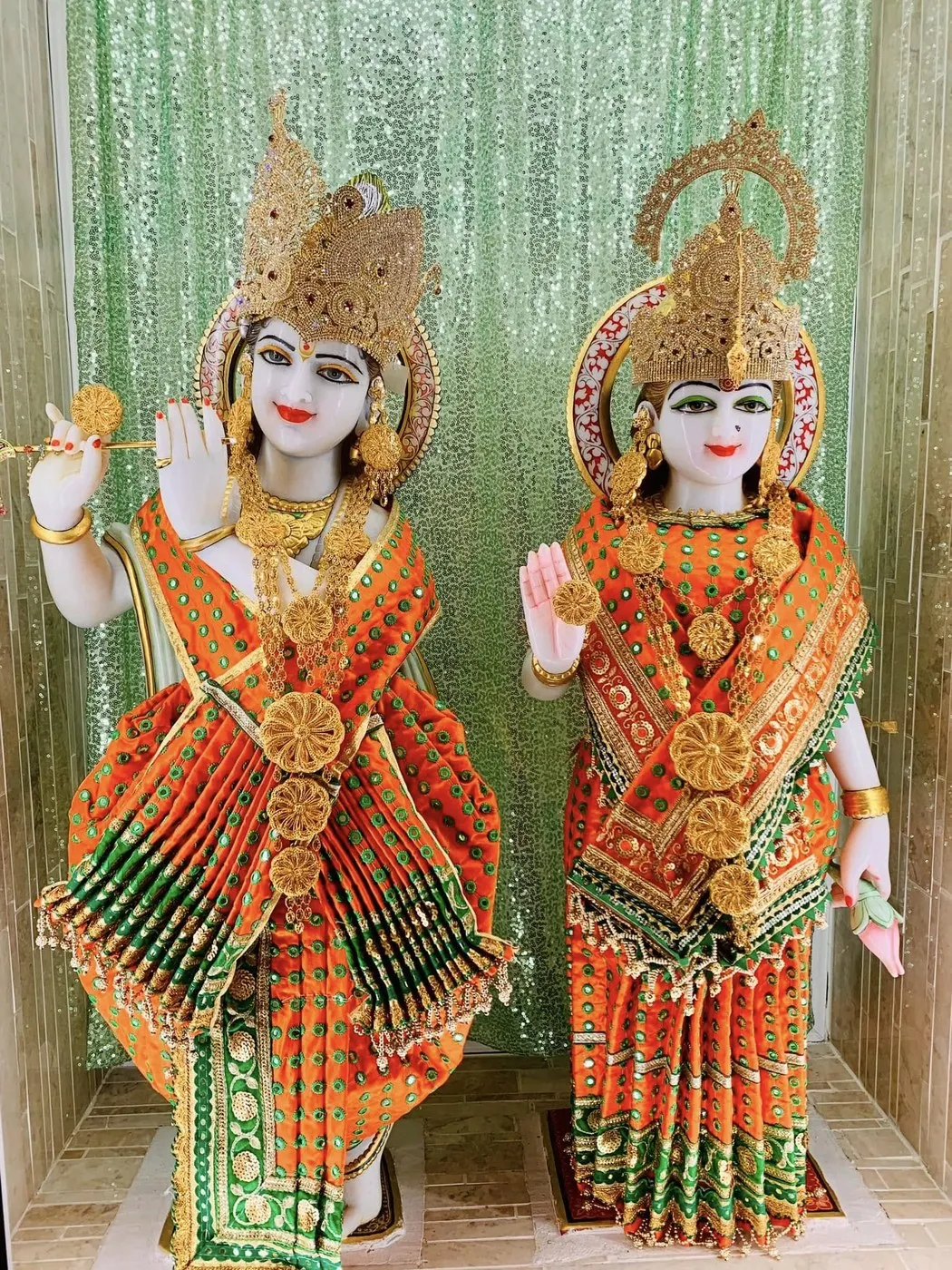
In their shrine, crowned and garlanded side by side, stand Radha and Krishna — the divine couple, God and the soul that loves him, inseparable.
Who they are
Krishna is among the most beloved forms of God in all Hinduism — the divine cowherd of Vrindavan, the flute-player whose music no heart could resist, the speaker of the Bhagavad Gita. Radha is his beloved: the soul whose love for God is so complete that the tradition sets her first — Radha–Krishna, never the other way round.
Together they are Hinduism’s great image of bhakti — devotion as love. The philosophers put it precisely: Krishna is God as the beloved; Radha is the love of God itself, given form. Apart, neither name says everything; together they say it all.
Reading their forms
- The flute — hollow, and so able to sing: the soul emptied of ego becomes God’s instrument.
- The peacock feather in Krishna’s crown — beauty worn lightly, the gift of the forest he grazed.
- His dark blue form — the colour of the infinite: deep water, monsoon sky.
- The yellow pitambara — the silk of the sun about the darkness of the deep.
- Radha at his left — nearest his heart, her hand raised in the same blessing she receives.
- The tribhanga pose — Krishna’s famous triple bend, ease itself: God at play.
Radha–Krishna at our mandir
Their great festival is Janmashtami — Krishna’s midnight birth, kept in Bhadrapada (August–September; UK dates can differ from India’s) — followed fifteen days later by Radhashtami, her appearance day. Holi, the festival of colours, belongs to their Braj tradition above all.
And they preside, in a real sense, over every kirtan sung in this mandir: bhakti — devotion as song and love — is their path. Come on a Tuesday evening for Kirtan & Langar and you will hear it. See their shringar through the year.
Shringar
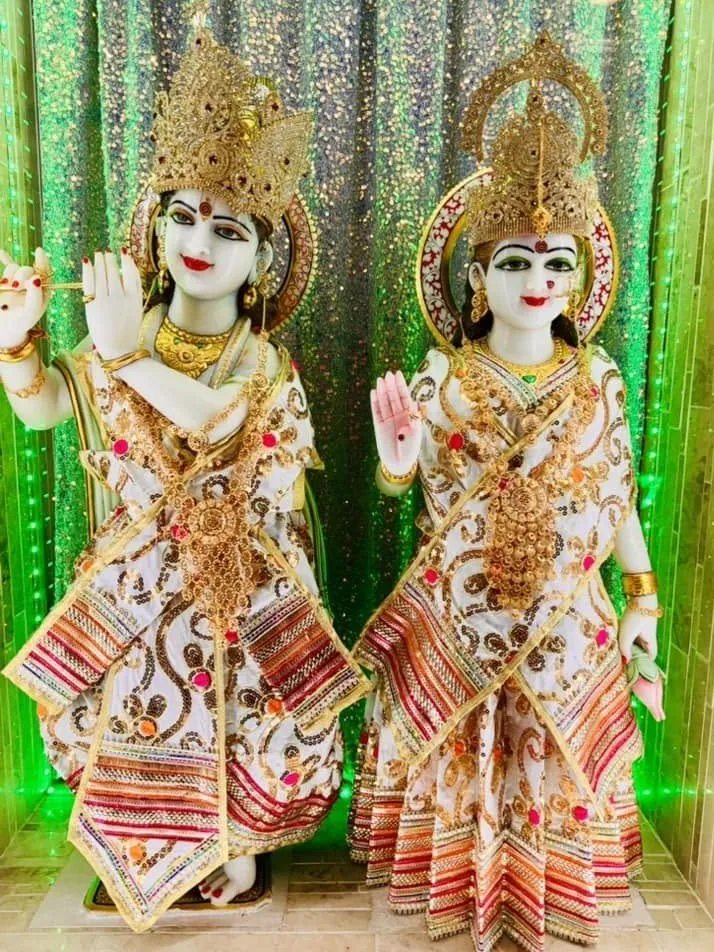
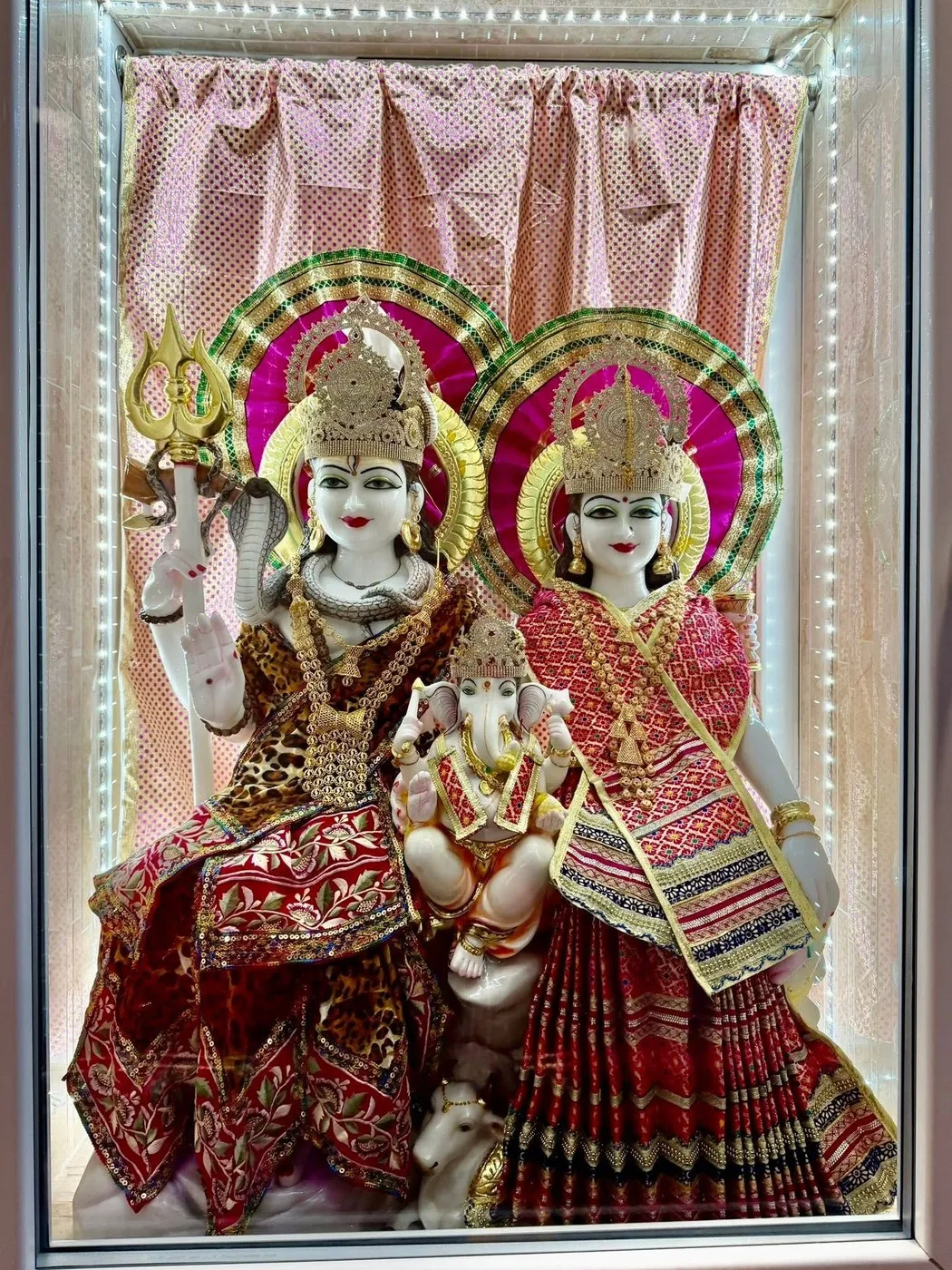
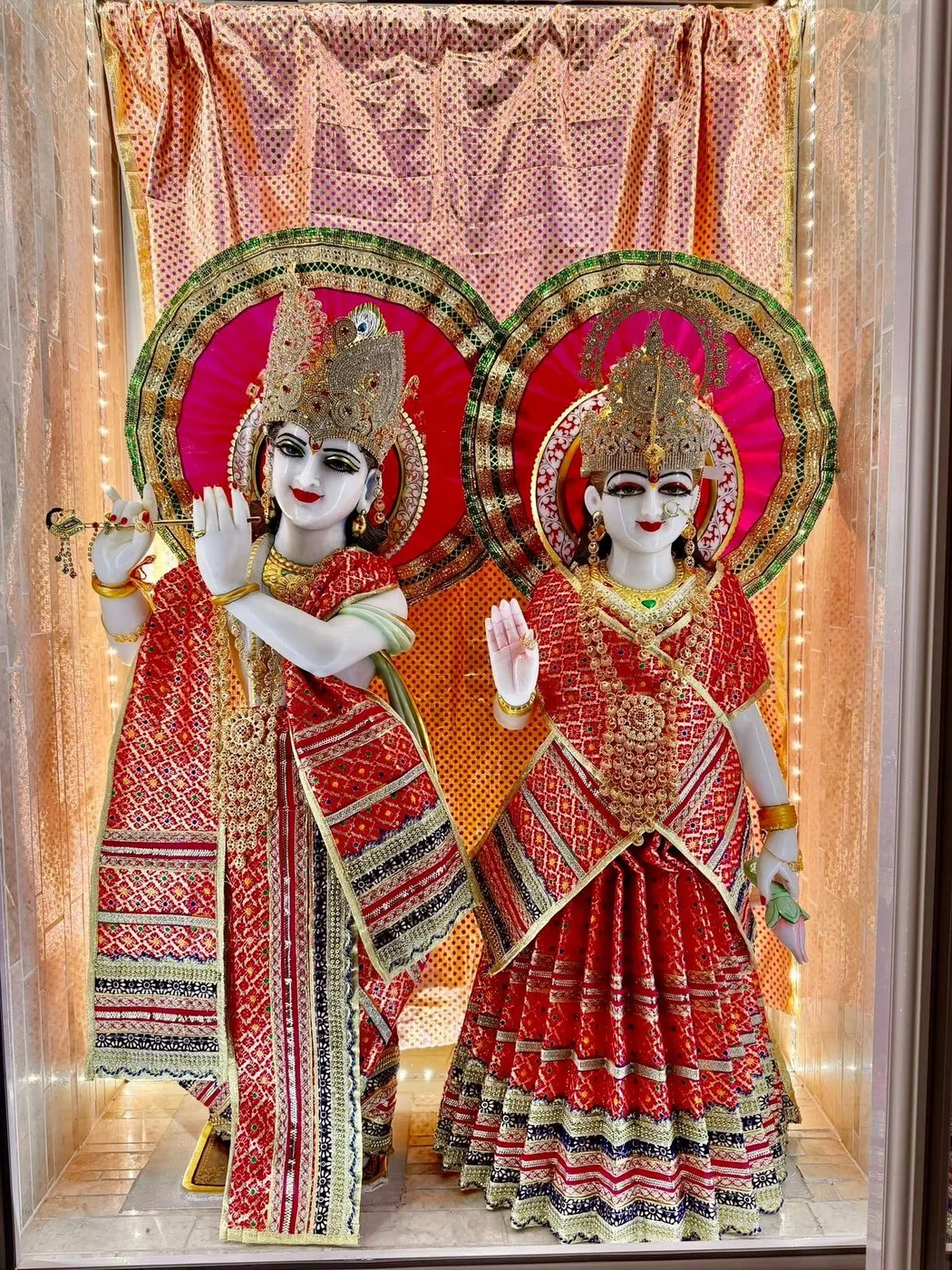
Radha–Krishna through the year
The same murti, dressed anew through the year. See the full gallery on Maa's Shringar.
7 shringar
Questions people ask
Why are Radha and Krishna worshipped together?
Because together they are the complete image of divine love: Krishna is God as the beloved, and Radha is the soul that loves him utterly. Their inseparability is the point — devotion so total that the lover and the beloved cannot be spoken of apart. That is why her name comes first: Radha–Krishna.
What does Krishna's flute mean?
The flute is hollow — it makes music only because it is empty of itself. Tradition hears in it the call of God to every soul, and the teaching that a heart emptied of ego becomes an instrument the divine can play. When Krishna's flute sounded in Vrindavan, no one who heard it could stay away.
What is bhakti?
Bhakti is devotion as love — the path to God through the heart rather than through austerity or analysis alone. Radha is its supreme model: her love for Krishna is the pattern of the soul's love for God. Every kirtan sung at our mandir stands in that tradition.
Go deeper
One God, or many? Understanding Hindu deities
Are Hindus polytheistic? The honest answer to the question every visitor asks — and why the question itself is shaped by the wrong assumptions.
Read →Why Hindu festival dates are different in the UK
Your Indian calendar says one date; the UK mandir says another. Neither is wrong — here's why Hindu festival dates and timings genuinely differ in Britain.
Read →What is aarti?
Aarti — the offering of light before the deity, sung twice daily at our mandir. What happens, what it means, and why people pass their hands over the flame.
Read →