Hindu temple etiquette — a first-timer's guide
The only universal rule at a Hindu temple is to remove your shoes before entering. Beyond that: dress modestly, walk clockwise around the shrine, receive prasad in your right hand, keep your voice low, and ask if you're unsure. Everything else is easier than you fear, and nobody expects a newcomer to know it all.
Hindu temples can look complicated from the doorway: people doing different things, bells ringing, no obvious order of service. Here is what is actually going on and what is expected of you.
A reassurance first: there is no wrong way to be a guest. You will not offend anyone by not knowing something. Our visitors say this repeatedly — someone always shows them the way.
The one universal rule
Take your shoes off. Every Hindu temple, everywhere, without exception. Shelves are provided at the entrance. This is not a formality — the prayer hall is treated as sacred ground.
Almost everything else varies between temples. What follows is our practice; another mandir may do things slightly differently, and both are correct.
When you arrive
- Remove shoes at the entrance.
- Wash your hands if facilities are there; some people rinse their mouth too.
- Turn your phone to silent.
- Enter calmly. There is no queue system and no ticket. Walk in.
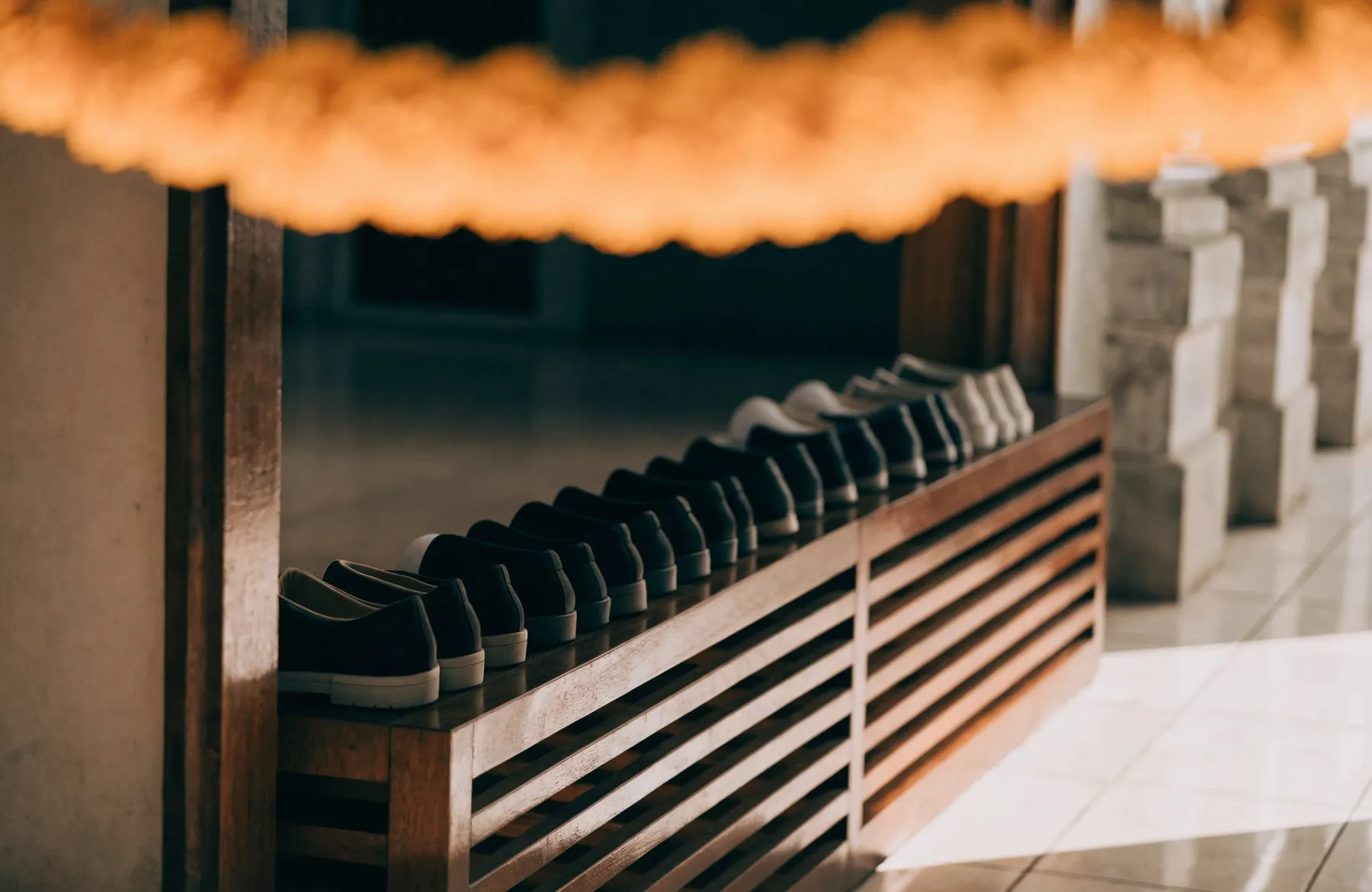
Shoes come off at the door. If you remember nothing else, remember this one.
Before the deities
This is darshan — seeing, and being seen by, the divine. You may:
- Stand quietly with your hands folded (namaskar).
- Bow, or touch the floor and then your forehead.
- Simply look. Looking is the practice.
Walk clockwise around the shrine if you are circling it (pradakshina) — keep the deity on your right.
You do not have to kneel, chant, or perform anything. Presence is enough.
Offerings
You may bring fruit, flowers, sweets, a coconut, or a red chunni for Maa. None of this is required. If you bring something, hand it to a sevadar or place it where others are placing theirs.
Money is never expected of a visitor. There is a donation box if you wish.
Prasad
Prasad is food that has been offered to God and returned as blessing. It will be offered to you — often something sweet, or a little fruit.
- Receive it in your right hand, or both hands cupped together.
- Accept it graciously. Refusing is a bit awkward; taking a small piece is fine.
- Allergy note: prasad and langar are prepared in a kitchen that handles nuts, dairy and gluten. Please ask a sevadar — they will happily tell you what’s in it.
Aarti
If you arrive at 11am or 7pm you will find aarti underway — lamps waved before the deities, with singing. Just stand with everyone.
When the lamp comes round, people pass their hands over the flame and touch them to their eyes and head, receiving the light’s blessing. You are welcome to do it, or to let it pass with a smile. Both are completely normal.
Photography
Photography is welcome at our mandir. Take pictures of the murtis, the hall, the shringar — devotees do it all the time, and we would rather you had something to take home. Two courtesies, though:
- Never photograph people at worship without asking them. A murti will not mind; a person praying might.
- Family events belong to those families. At a wedding or a family pooja, ask the family, not us.
Langar
If you’re visiting on a Tuesday evening, stay and eat. Kirtan & Langar runs 6–8pm: singing, aarti at 7pm, and then a free vegetarian meal served to everyone present. Everybody sits and eats together — this isn’t charity being handed to you, it’s how the mandir works. Saying yes is the polite thing to do.
Langar is also served at major events such as jagrans and festival nights.
Things you might see and wonder about
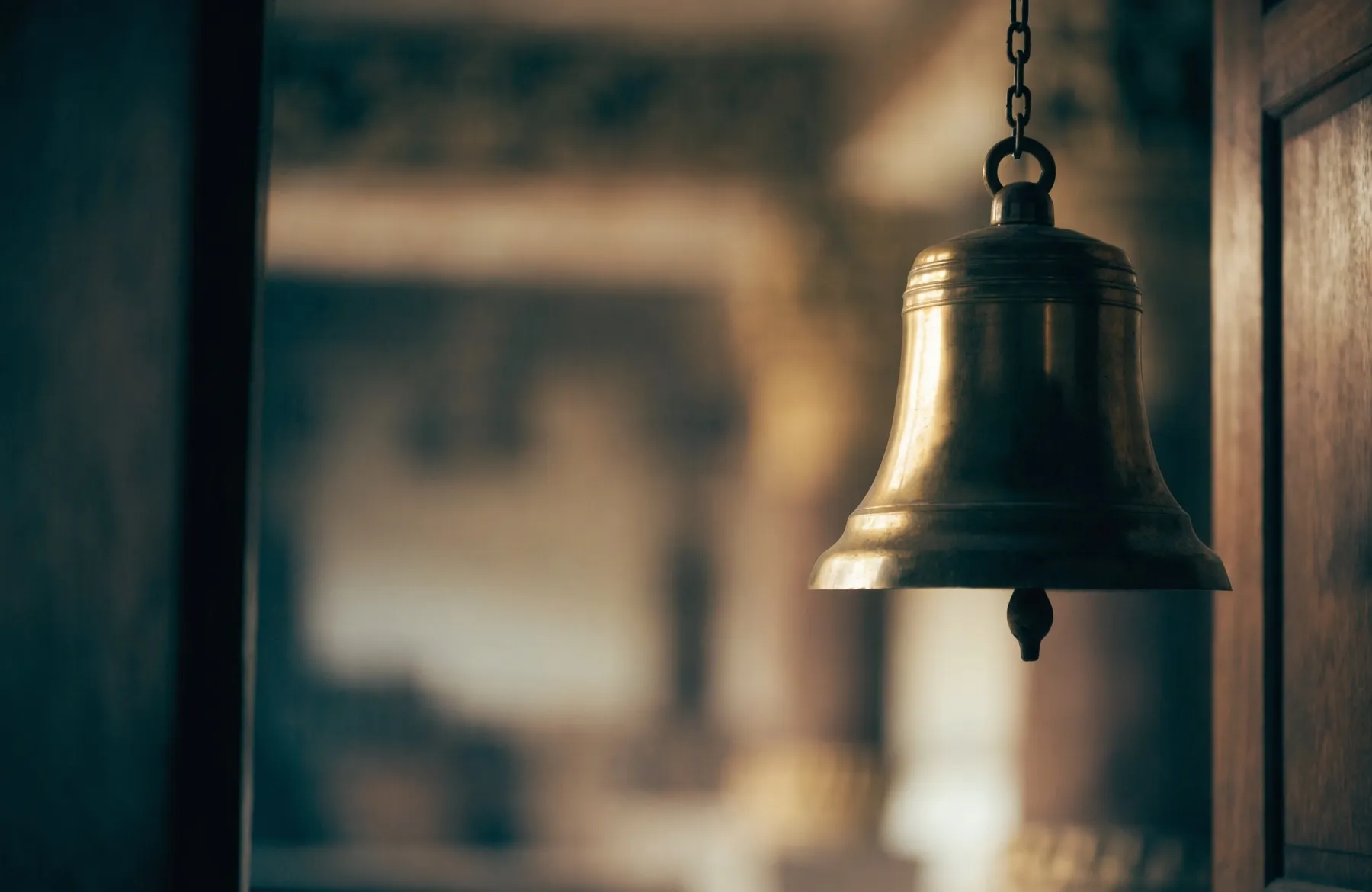
- A bell being rung on entering — announcing your arrival to the divine, and marking the moment.
- A red mark on foreheads — tilak, a blessing. You may be offered one. It’s fine to accept or decline.
- People touching an elder’s feet — a mark of respect for age and blessing.
- Someone slipping out mid-service — people come and go as work and life allow; nobody minds.
If in doubt
Ask. Genuinely. Everyone at the mandir would rather answer your question than have you stand worrying about it. That is the whole point of an open door.
Come and see. Our mandir in Willenhall is open every day, 8am–1pm and 4pm–8pm. Plan your visit — school and community groups are warmly welcome.