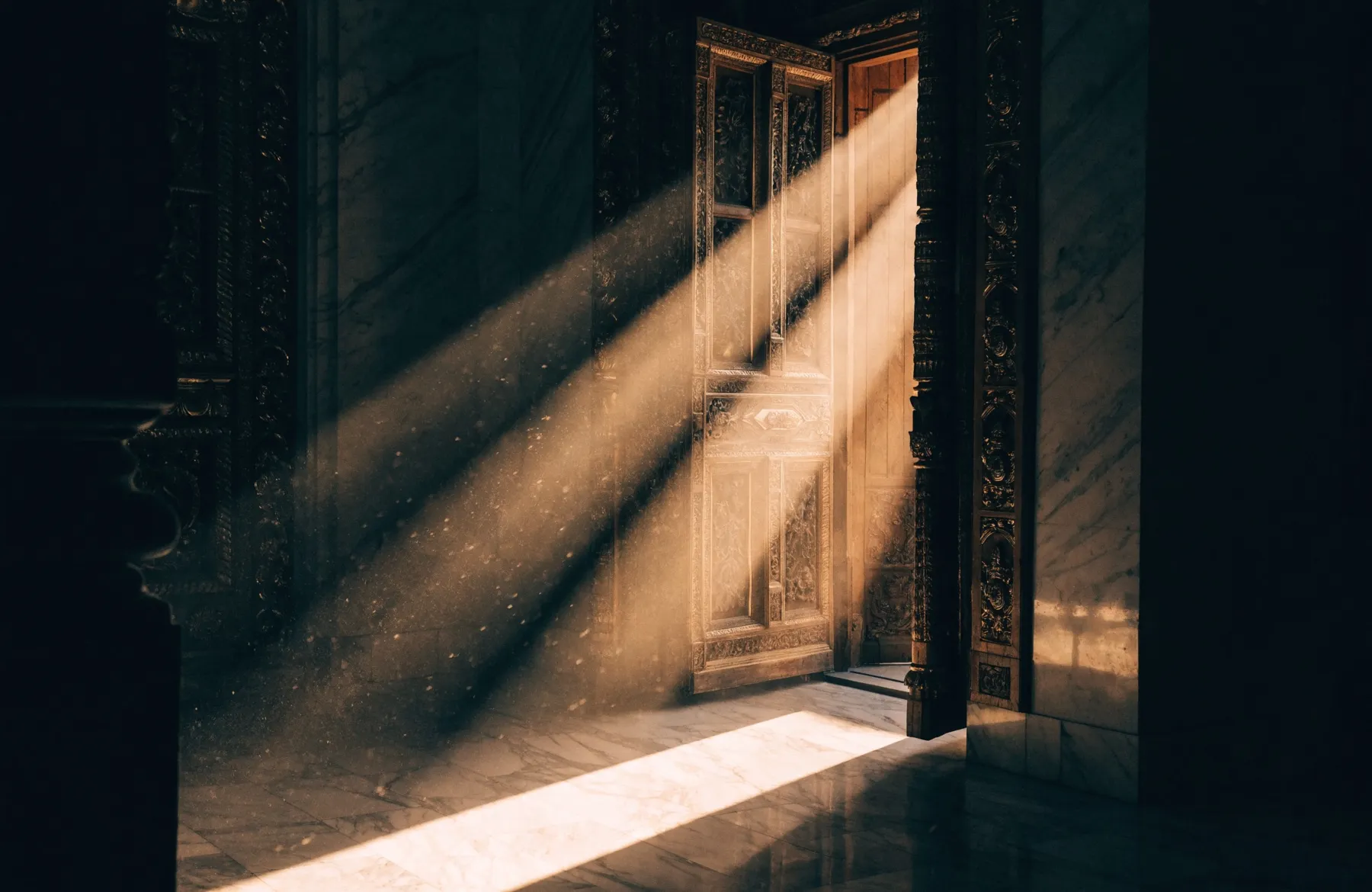
What is darshan?
Darshan means 'seeing'. It is the central act of Hindu worship: to stand before the murti of a deity and look — and, crucially, to be looked at in return. The exchange of sight is itself the worship. There is nothing you need to do beyond being present.
Visitors from a church background often arrive at a mandir looking for the service — the bit where everyone sits down, someone speaks, and the thing formally begins.
There isn’t one. What there is, is darshan.
Seeing, and being seen
The Sanskrit word darśana simply means “sight” or “seeing”. To “take darshan” is to come before the deity and look.
But the grammar of it matters: darshan is not a one-way inspection. The deity sees you back. That is why the murti’s eyes are made so large and so open, why they are ceremonially opened when a murti is first installed, and why devotees speak of taking darshan rather than doing anything.
You come. You are seen. That is the worship.
Why murtis are not idols
The word “idol” carries centuries of Christian polemic and misses the point entirely.
Hinduism holds that the Divine is one, infinite and beyond all form. But an infinite formless reality is difficult to love. So God, out of compassion, accepts a form — so that you have somewhere to bring your flowers, somewhere to look, someone to look back.
The murti is not a picture of God, and it is not a lump of stone that people confuse for God. Through the ceremony of prana pratishtha (“establishing the life-breath”) — which our own mandir performed in 2018 — the deity is invited to be genuinely present in that form. Devotees then treat the murti exactly as you would treat an honoured living guest: woken in the morning, bathed, dressed, fed, offered light, and put to rest at night.
Ask any devotee whether the murti is God and you’ll get a philosophically careful answer. Watch them at darshan and you’ll get the real one.
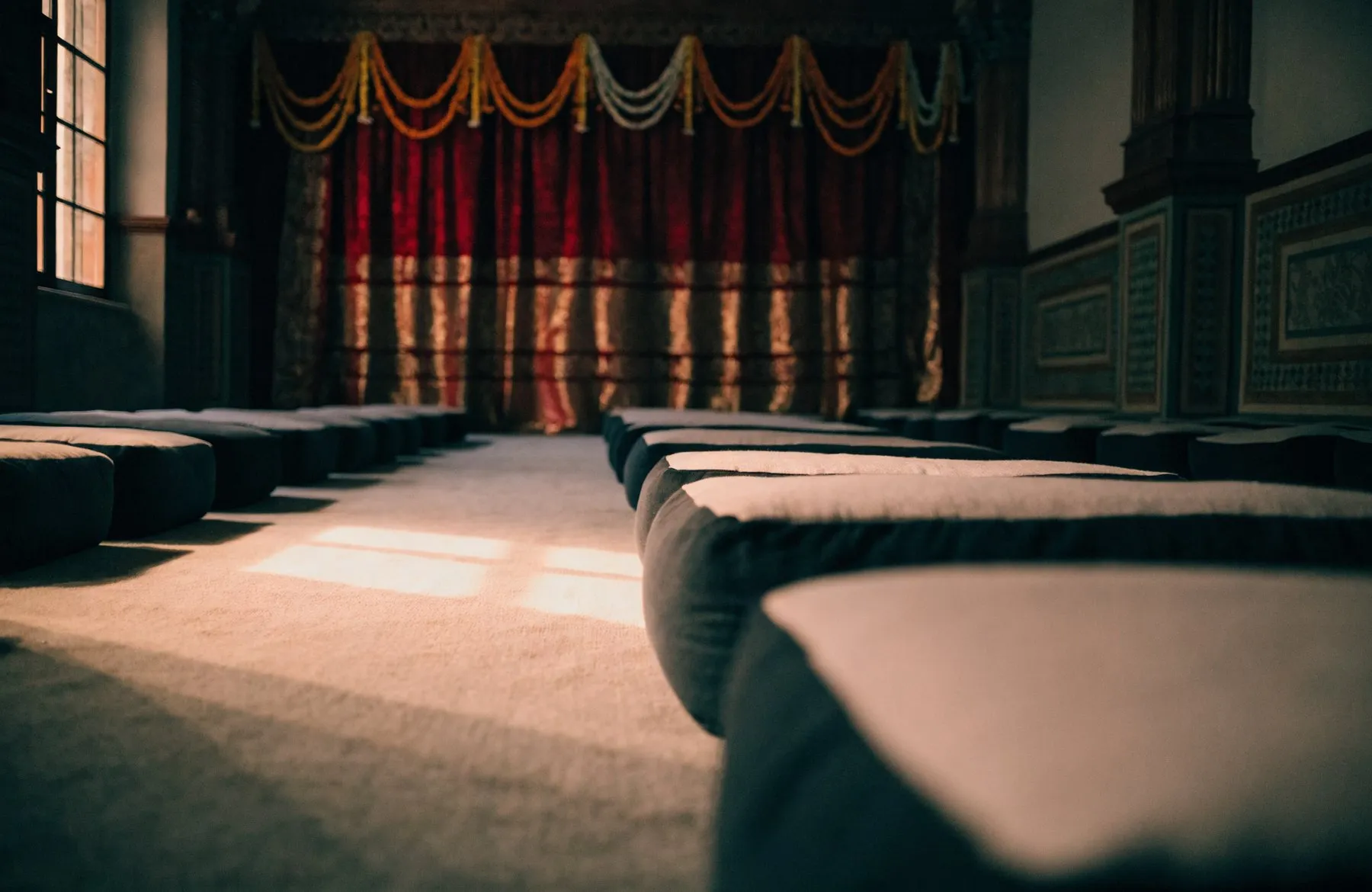
The curtain is drawn while Maa is dressed. The moment it opens — that is darshan.
What it feels like
Undemanding. That’s what surprises people.
Nobody hands you a hymn book. Nobody tells you when to stand. You walk in, you stand before Maa, and you look for as long as you like. Some people are there for two minutes on the way to work. Some sit for an hour. Some cry. Some just say hello.
One of our visitors wrote that they had “never been to a temple that made my friend and I feel so special.” Nothing was done to them. They were simply seen — by the Mother, and by everyone else in the room.
When to come for darshan
Our mandir is open every day, 8am–1pm and 4pm–8pm. Darshan is available any time we are open.
If you would like to see the mandir at its most alive, come for aarti at 11am or 7pm — the offering of light, when the curtains are drawn back and the whole hall sings.
Come and take darshan. Maa Kali and Maa Bhameshwari at 158 Dilloways Lane, Willenhall. Everyone is welcome — plan your visit.