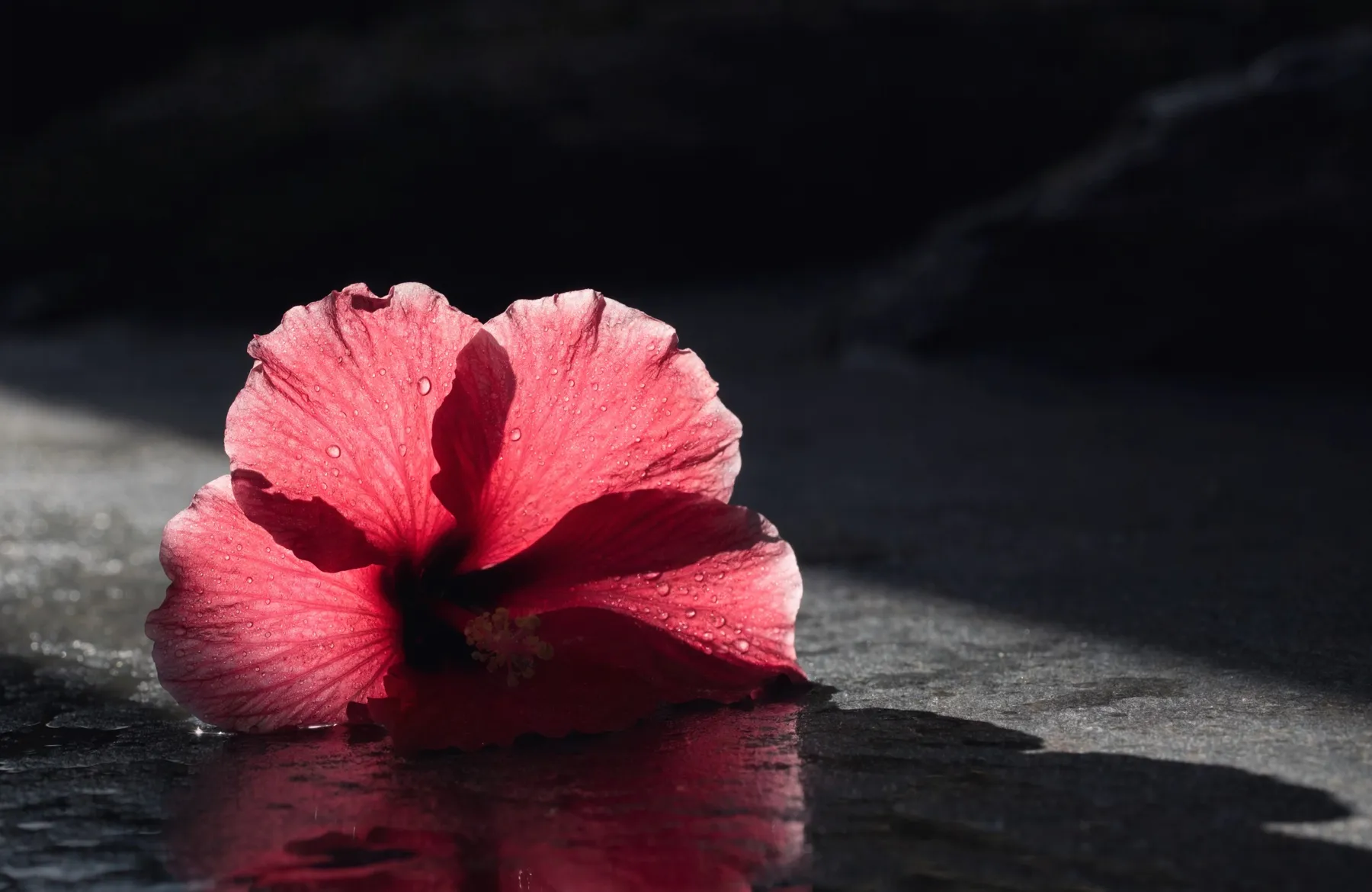
Why is Kali's tongue out?
Kali's extended tongue is understood in several ways: as her all-consuming power in the heat of battle, as passion (the red tongue) restrained by calm (the white teeth), and — in a much-loved Bengali tradition — as a mother's startled modesty on realising her foot has landed on her husband. The tradition holds all these meanings together rather than choosing one.
It is one of the first things people ask about Maa Kali — usually a little awkwardly, because in Britain sticking your tongue out is rude.
The honest answer is that Hindus have understood it in more than one way for centuries, and the tradition has never needed to settle on a single meaning. Here are the three you will hear.
1. The battle reading: nothing escapes her
In the Devi Mahatmya, Kali faces Raktabija — a demon with a terrible gift. Every drop of his blood that touches the ground becomes a new Raktabija. Cut him, and you multiply him. An ordinary army would lose by winning.
Kali’s answer is total: she spreads her tongue across the battlefield and drinks every drop before it can fall.
In this reading, the tongue is her all-consuming power — the Mother who leaves nothing of evil behind, not one drop.
2. The tantric reading: passion held by calm
Look closely at any Kali murti and you will see something easily missed: her tongue is not simply out. It is held between her teeth.
In this reading the red tongue is rajas — passion, desire, the hot rushing energy of life. The white teeth are sattva — clarity, calm, restraint. The image is not passion running wild. It is passion caught, held, mastered in the instant.
That is a teaching for the devotee, not just a description of the goddess: your fire is not the problem. Whether it is held is the problem.
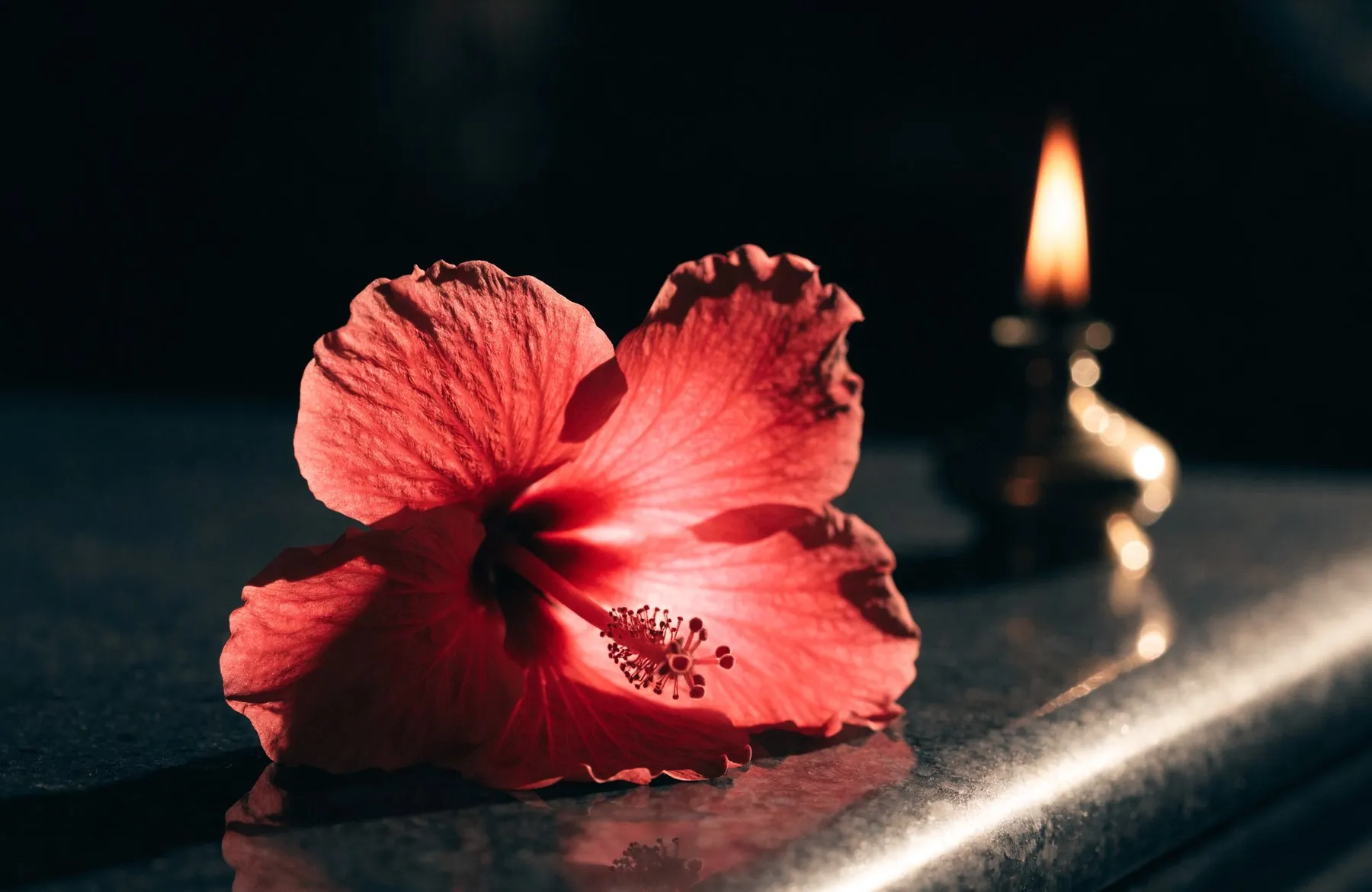
The red hibiscus is Kali’s flower. The colour is not an accident.
3. The Bengali story: a mother’s modesty
This is the version most Hindus grow up with, and it is beloved for good reason.
Kali’s victory dance grows so wild it threatens to shatter the world. Shiva lies down in her path to stop her — and her foot comes down on her own husband’s chest.
And Kali — the destroyer of demons, the goddess before whom the universe trembles — is mortified. Her tongue flies out and she bites it, the exact gesture a woman of that time and place would make on committing an unthinkable social blunder. In Punjabi and Hindi households it is instantly recognisable: the oh no, what have I done face.
That is the moment the murti freezes. The most powerful being in existence, caught in a flash of pure embarrassment, because she loves him.
It is worth saying plainly that this reading is a later, regional devotional tradition — Bengali and Odia in origin — rather than something the ancient texts state. Scholars point that out, and they are right. But that has never made it less true for devotees, and it may be the most tender thing in all of Hindu iconography.
Why we don’t pick one
Newcomers often want the “real” answer. Hinduism rarely works that way.
The tongue is the Mother’s ferocity and her mastery and her tenderness — because Kali is all of those at once. A tradition confident enough to hold three meanings in one image is not being vague. It is being accurate about something too large for one meaning.
Come and look for yourself. Maa Kali’s murti stands at our mandir in Willenhall, West Midlands. Plan your visit — or read who Maa Kali is and why she stands on Shiva.