Shrine of the mandir
Hanuman Ji हनुमान
The greatest of devotees — strength without limit, because devotion without limit.
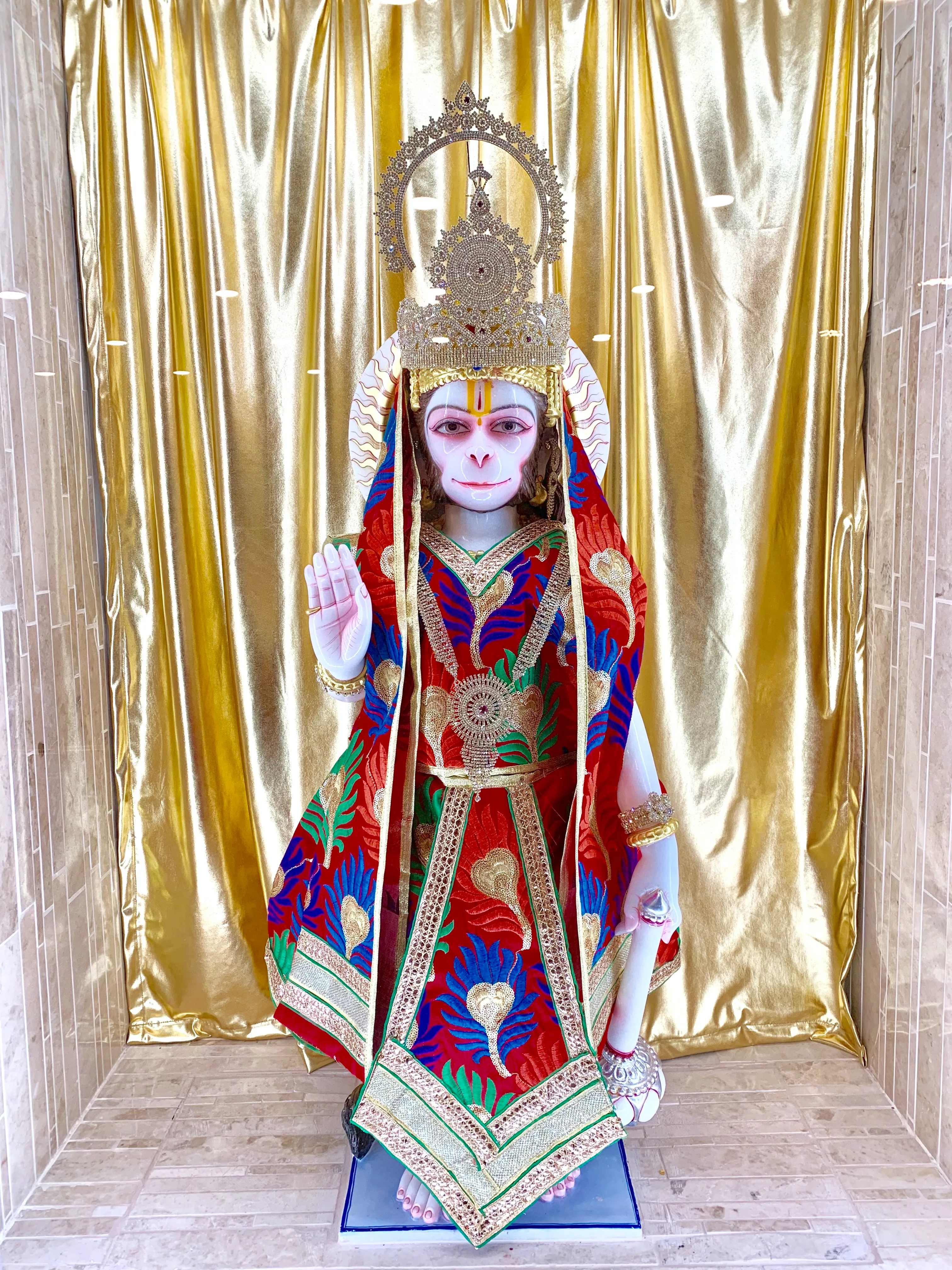
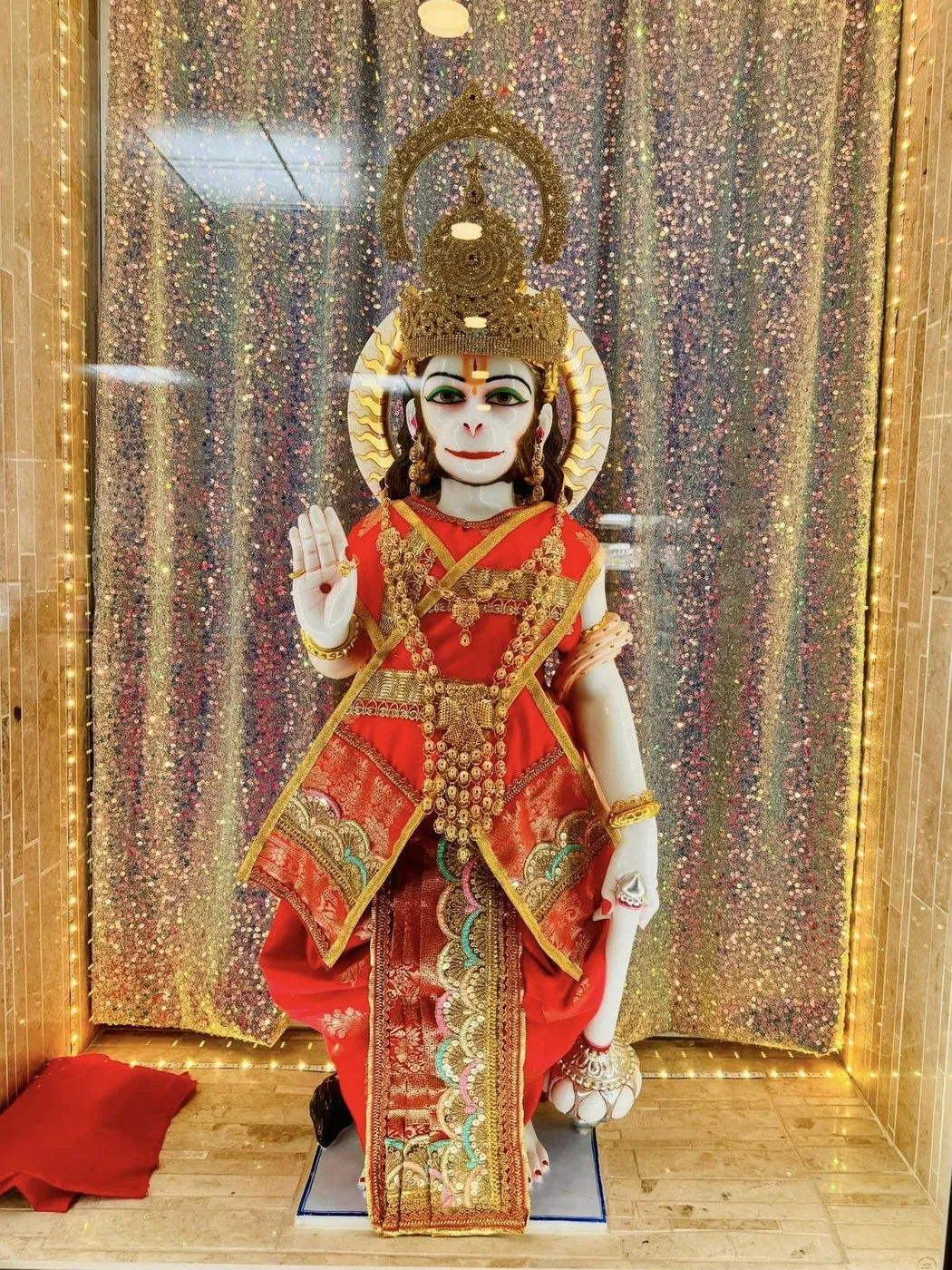
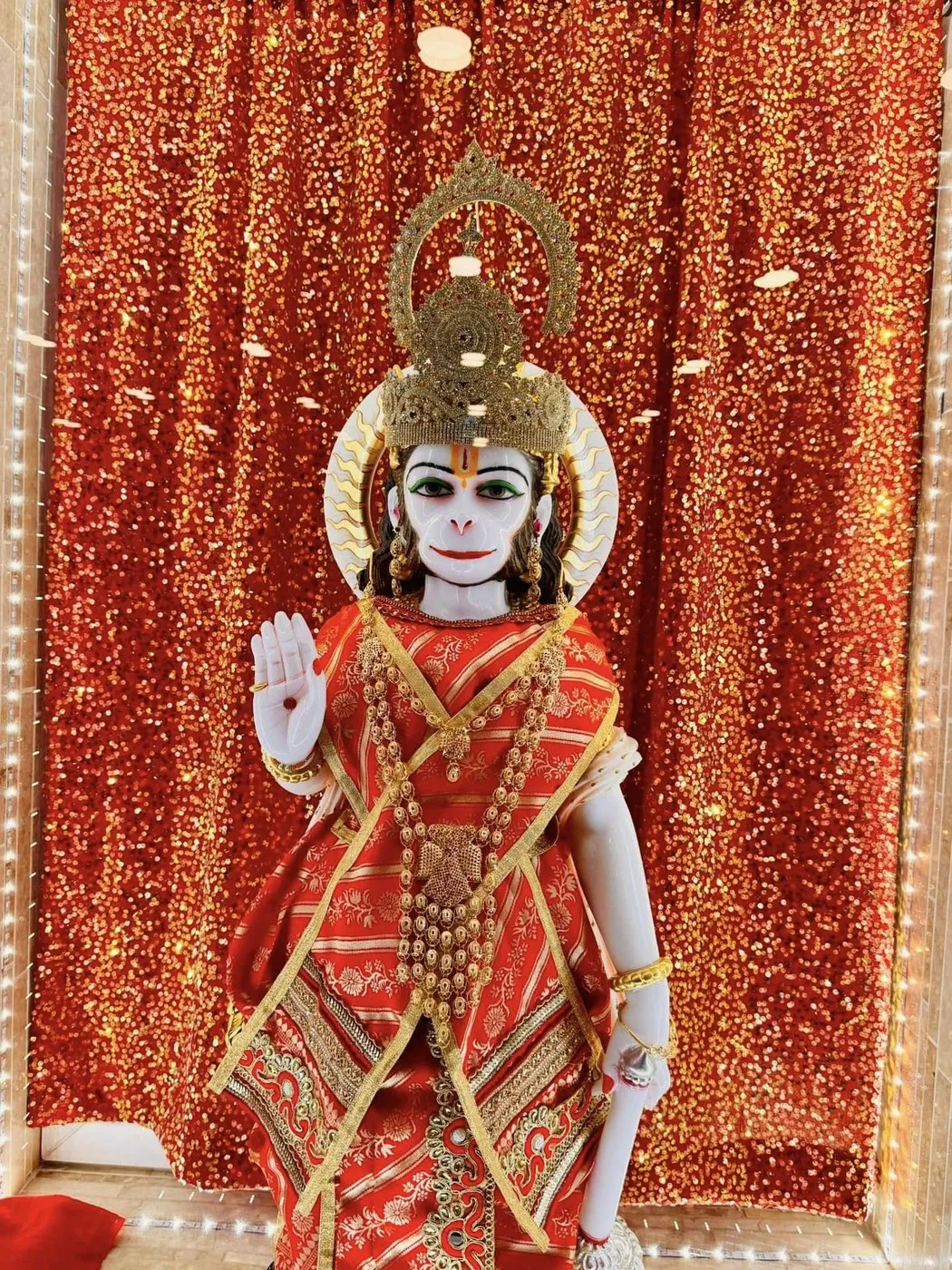
Standing in red and gold, mace in hand — Hanuman Ji, the greatest devotee who ever lived, and the proof of what devotion makes possible.
Who he is
Hanuman is the son of Vayu, the wind, and the hero of the Ramayana’s most beloved chapters — the devotee whose service to Shri Ram knew no limit, and therefore neither did his strength. He leapt an ocean in a single bound, carried a mountain because the herb he needed grew somewhere on it, and tore open his own chest to show Ram and Sita enthroned in his heart.
The tradition’s teaching is precise: his strength is not beside his devotion — it flows from it. That is why he is called the greatest of bhaktas, and why the strong go to him to learn humility, and the frightened to borrow courage.
Reading his form
- The mace (gada) — strength held ready, never swaggered.
- The folded hands or the leap — service and daring, his two postures.
- The open chest — Ram and Sita in his heart: devotion as identity itself.
- The red and orange — sindoor, offered to him in love; the story tells he covered himself in it on learning it was dear to Ram.
- The monkey face — the humblest of forms carrying the mightiest of spirits; pride has nothing to hold onto.
Hanuman at our mandir
His days are Tuesday and Saturday, when devotees recite the Hanuman Chalisa — forty verses traditionally attributed to Tulsidas, and perhaps the most-known text in any Punjabi Hindu home. Group Chalisa paths and the Sunderkand — the beautiful chapter of his leap, sung for courage and the resolution of troubles — are arranged by our priest through the year.
Hanuman Jayanti, his appearance day, is kept by our tradition at Chaitra Purnima (March–April; the date varies across regional traditions — see our events calendar for each year’s).
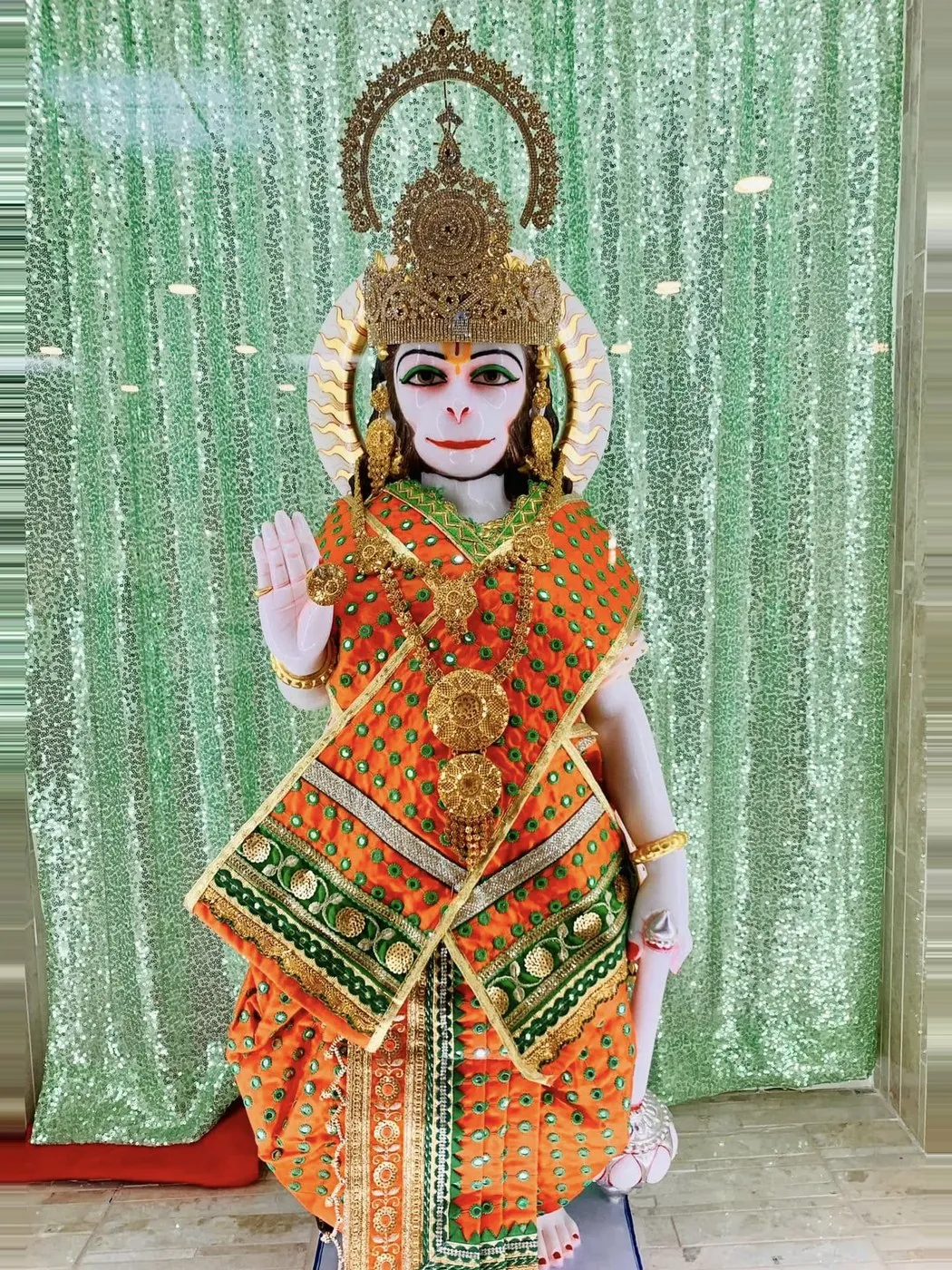
Before exams, before travel, before anything that needs a stout heart: Hanuman Ji. See his shringar — red and gold through the year.
Shringar
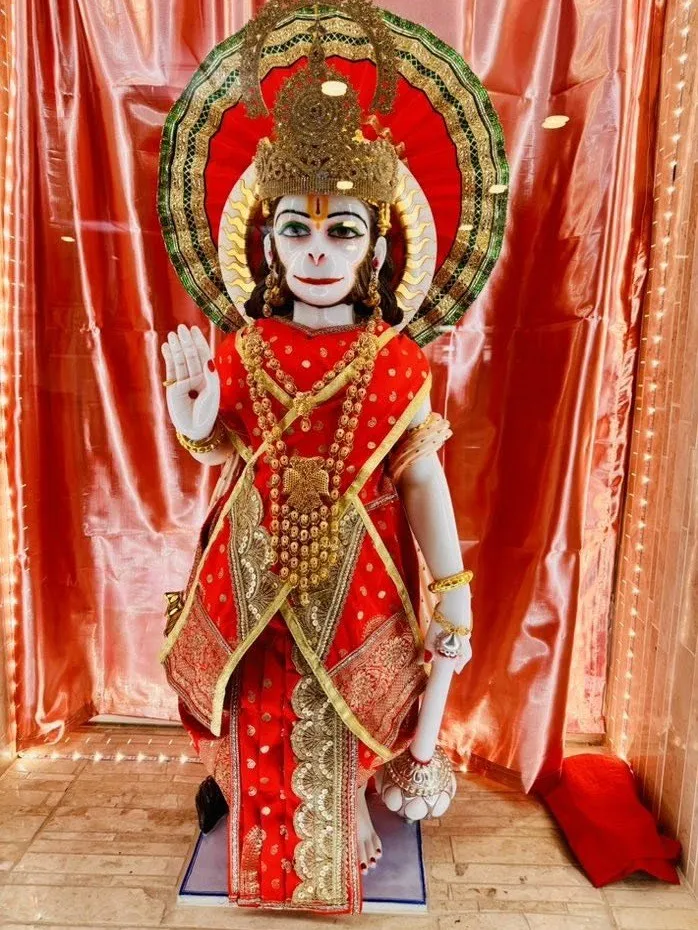
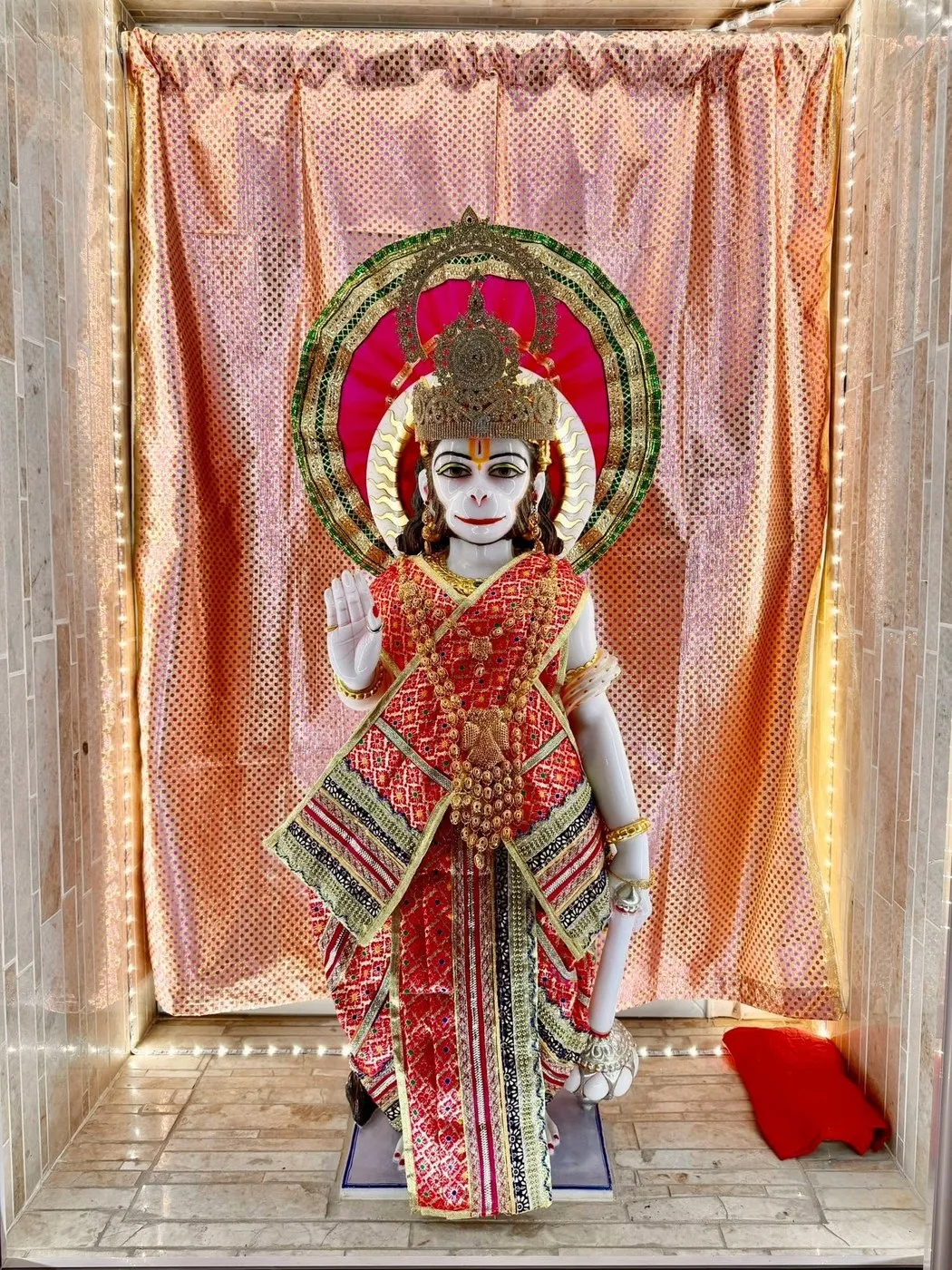
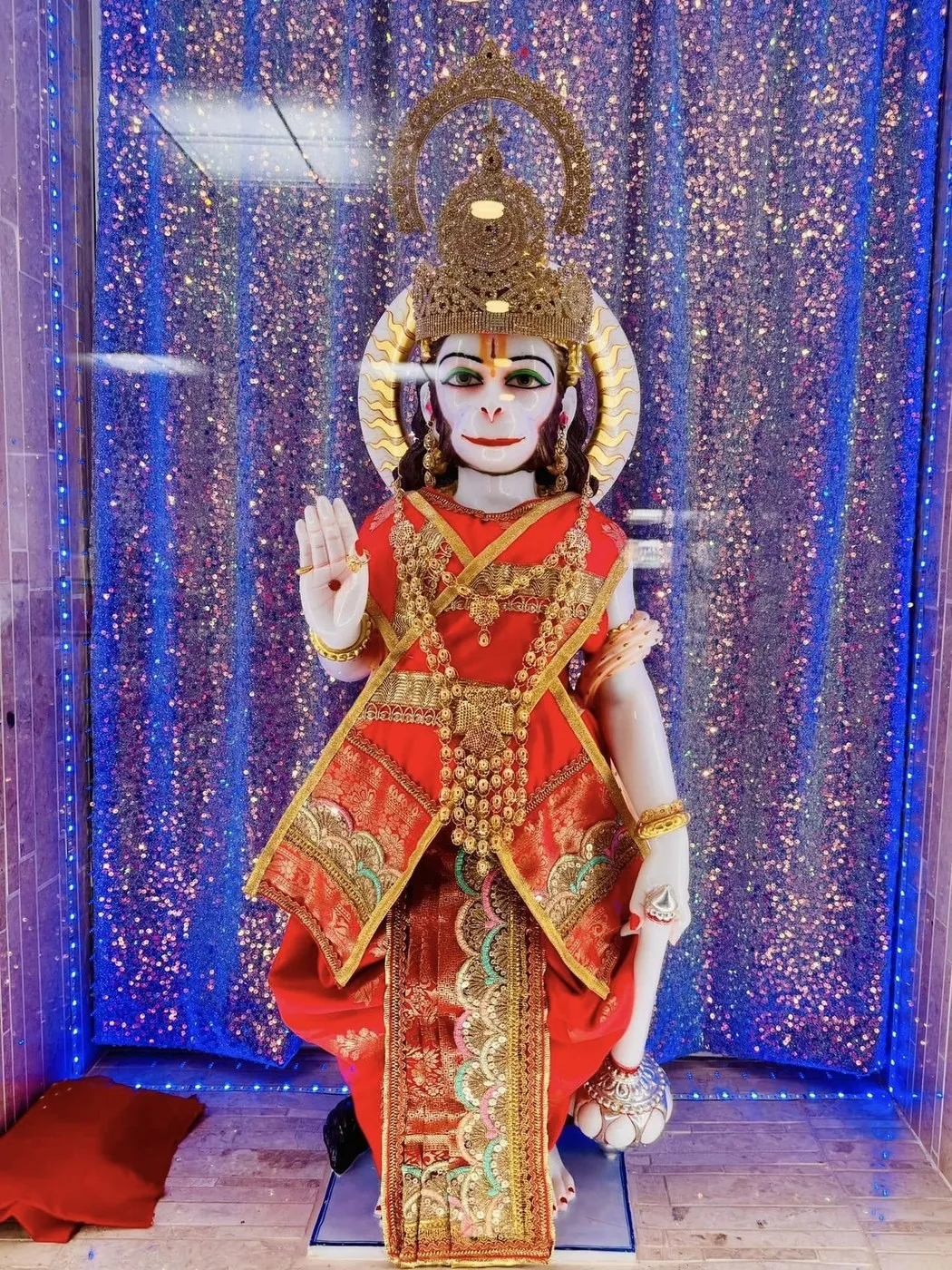
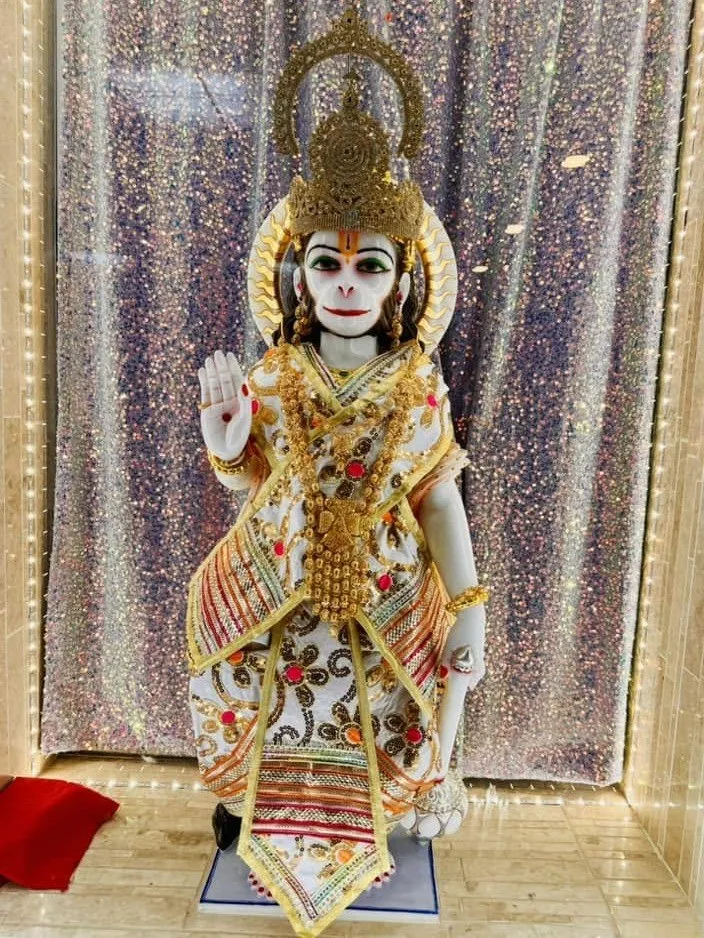
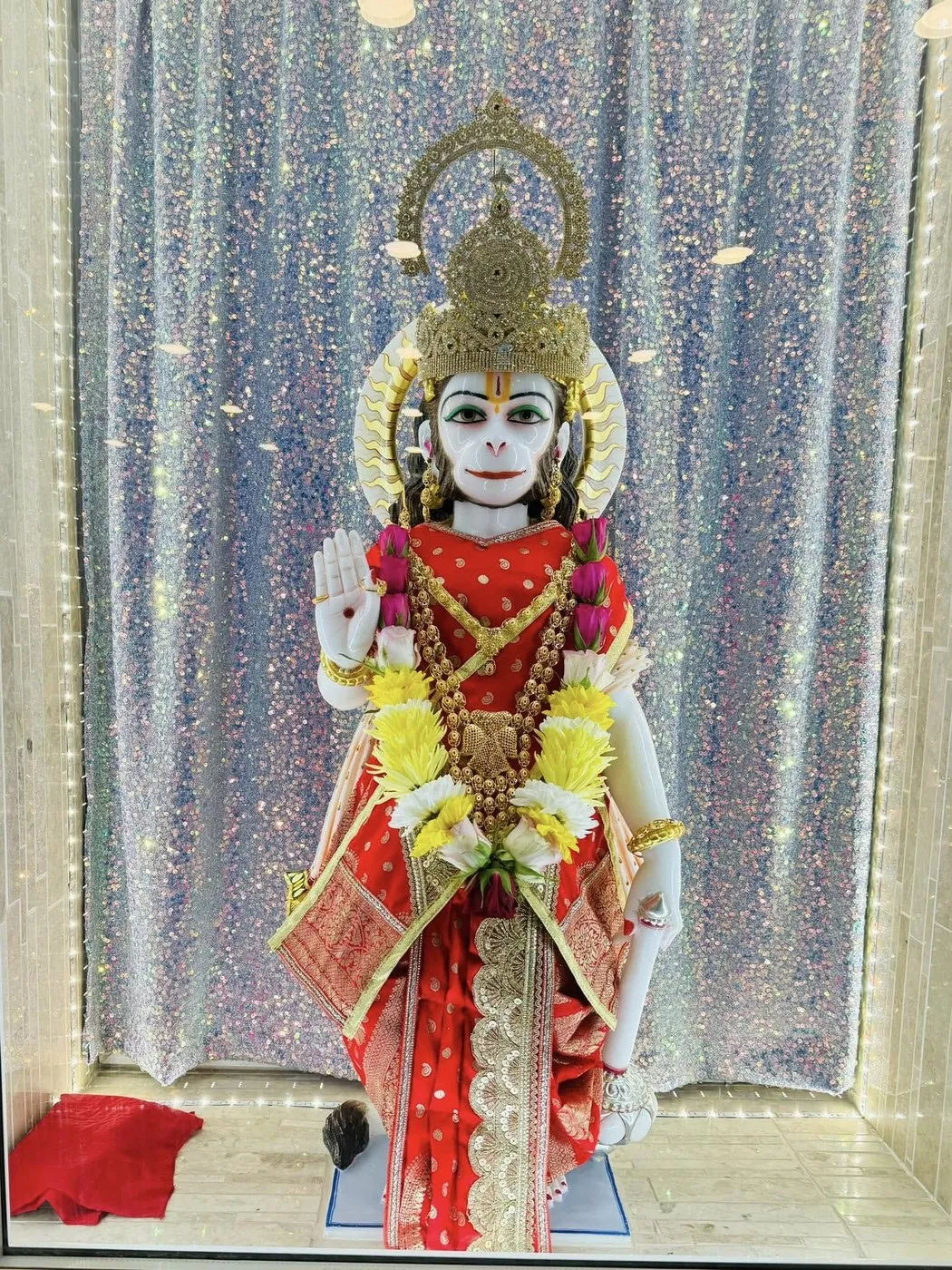
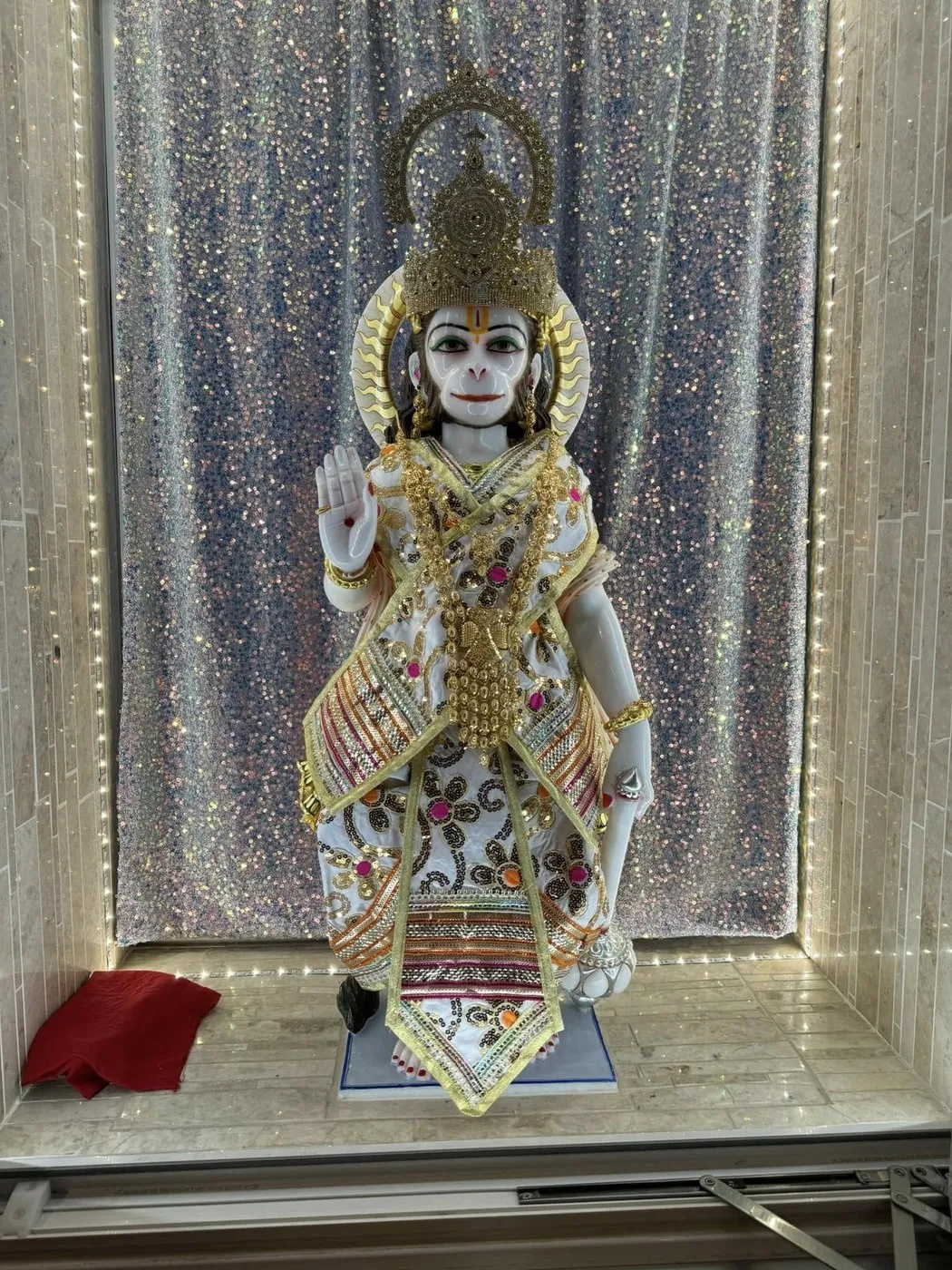
Hanuman Ji through the year
The same murti, dressed anew through the year. See the full gallery on Maa's Shringar.
9 shringar
Questions people ask
Why is Hanuman so strong?
Because his devotion is so complete. Hanuman is the son of the wind with immeasurable strength — but the tradition is exact about its source: every power he has flows from his love for Shri Ram. Where his devotion is total, nothing is impossible; the famous image of him tearing open his chest shows Ram and Sita enthroned in his heart.
What is the Hanuman Chalisa?
Forty verses in his praise, traditionally attributed to the poet-saint Tulsidas — probably the most recited devotional text in North India. Devotees sing it for courage, protection and steadiness of mind; many of our sangat know it entirely by heart, and group recitations of 11, 21 or more Chalisas are arranged at the mandir.
When is Hanuman Jayanti?
It depends on regional tradition — North India and the Punjabi tradition generally keep it at Chaitra Purnima (March–April), while South Indian traditions keep other dates. Our mandir follows the North Indian reckoning; see our events calendar for each year's date.
Go deeper
One God, or many? Understanding Hindu deities
Are Hindus polytheistic? The honest answer to the question every visitor asks — and why the question itself is shaped by the wrong assumptions.
Read →What happens at a Mata Ka Jagran?
An all-night vigil in praise of the Mother — hour by hour, what actually happens at a jagran, and the difference between a jagran and a mata ki chowki.
Read →