In his own shrine, beside the Navagraha
Shani Dev शनि देव
The stern but just Lord of Saturn — who gives every soul exactly what it has earned.
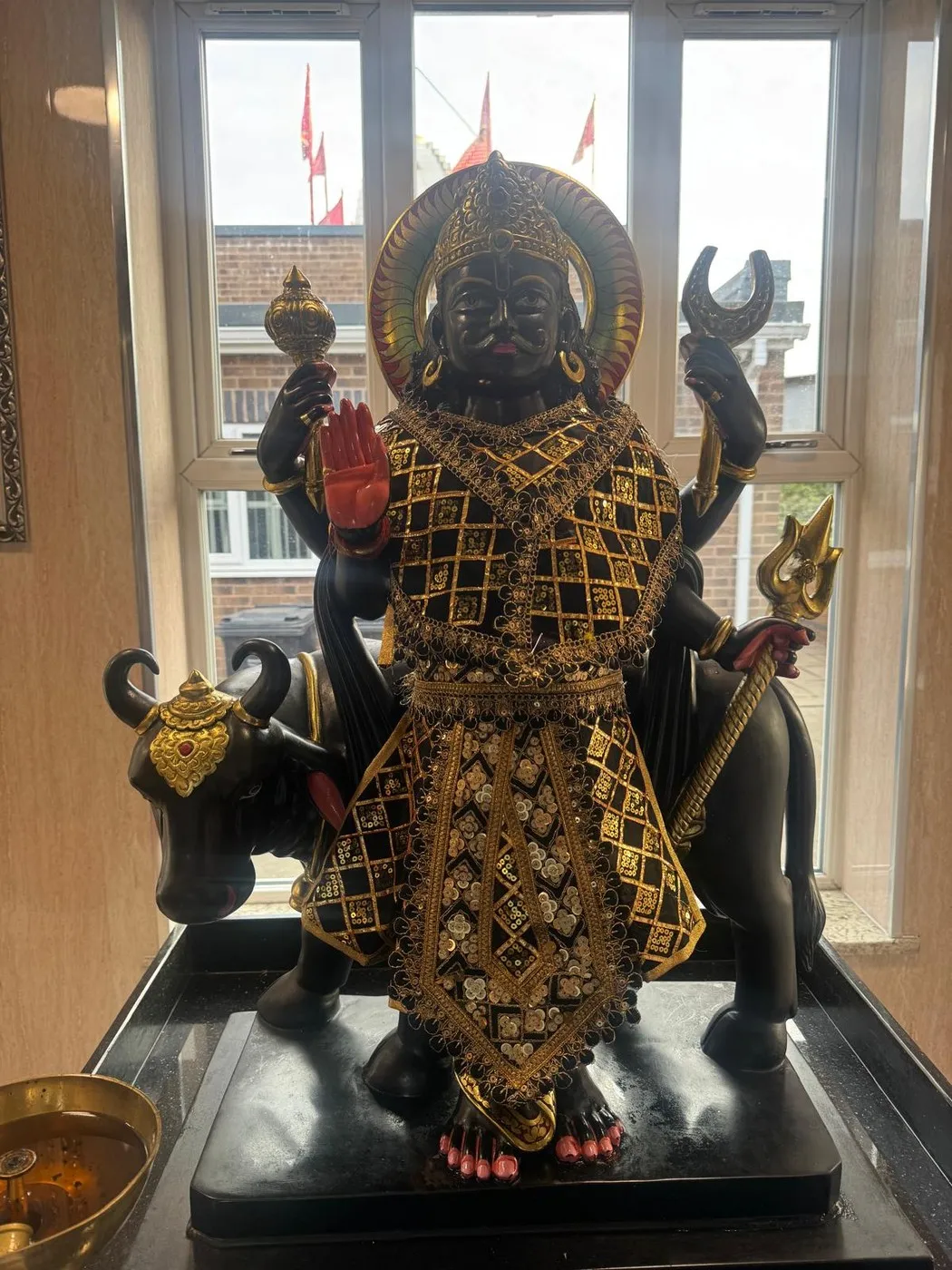
In his own shrine stands Shani Dev — dark as iron, crowned and four-armed, seated with his buffalo beside him. He is the graha of Saturn, the sternest and most misunderstood of the nine planets, and among the most faithfully visited murtis in any mandir.
Who he is
Shani is one of the Navagraha, the nine celestial powers of Hindu tradition, and he governs Saturn — the slow planet, the far planet, the cold one. In the Puranas he is the son of Surya Dev, the sun, and of Chhaya, the shadow; the boy born of light and shade alike.
He is the karmaphaladata — the giver of the fruits of action. This is the whole of him. Shani does not invent misfortune, and he cannot be flattered or bribed into leniency. He returns to each soul precisely what that soul has earned, no more and no less. That is why he is feared, and why the wise love him: there is no god in the tradition more perfectly fair.
His period in a life is spoken of as heavy — the famous Sade Sati. But those who have come through it will tell you it stripped away what was borrowed and left behind what was truly theirs. Shani is the teacher nobody wants and everybody needs.
Reading his form
- His dark complexion — the colour of iron, of shadow, of the slow cold distance of Saturn. Not evil; simply unsparing.
- The mace (gada) — the weight of consequence. What is owed will fall.
- The trishul beside him — his authority, held in the tradition of the great gods.
- The raised palm — even Shani gives abhaya, the gesture of “do not be afraid.” It is the most important thing in the image: the hard god still blesses.
- The buffalo — his vahana, patient, immovable, slow-moving as Saturn itself. (He is also shown with a crow.)
- His lowered gaze — tradition tells that his drishti is so potent he keeps his eyes turned aside. Power under restraint.
Shani Dev at our mandir
Saturday — Shanivar — is his day, and it is when devotees most often come to him. The traditional offerings are mustard or sesame oil, black sesame seeds, and dark blue or black flowers; many light a lamp with sesame oil before him.
There is one offering he is said to value above all the others, and it costs nothing to understand: giving to those who have least. Shani is the graha of the overlooked and the labouring, and service to the poor in his name is held to please him more than any ritual. In a mandir that serves free langar every week, that is not an abstract idea.
If you are troubled about Sade Sati or a difficult period, our Pandit Ji offers traditional guidance privately and without drama. And whether or not you know a single mantra, you are welcome simply to stand before him. Shani asks for honesty, not expertise.
Beside him stand the Navagraha — the nine grahas of which he is one — and his father Surya Dev is enshrined here too.

Shringar
Shani Dev through the year
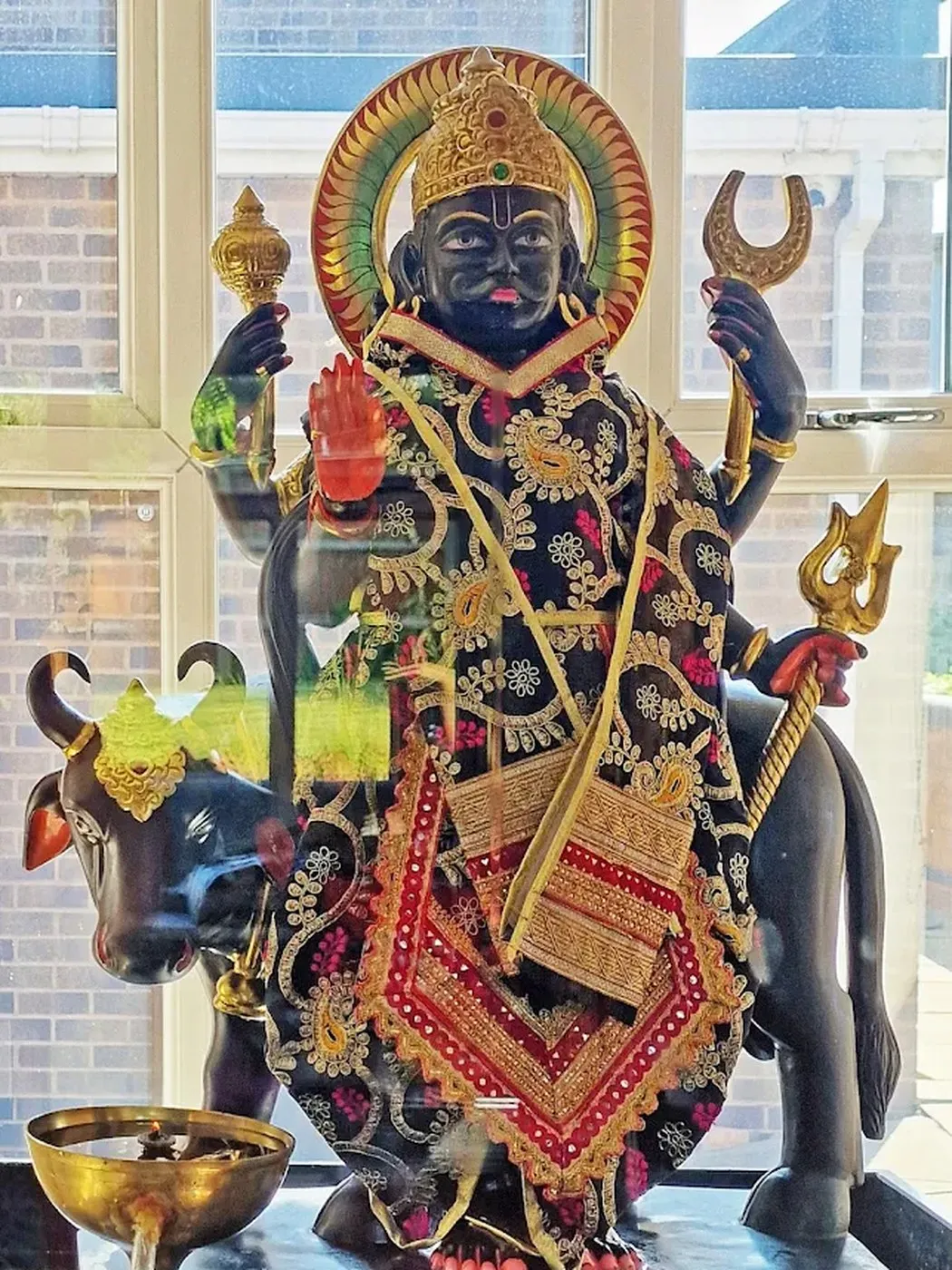
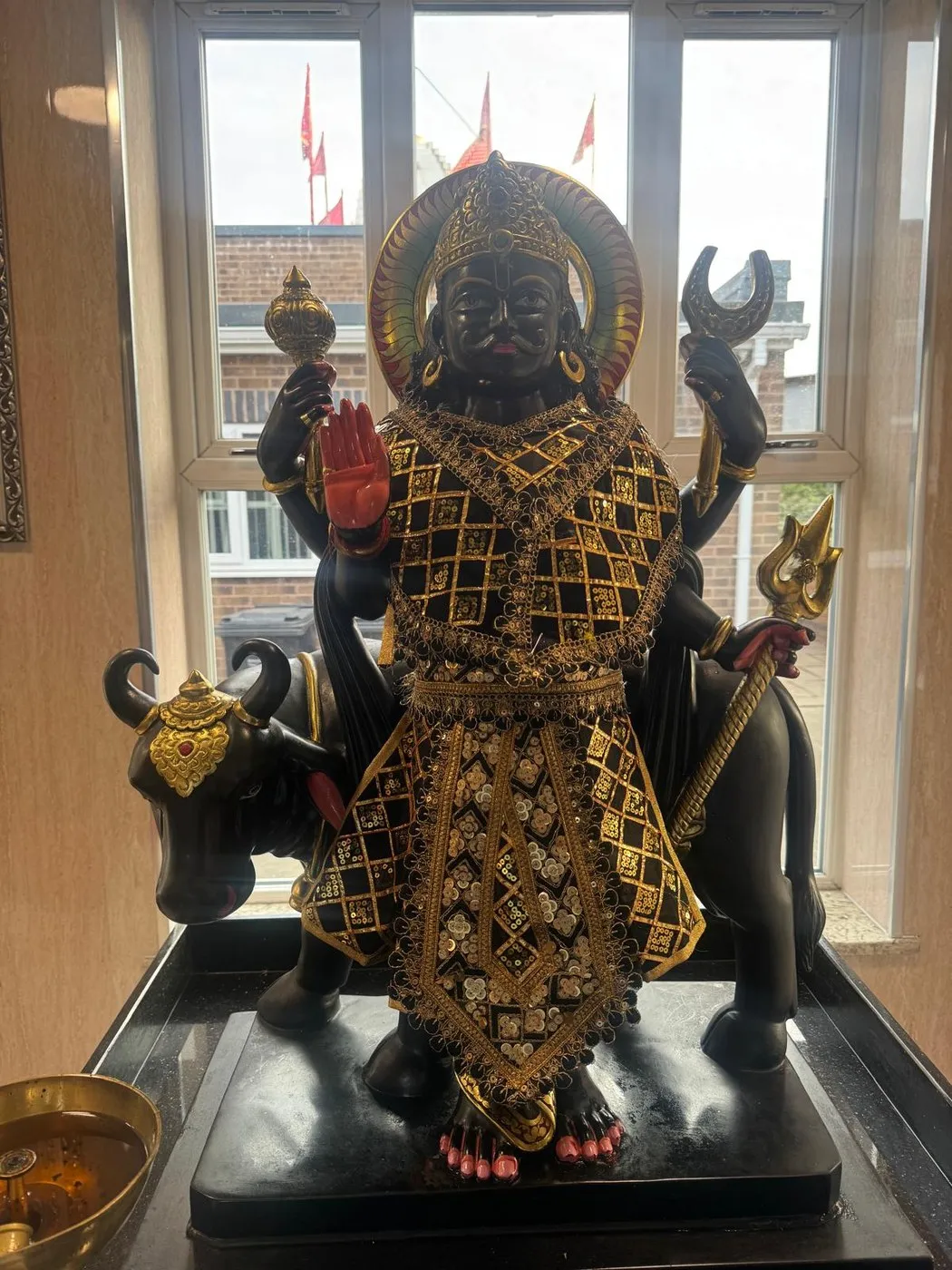
The same murti, dressed anew through the year. See the full gallery on Maa's Shringar.
2 shringar
Questions people ask
Is Shani Dev a bad or unlucky god?
No. Shani is not evil and he is not out to harm anyone — this is the most common misunderstanding about him. He is the judge of the Navagraha, the one who returns to each soul the exact fruit of its own actions. His difficulty is the difficulty of honest accounting. Devotees who have been through his period often say afterwards that it was the making of them: he takes away what was never truly ours and leaves what is real.
What is Sade Sati?
Sade Sati is the roughly seven-and-a-half year span when Saturn transits the signs before, on and after your moon sign. It is widely spoken of with dread, but tradition treats it as a period of testing and maturing rather than punishment. If you are concerned about it, speak to our Pandit Ji — he offers traditional guidance privately, and will tell you honestly that character and conduct matter more than any transit.
How should I worship Shani Dev at the mandir?
Saturday is his day. Devotees traditionally offer mustard or sesame oil, black sesame seeds, and blue or black flowers, and light a lamp with sesame oil. Many offer to the poor in his name — Shani is especially pleased by service to those who have least. Simply standing before him with an honest heart is welcome; no elaborate ritual is required. Ask a sevadar if you would like to be shown.
Why does Shani look away, and why is his gaze feared?
Tradition holds that Shani's gaze (drishti) is so powerful that what it falls upon is changed. In many tellings he keeps his eyes lowered out of restraint, not malice — a god so strong he must be careful where he looks. It is a striking idea: the discipline of power held back.
What is his connection to Surya Dev?
Shani is the son of Surya Dev, the sun — and the two are famously estranged in the Puranas, light and shadow, warmth and cold. Both are honoured here at the mandir, which devotees find fitting: a family reconciled in the same house of God.
Go deeper
What is darshan?
Darshan is the heart of Hindu worship — and it isn't quite what Western visitors expect. Not a service you attend, but a seeing that goes both ways.
Read →One God, or many? Understanding Hindu deities
Are Hindus polytheistic? The honest answer to the question every visitor asks — and why the question itself is shaped by the wrong assumptions.
Read →What is prasad?
Prasad is food offered to God and returned as blessing — why it's given, how to receive it, and what to do about allergies.
Read →