Shrine of the mandir
Shiv Parivar शिव परिवार
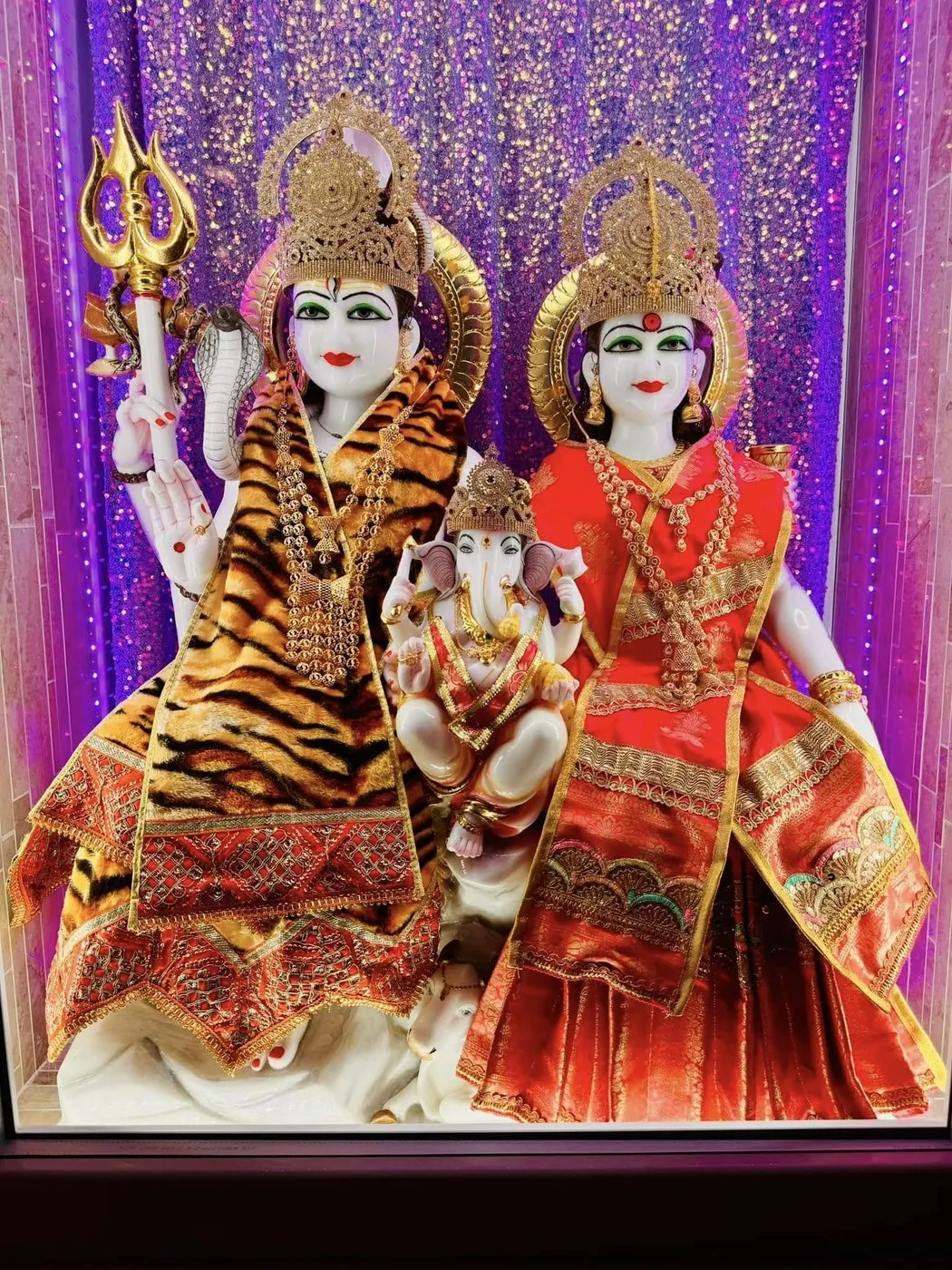
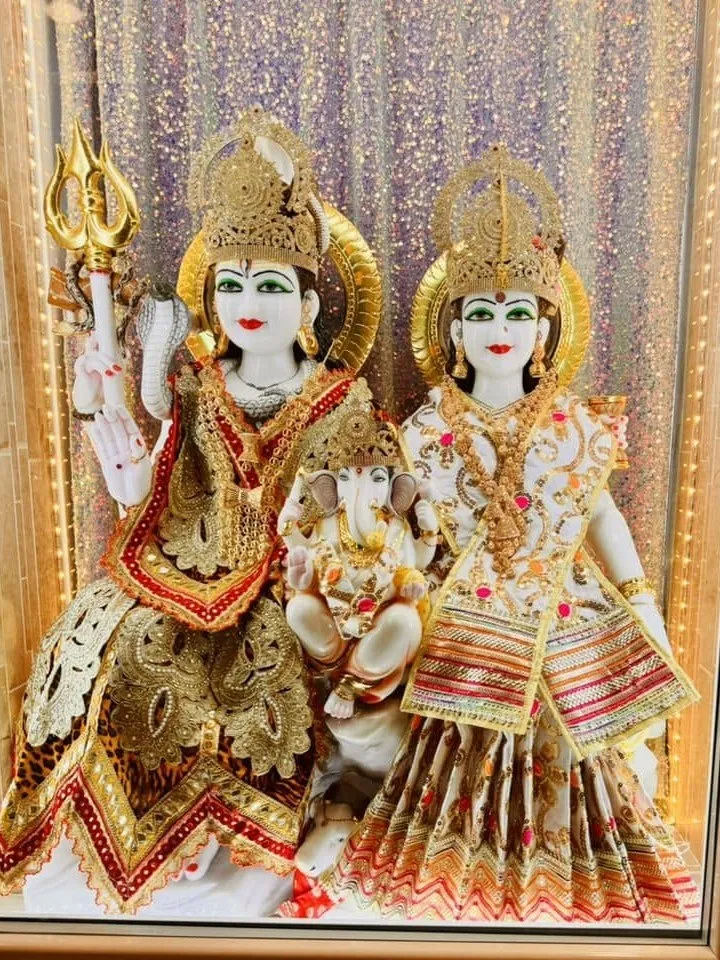
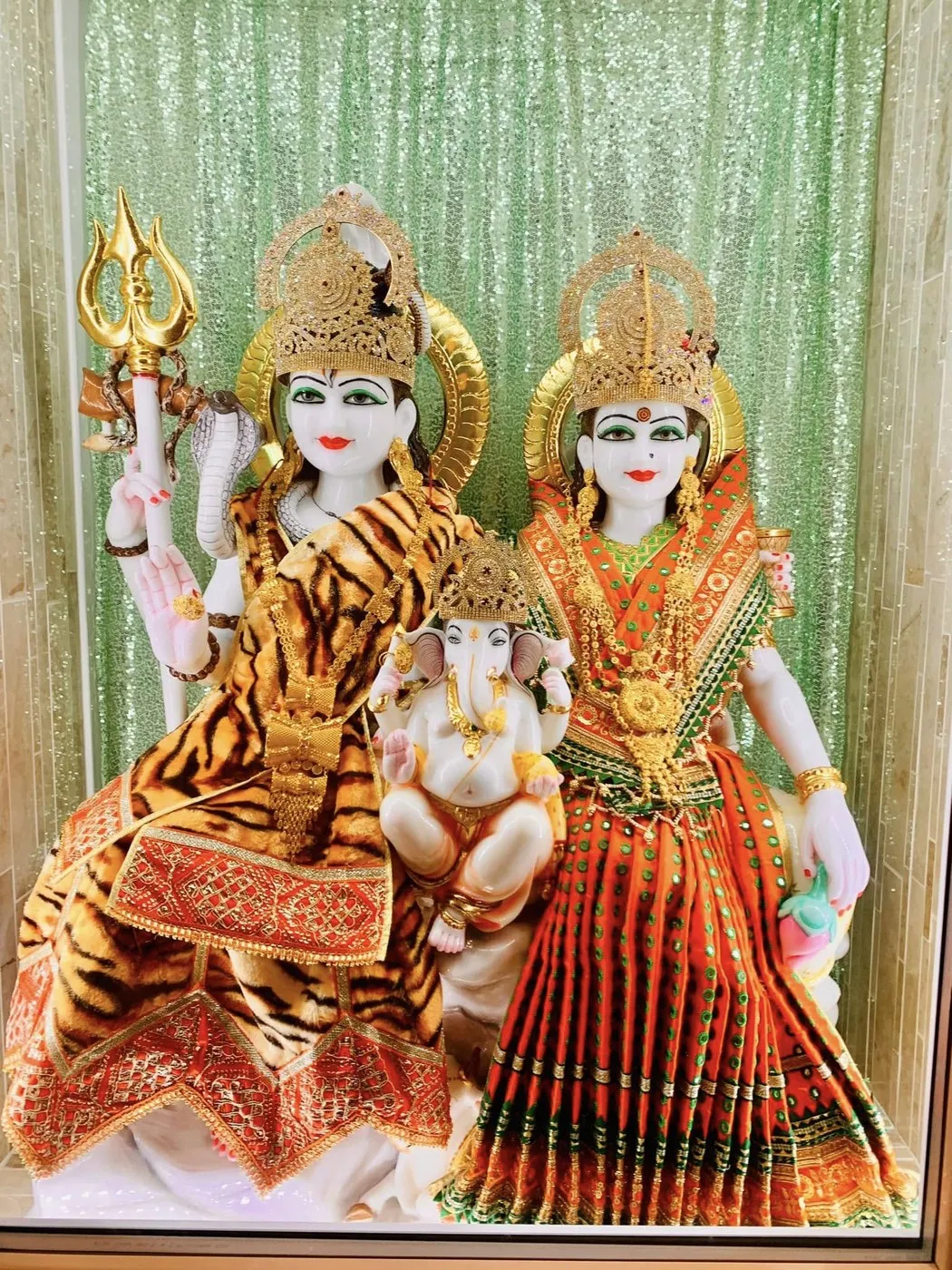
Shiv Ji with Maa Parvati and Ganesh — the divine family, with Nandi and the sacred Shivling.
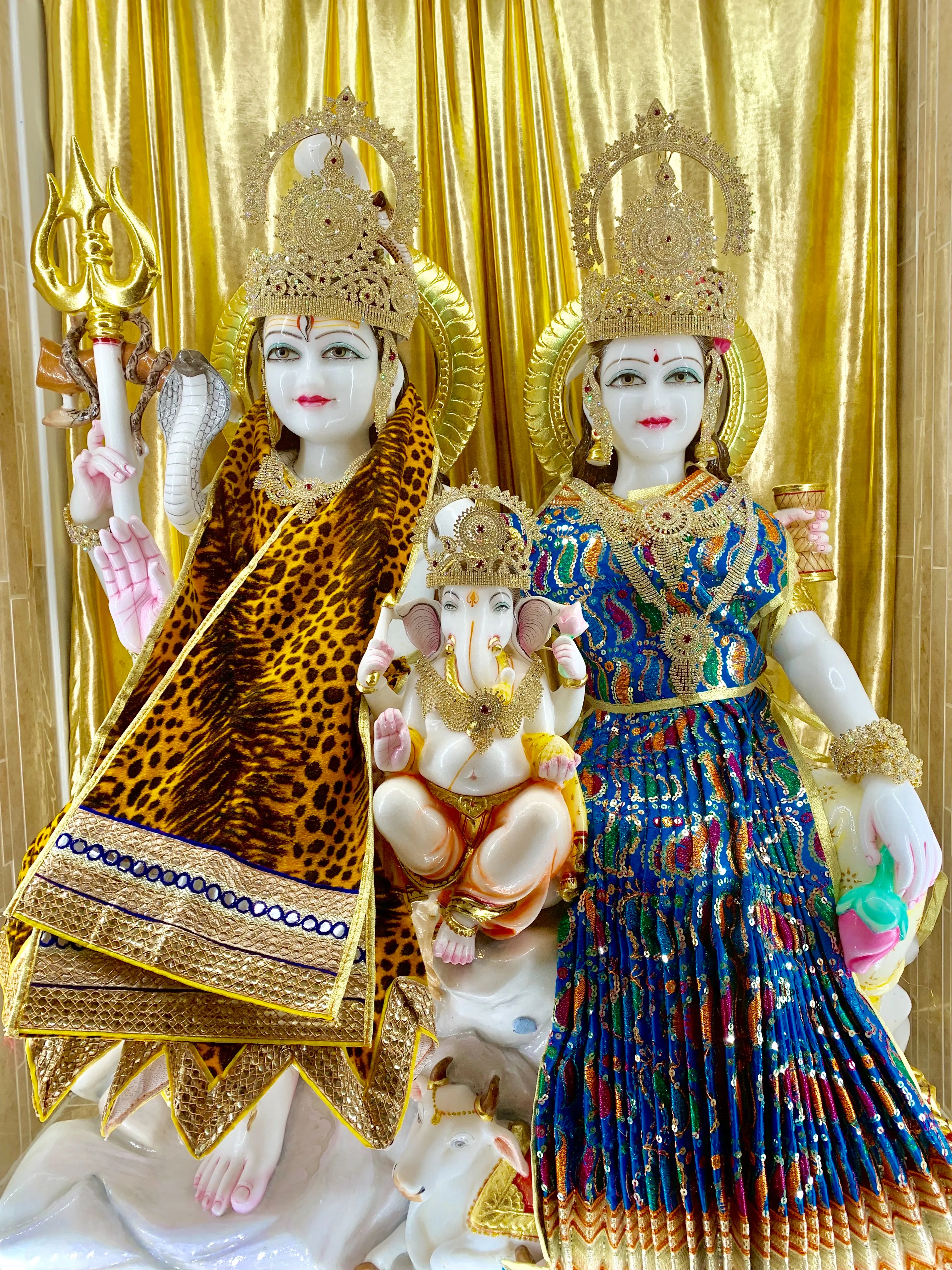
In the Shiv Parivar shrine stand Shiv Ji, Maa Parvati and Ganesh together — the divine family — with faithful Nandi before them and the sacred Shivling, washed daily in offering.
Who they are
Shiva is Mahadeva, the Great God — pure consciousness itself, the still ground upon which all power moves. In our Shakta tradition his relationship to the Mother is the deepest teaching in the mandir: Shiv and Shakti are inseparable, consciousness and its living energy, which is precisely what Maa Kali’s foot upon him expresses on our main altar.
Shown as Parivar — family, with Parvati at his side and Ganesh in their arms — he is the model of the divine household: ascetic and householder at once, the renunciant who is also the most devoted of husbands and fathers.
Reading the shrine
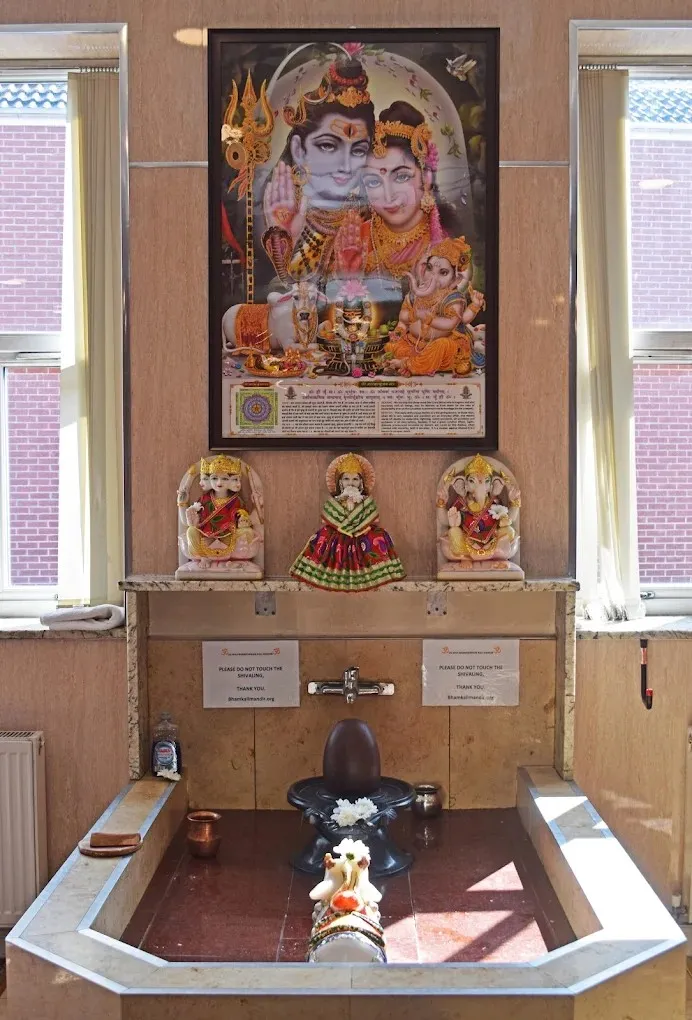
- The Shivling — the aniconic sign of the formless Absolute, honoured as a pillar of light. Worshipped by abhishek: water, milk, honey and bilva leaves poured in offering.
- The trishul — his trident, traditionally read as mastery over the three of everything: creation, preservation, dissolution.
- The damaru — the little drum whose beat, tradition says, sounded creation into being.
- The third eye — inward vision, which burns illusion when it opens outward.
- The crescent moon and the Ganga in his matted locks — time, and the river of grace, both held gently.
- The blue throat — Nilakantha: he drank the world’s poison to save it, and held it where it could harm no one.
- Nandi — the white bull who faces his lord forever: patient strength, and devotion that simply stays.
Shiv Parivar at our mandir
Milk may be offered on the Shivling at all times — devotees are warmly welcome to bring it. (Only the lighting of diyas directly before the Shivling is restricted, purely for fire-safety and insurance; the devotion itself we honour completely.)
His great night is Maha Shivaratri (February–March), kept with vigil and abhishek; his holiest month is Sawan (July–August), especially its Mondays, when jal abhishek is performed — our priest performs Rudrabhishek through the year. And Monday, all year round, belongs to Shiv Ji.
See the Shiv Parivar’s shringar — dressed and adorned with the same care as every murti in the mandir.
Shringar
Shiv Parivar through the year
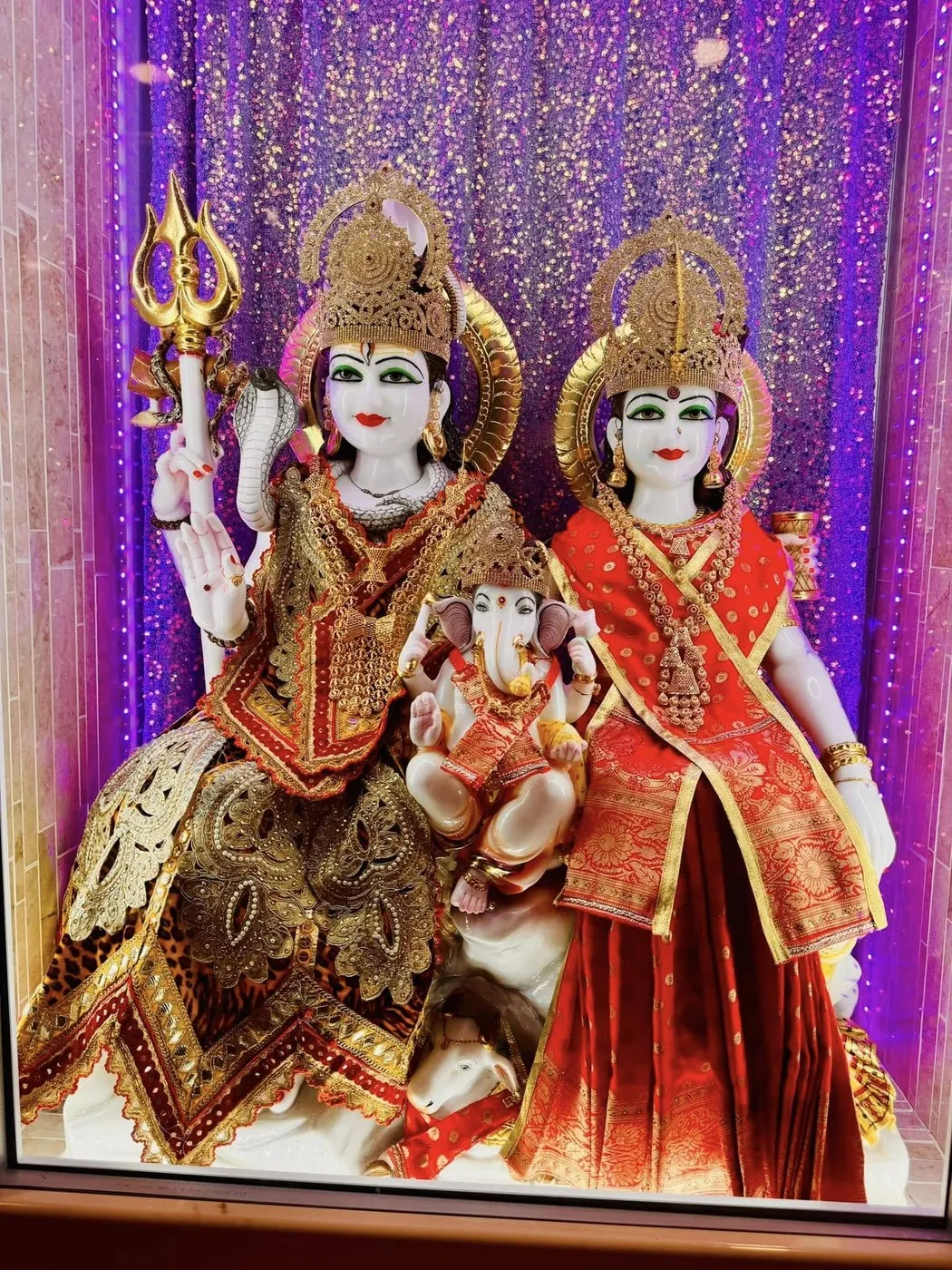
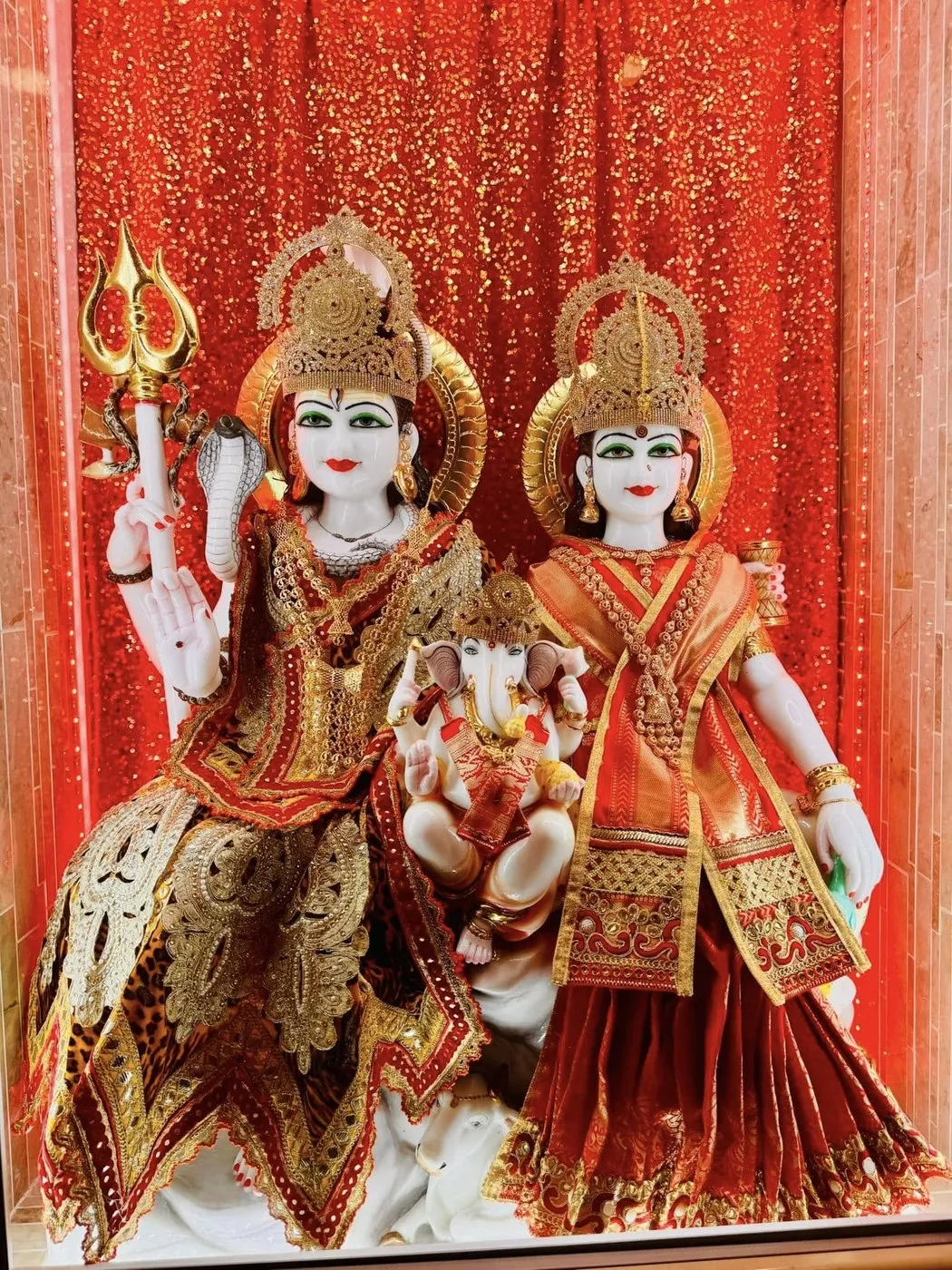
The same murti, dressed anew through the year. See the full gallery on Maa's Shringar.
5 shringar
Questions people ask
Can I offer milk on the Shivling?
Yes — milk may be offered on the Shivling at our mandir at all times, and we gladly support this tradition. The one restriction is lighting a diya directly in front of the Shivling, which is limited purely by fire-safety and insurance rules — never by any objection to the devotion itself.
What is the Shivling?
The Shivling is the aniconic emblem of Shiva — the form of the formless. The word linga means 'sign' or 'mark': it points to the Absolute that has no shape, honoured in tradition as a pillar of light without beginning or end. It is worshipped by abhishek — the pouring of water, milk and honey — rather than by image.
Why does Shiva wear ash and a serpent?
Shiva is the great renunciant: the ash of the cremation ground says that everything passing will pass, and he is not afraid of it. The serpent at his throat — stilled and worn as an ornament — is fear and death themselves, mastered. His third eye is inward vision; the crescent moon in his hair, time held gently.
Go deeper
Why does Kali stand on Shiva?
The image of Maa Kali standing on Shiva is Hinduism's deepest teaching about power and consciousness — plus the beloved story of the Mother who stopped in her tracks.
Read →Shaktism — worshipping God as Mother
Shaktism is the Hindu tradition that holds the Goddess to be ultimate reality itself. What Shaktas believe, where it comes from, and why a Kali mandir stands in Willenhall.
Read →Why Hindu festival dates are different in the UK
Your Indian calendar says one date; the UK mandir says another. Neither is wrong — here's why Hindu festival dates and timings genuinely differ in Britain.
Read →