Shrine of the mandir
Ganesh Ji गणेश
Lord of beginnings and remover of obstacles — worshipped first in every pooja.
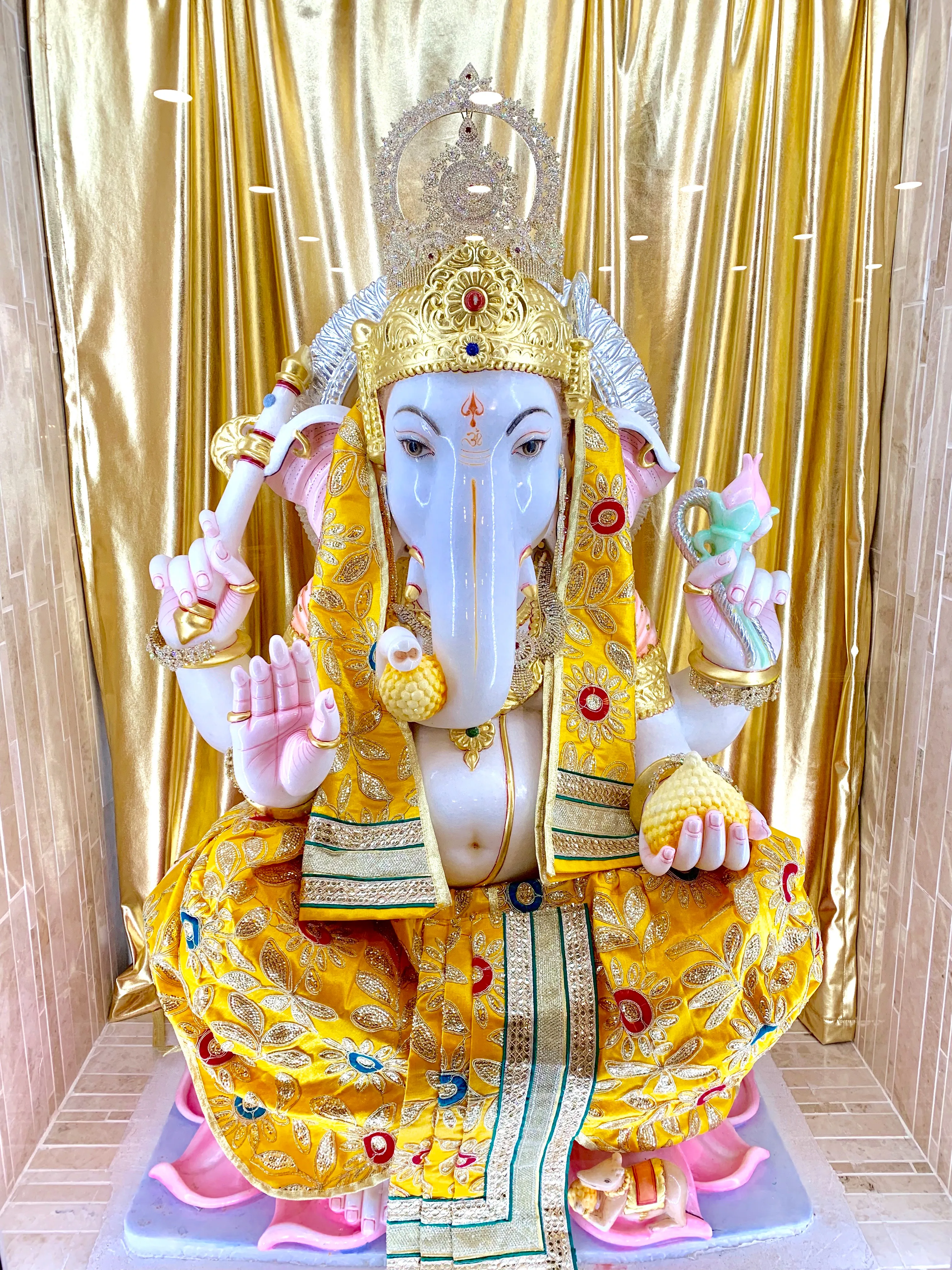
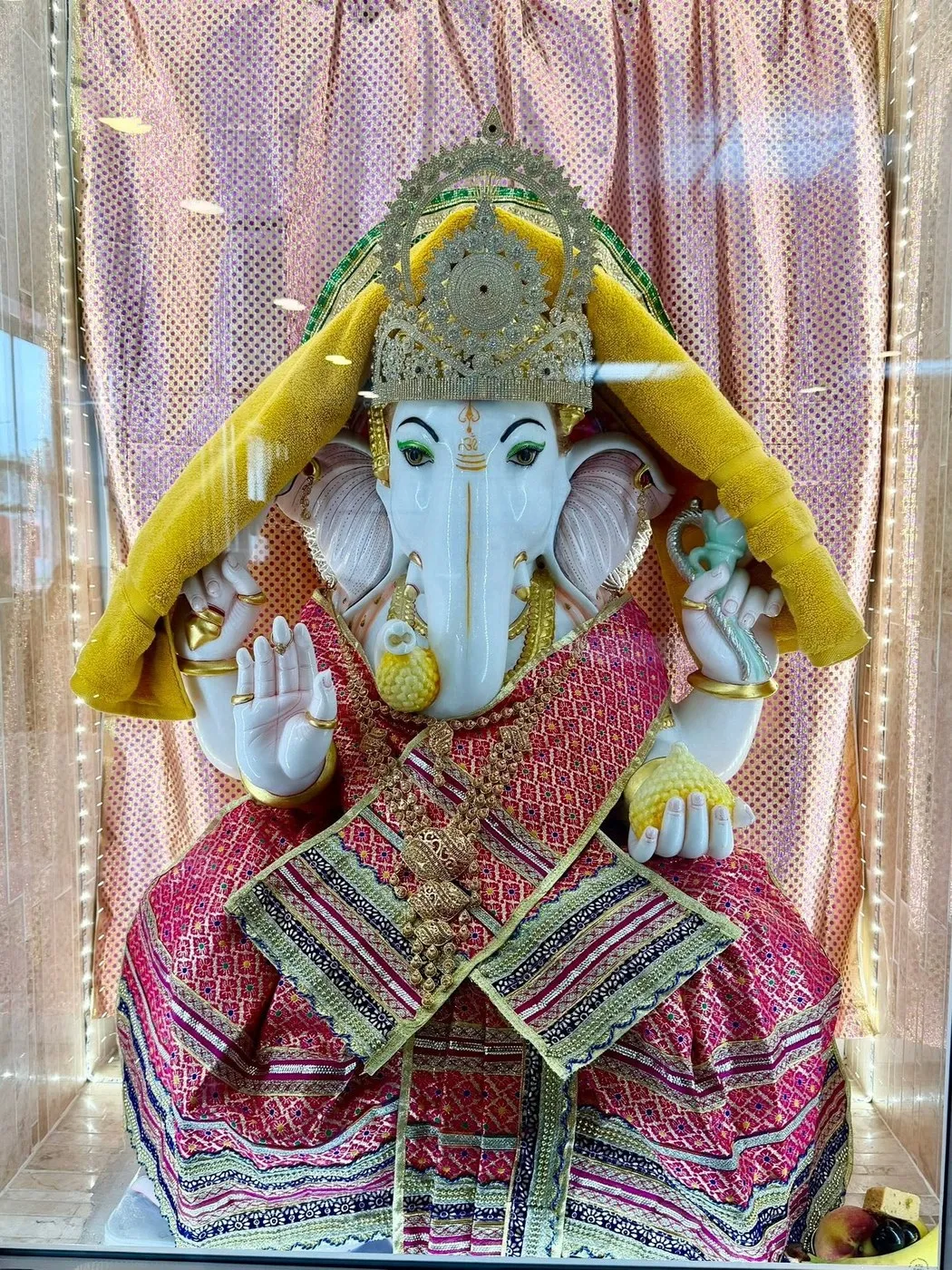
In his shrine, dressed in yellow silk, sits Ganesh Ji — the elephant-headed lord of beginnings, and the first deity honoured in every ceremony this mandir performs.
Who he is
Ganesh — Ganapati, Vinayaka — is the son of Shiv Ji and Maa Parvati, and the lord of beginnings and remover of obstacles. Nothing in Hindu life properly starts without him: not a wedding, not a griha pravesh, not a business, not a pooja to any other deity. His invocation asks one thing — let the way be clear — and the tradition also remembers, gently, that the same lord who removes obstacles may place one where we need to be checked.
He is the patron of wisdom and letters, beloved of scribes and students, and the most instantly recognised face in all of Hinduism.
Reading his form
- The elephant head — wisdom, memory, and ears that listen more than the mouth speaks.
- The broken tusk (Ekadanta) — most beloved of the stories: he broke it himself to keep writing the Mahabharata at Vyasa’s dictation. Knowledge was worth a tusk.
- The modak — the sweet he holds: the sweetness of the inner reward.
- The noose and goad — to catch what runs from us, and to prod what will not move.
- The mouse — his unlikely vahana: even the smallest creature can carry the greatest load, and the lord of obstacles rides the very animal that gnaws through them.
- The pot belly — a universe of experience, digested with equanimity.
Ganesh at our mandir
Every ceremony our priest performs — from naamkaran to weddings to griha pravesh — opens with Ganesh pooja. His festival, Ganesh Chaturthi, falls in Bhadrapada (August–September) and runs up to ten days, closing with visarjan.
Devotees honour him especially on Wednesdays, and before anything new: an exam, a journey, a house, a marriage. Come and see him — and his shringar through the year — any day the mandir is open.
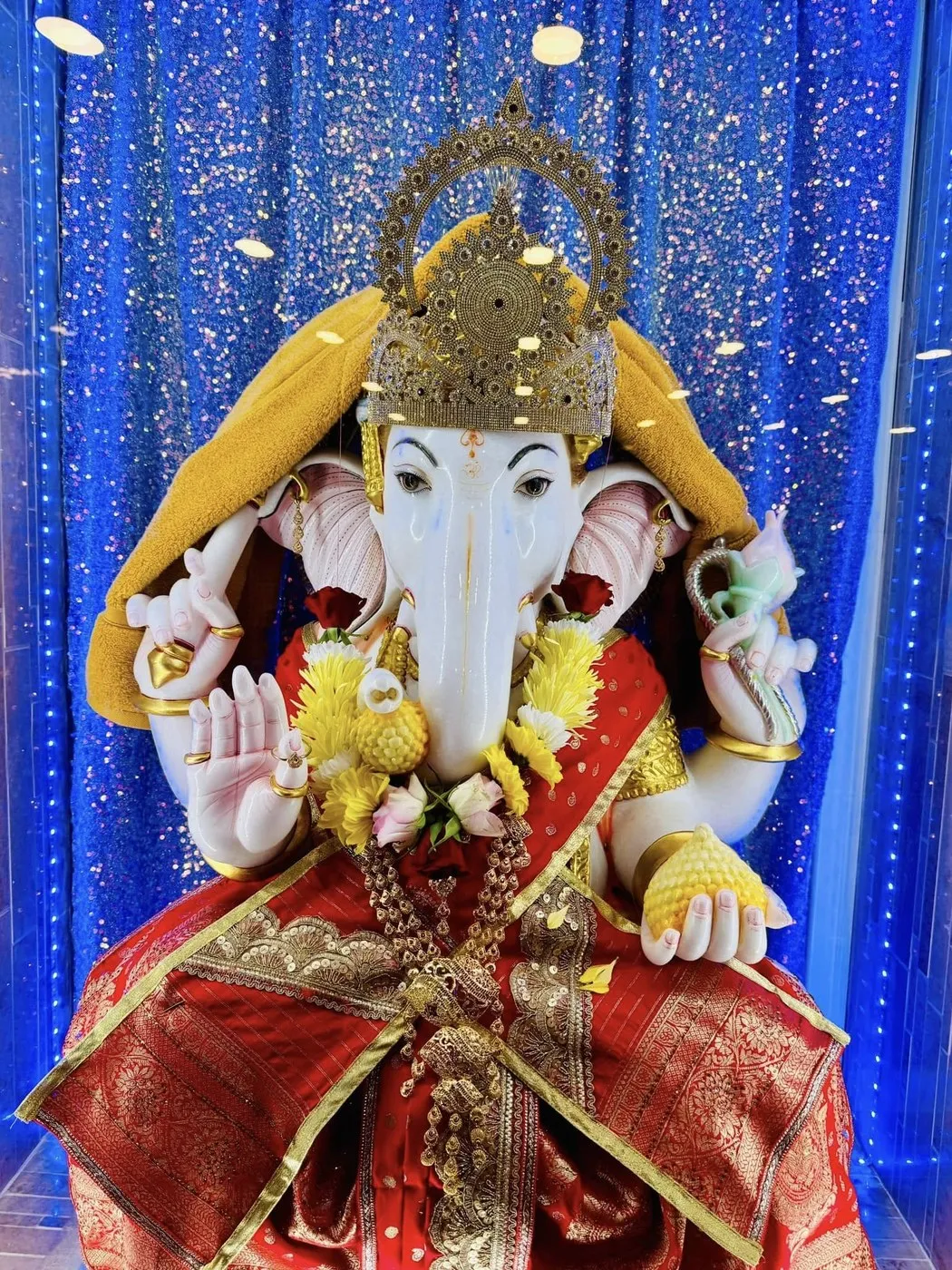
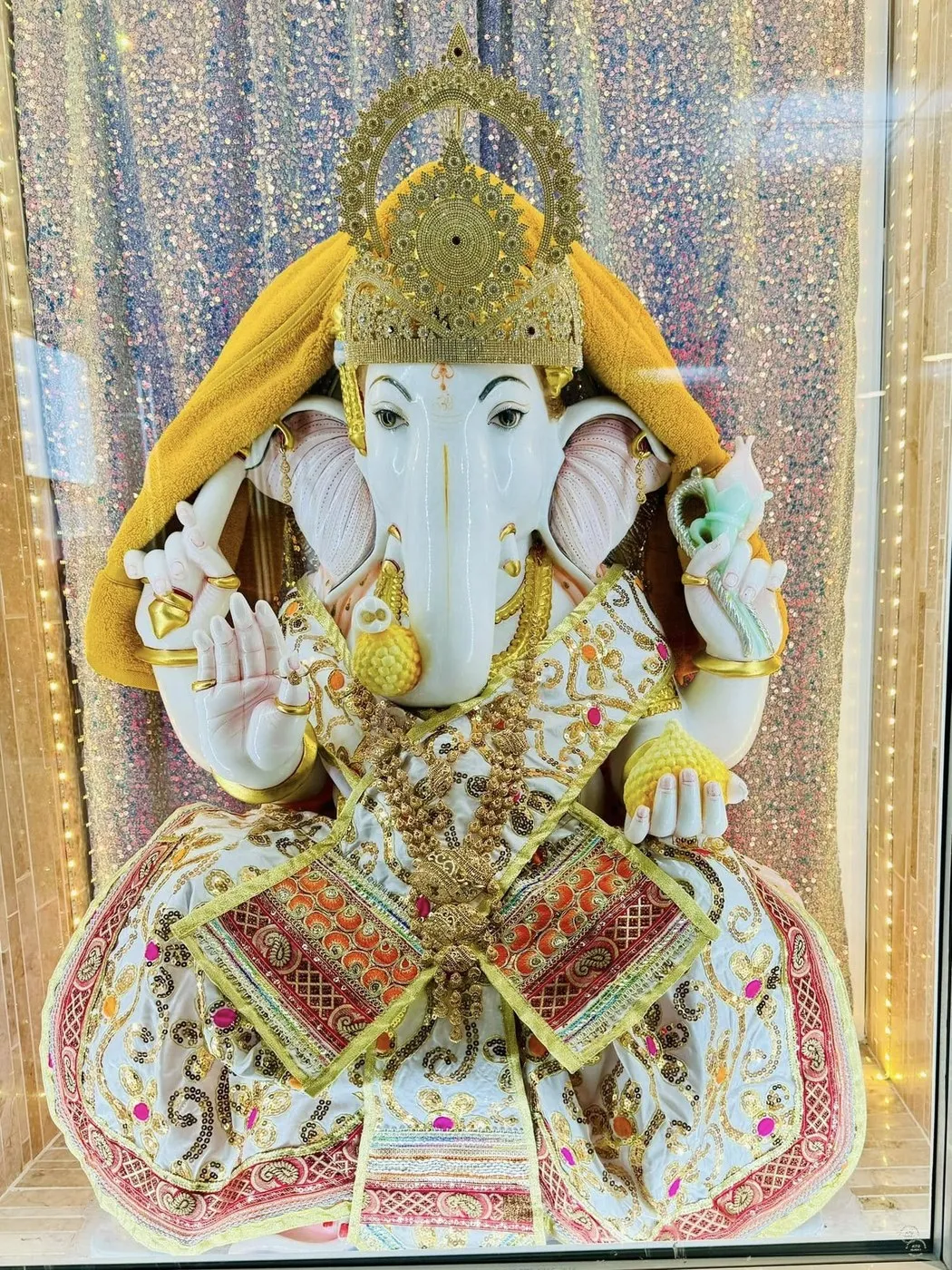
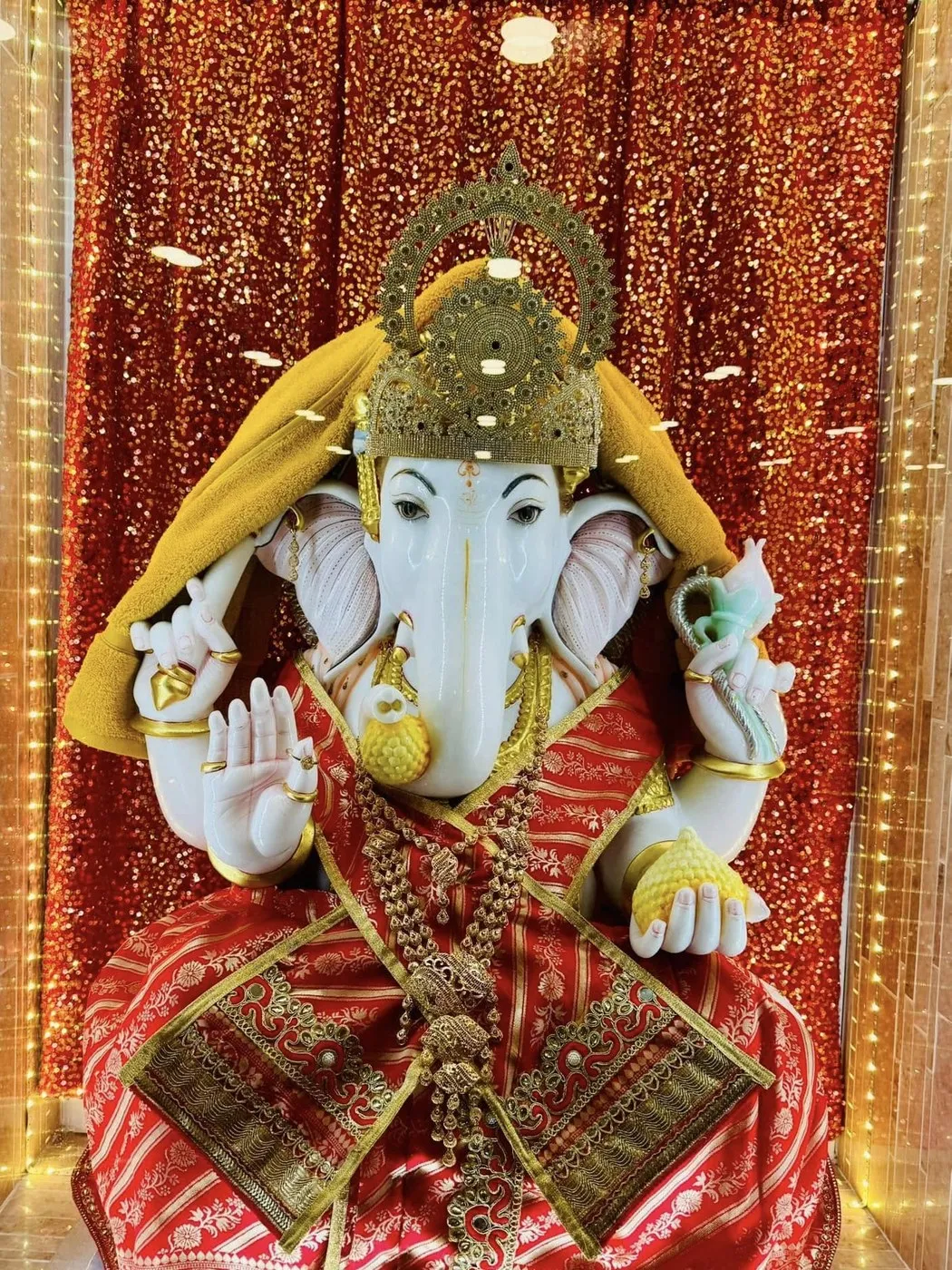
Shringar
Ganesh Ji through the year
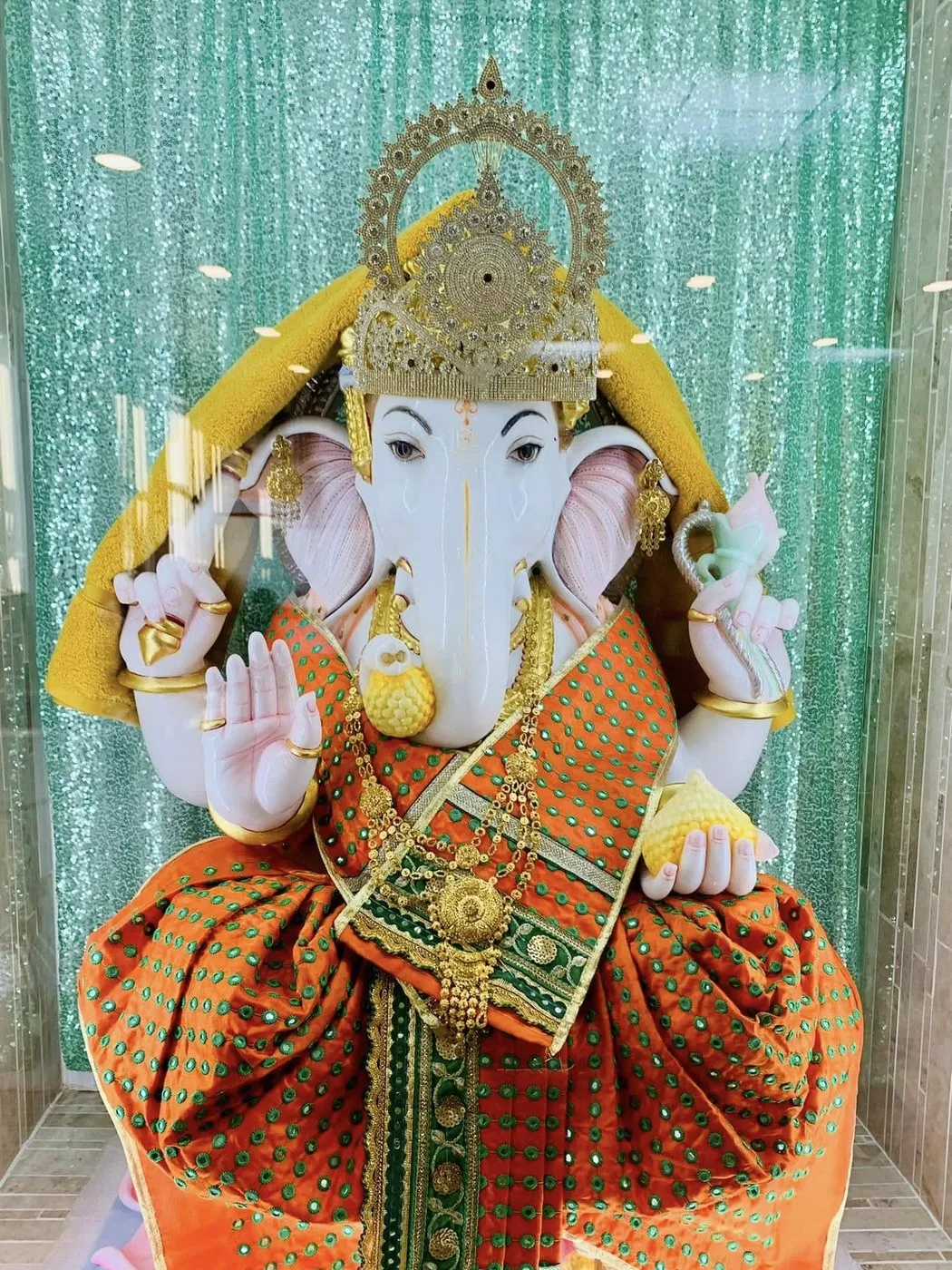
The same murti, dressed anew through the year. See the full gallery on Maa's Shringar.
5 shringar
Questions people ask
Why is Ganesh worshipped first?
He is the lord of beginnings and the remover of obstacles — so every pooja, wedding, griha pravesh and new venture opens by invoking him, asking that the way be clear for what follows. Even poojas to other deities begin with Ganesh. It is one of the most universal customs in Hinduism.
What does the elephant head mean?
The tradition tells several stories of how Ganesh received it, and devotees read its meaning in his qualities: the wisdom and memory of the elephant, the small discerning eyes, the large ears that listen more than they speak, and the trunk — strong enough to uproot a tree, delicate enough to pick up a grain.
Why is one tusk broken?
His name Ekadanta means 'one-tusked', and the traditions tell it differently — most beloved is the story that he broke it off himself to write the Mahabharata as the sage Vyasa dictated, refusing to let the writing stop. A scholar's sacrifice: knowledge was worth a tusk.
Go deeper
One God, or many? Understanding Hindu deities
Are Hindus polytheistic? The honest answer to the question every visitor asks — and why the question itself is shaped by the wrong assumptions.
Read →Hindu temple etiquette — a first-timer's guide
What to do (and not do) when visiting a Hindu mandir in the UK: shoes, offerings, prasad, photography, aarti and the one rule that actually matters.
Read →