Far left of the main altar
Maa Saraswati माँ सरस्वती
Goddess of knowledge, music, the arts and speech — the veena never leaves her hands.
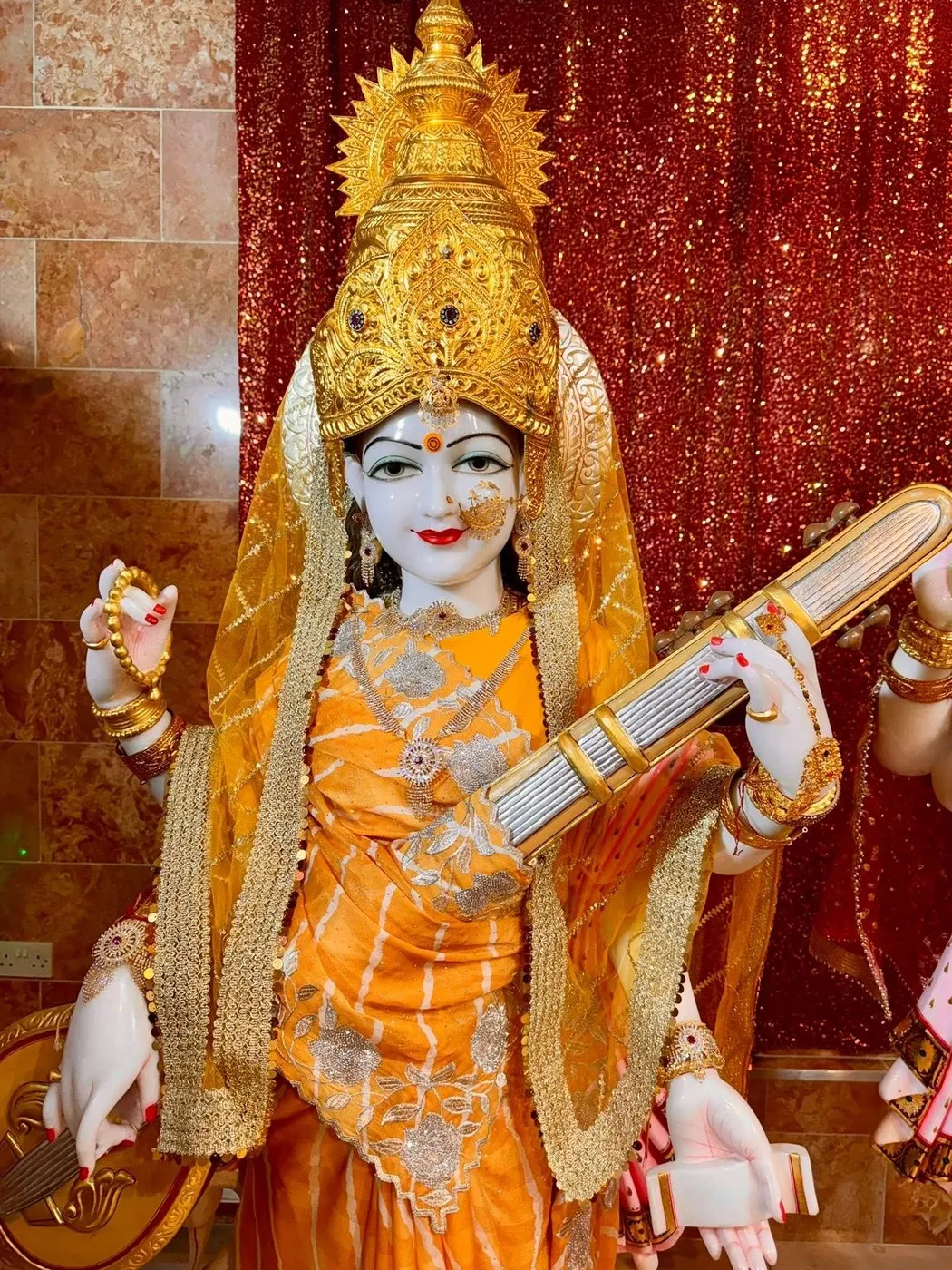
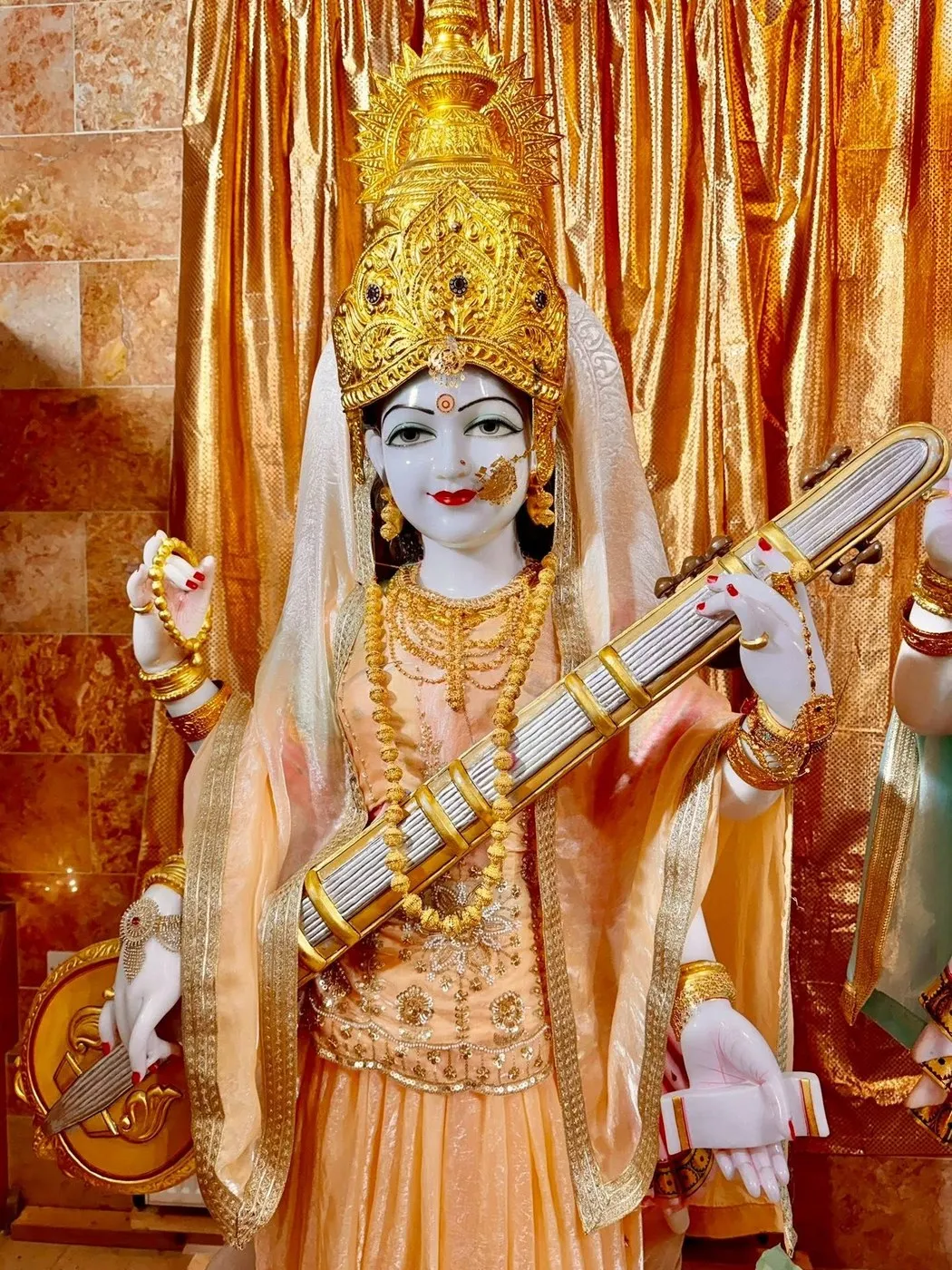
At the far left of the main altar stands Maa Saraswati, the veena in her hands — the Mother of knowledge, music, the arts and speech itself.
Who she is
Saraswati is among the oldest names in the Hindu tradition. In the Rig Veda she is honoured as a sacred river, and over time the tradition came to know her as Vac — sacred speech itself — the power by which knowledge is carried, taught and sung. That is what she remains: the goddess of knowledge, learning, music, the arts and the spoken word, revered not only by Hindus but historically by Jains and Buddhists too.
She matters enormously in a community like ours. Every child sitting exams, every student applying to university, every musician in the mandali who plays at our jagrans — they are all in Saraswati’s care.
Reading her form
- The veena — her unmistakable sign: knowledge as harmony, tuned and practised.
- The book — the scriptures and all true learning.
- The mala — knowledge turned inward, as contemplation.
- The hamsa (swan) — her vahana, said in tradition to separate milk from water: discernment, the heart of wisdom.
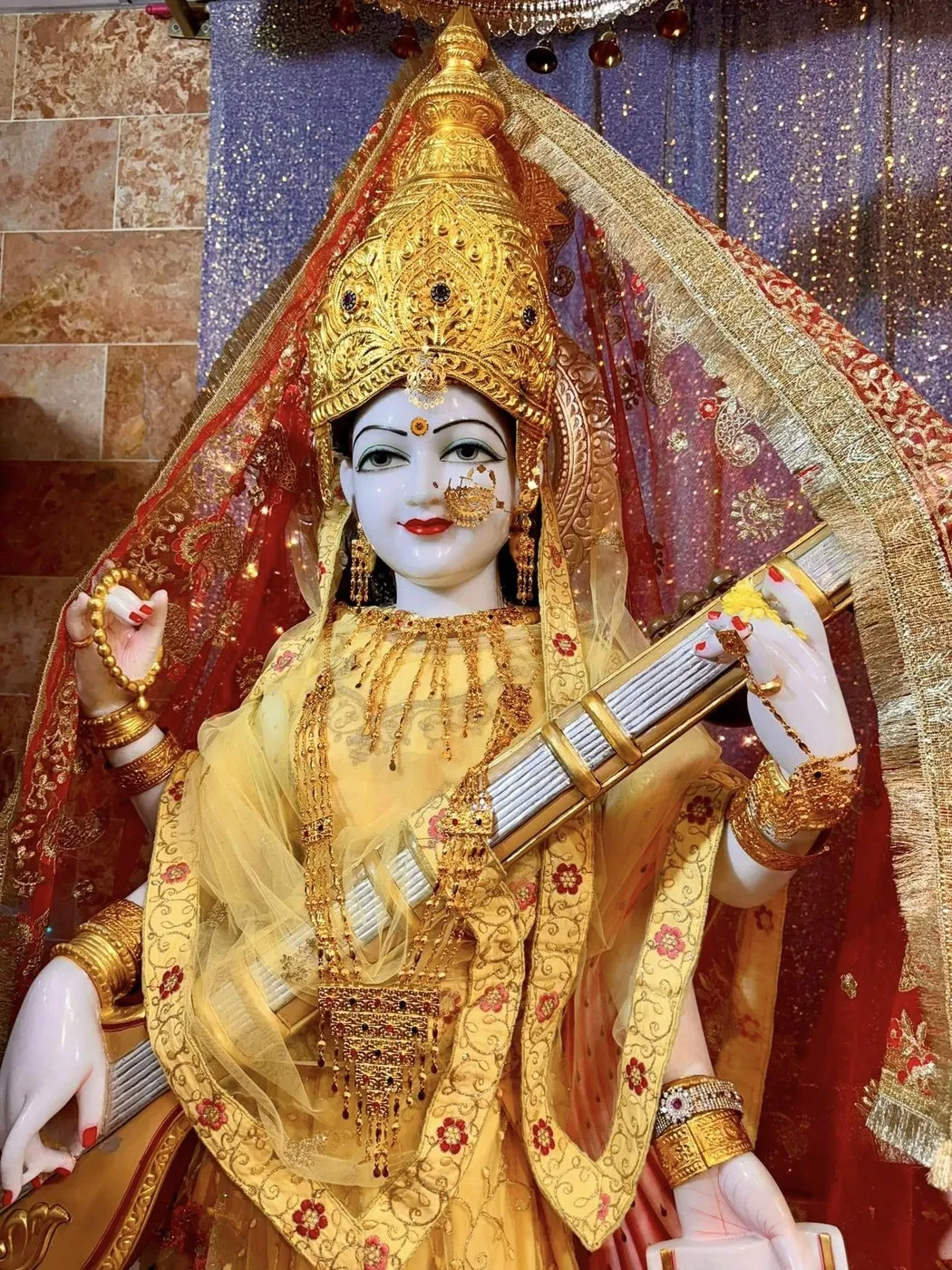
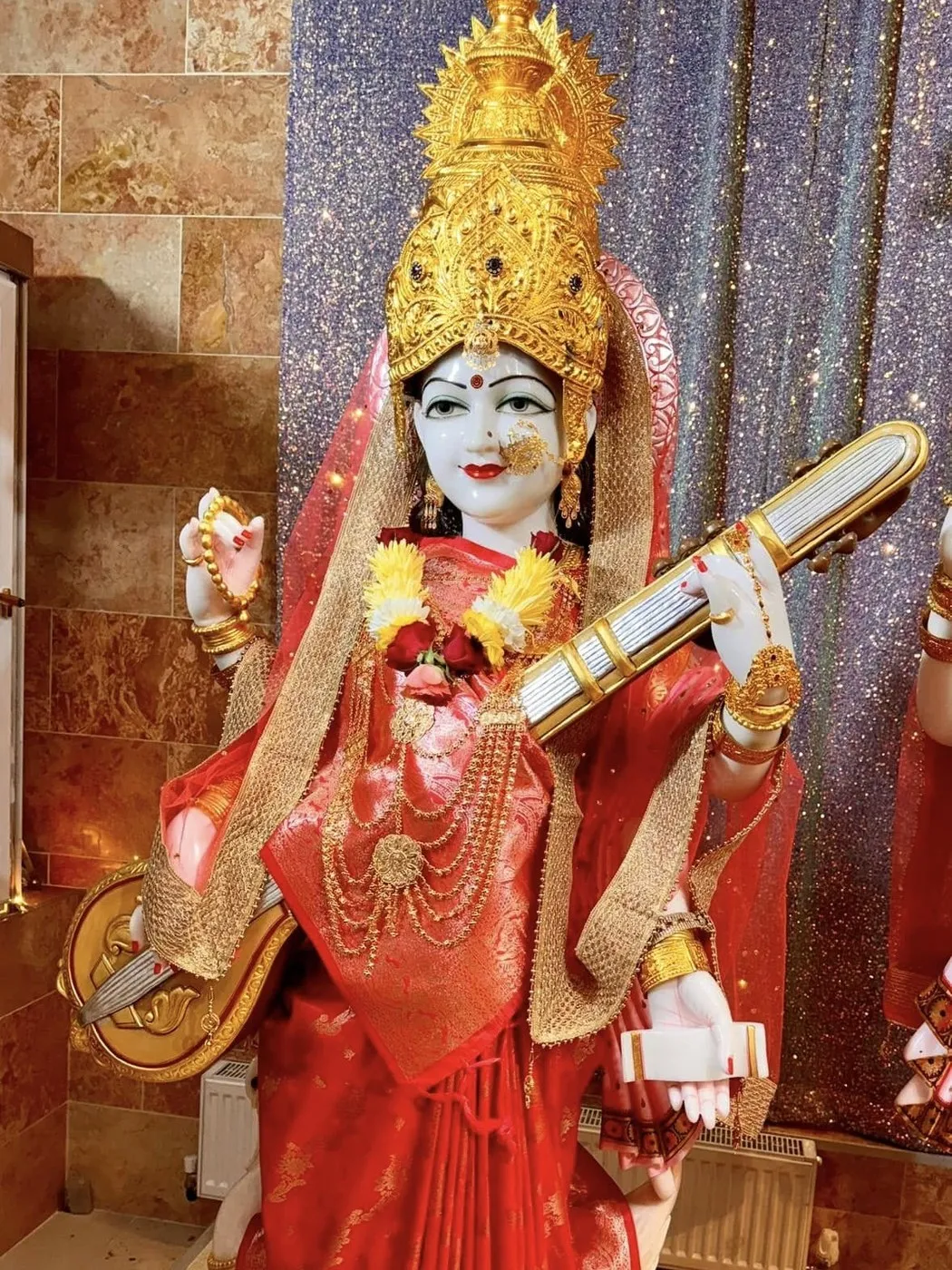
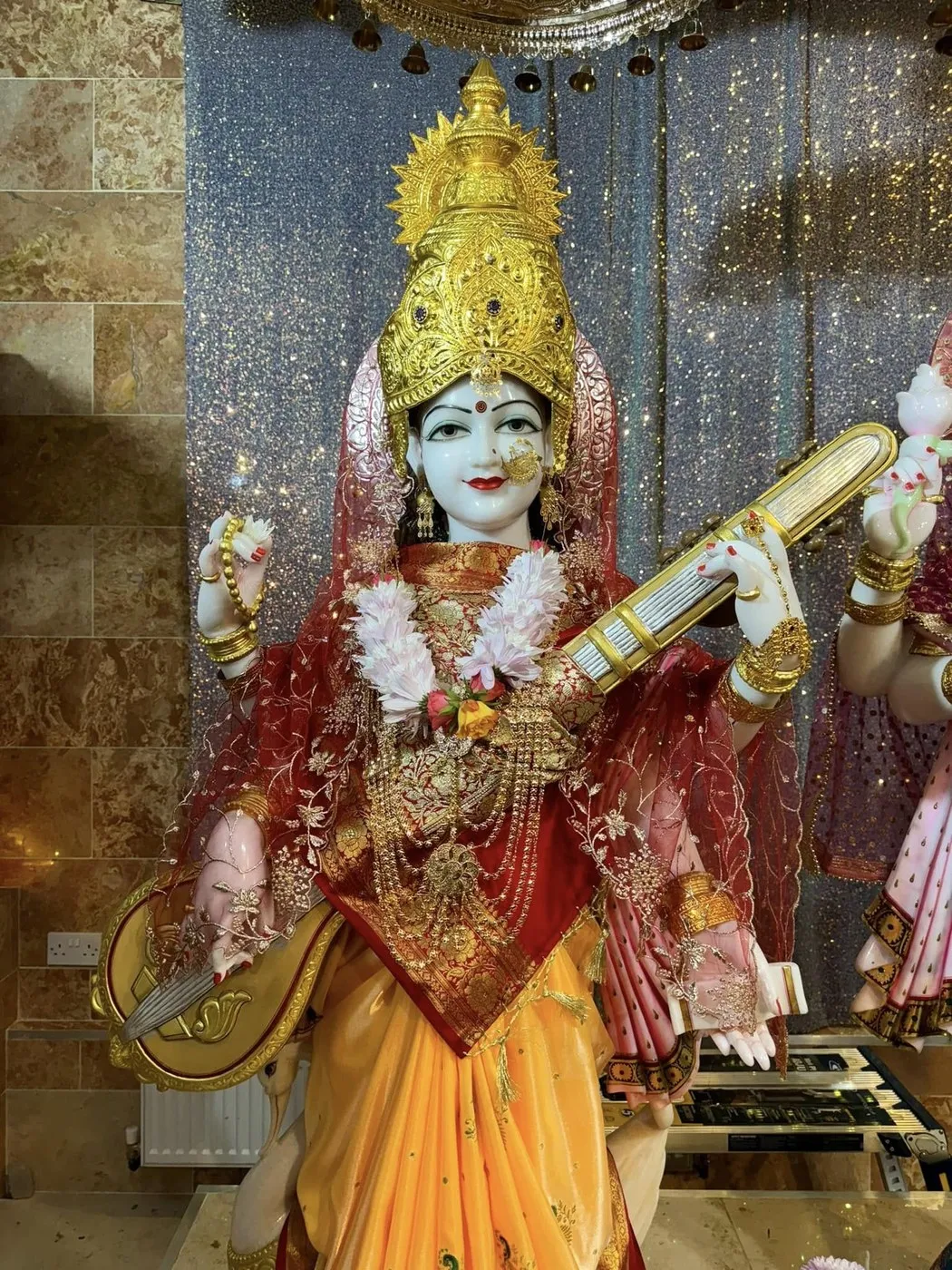
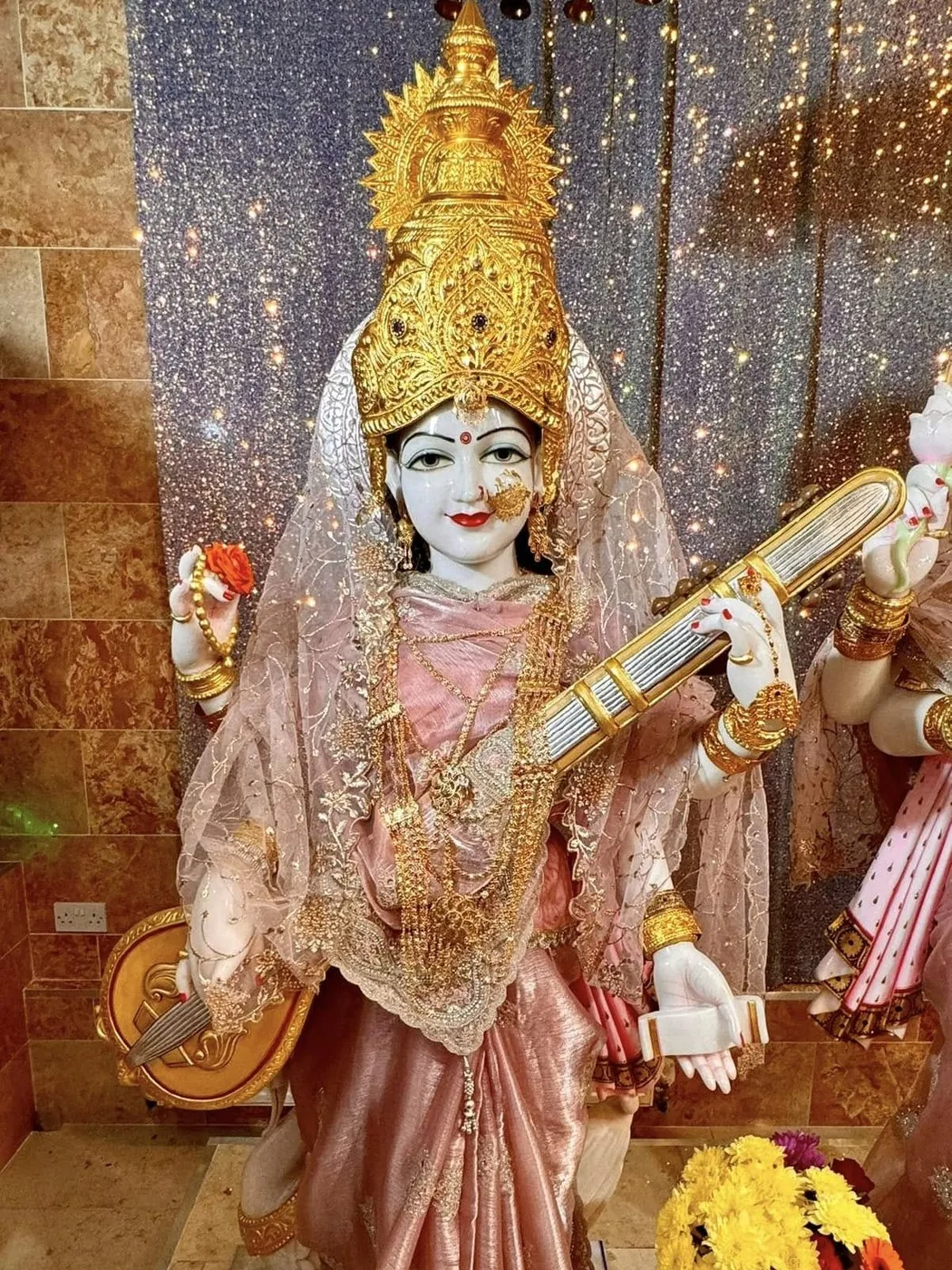
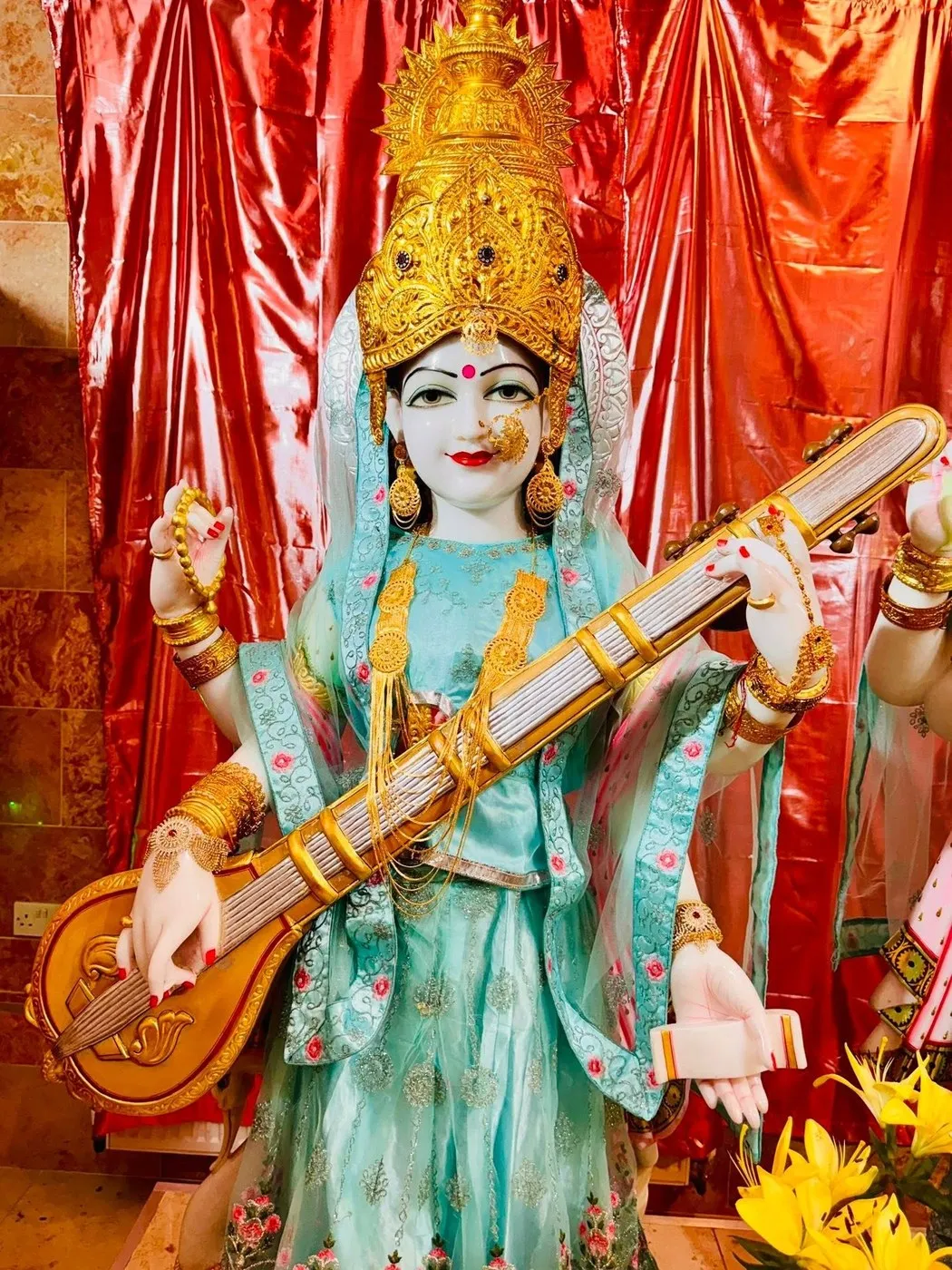
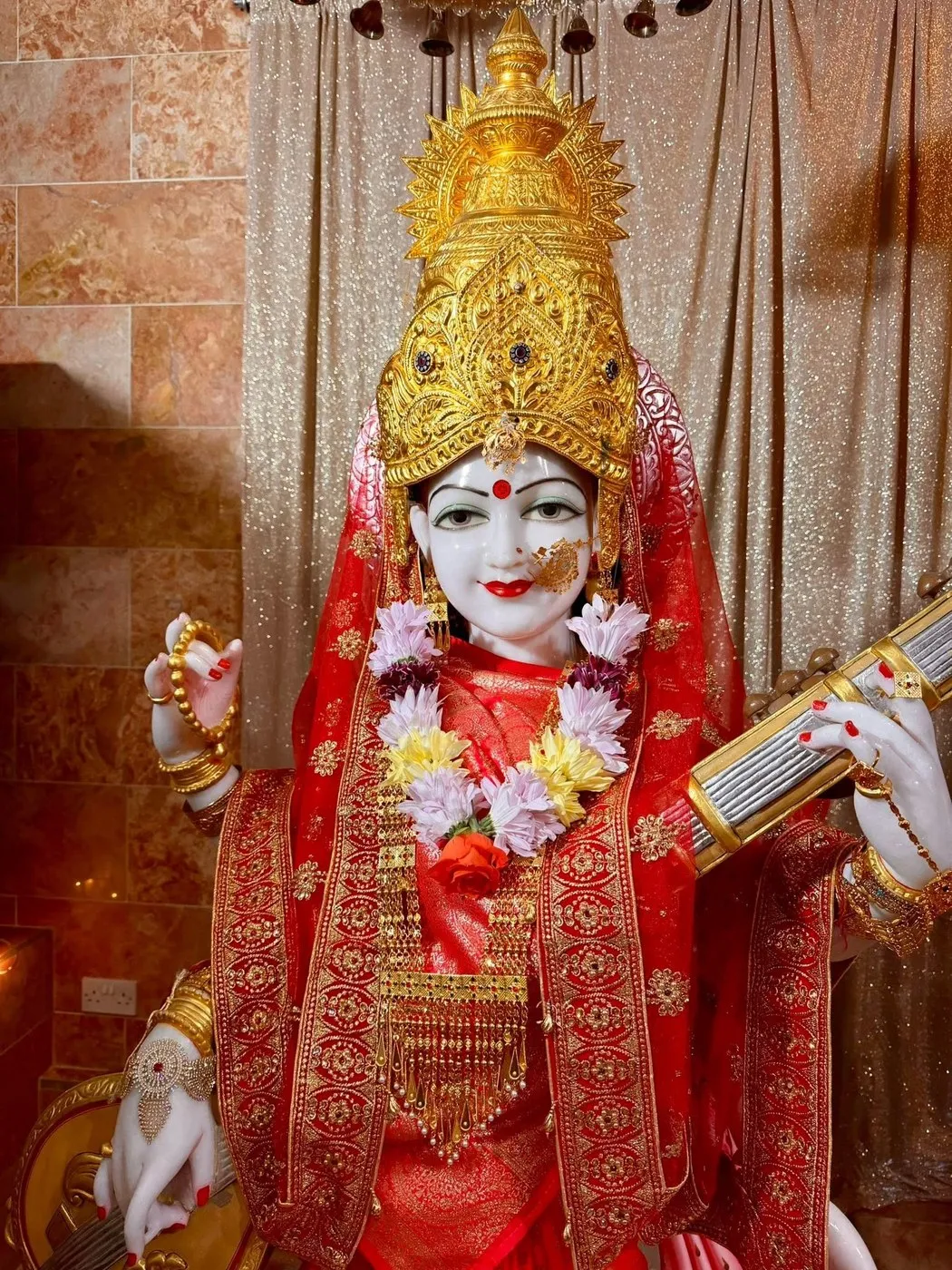
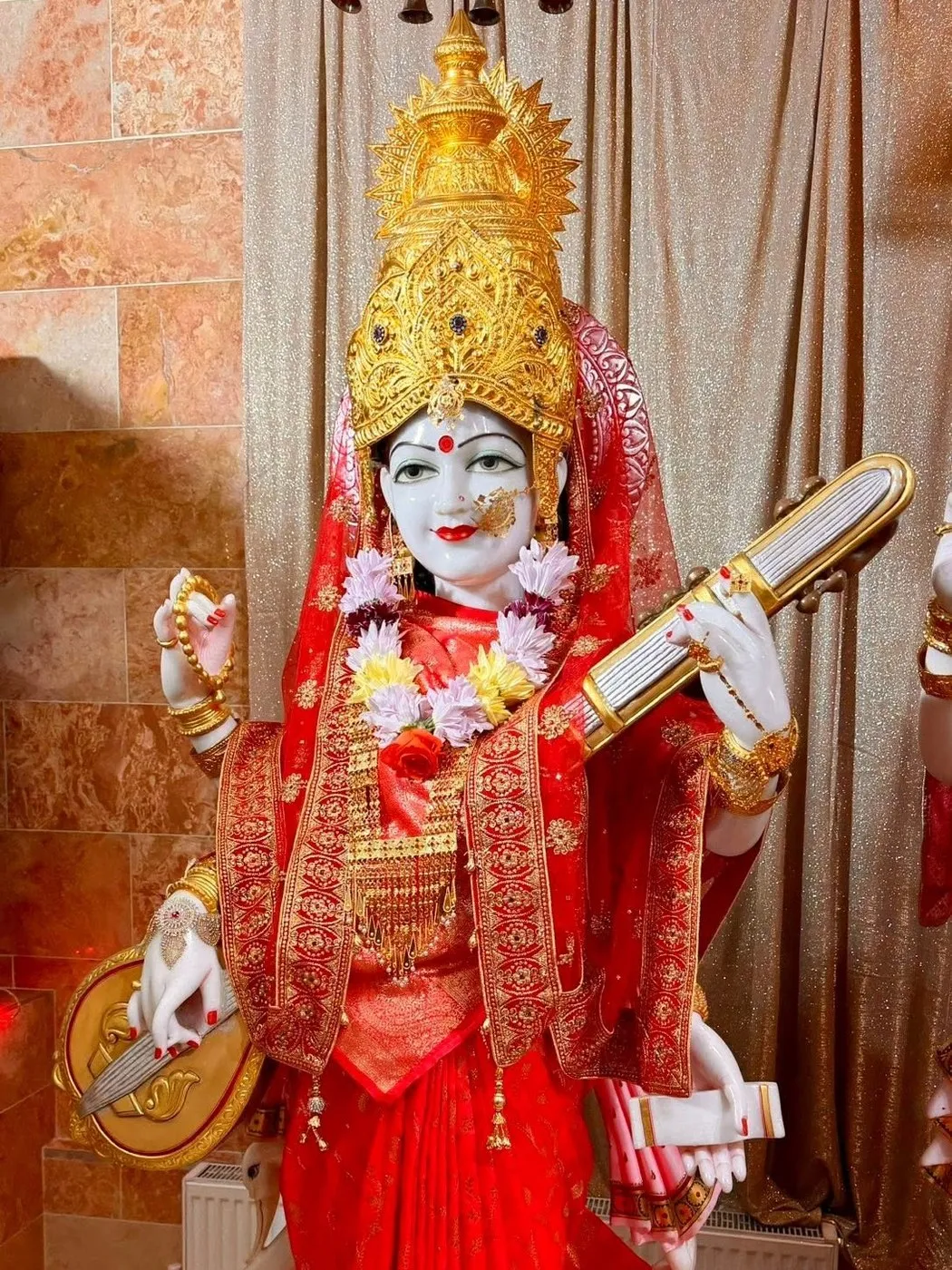
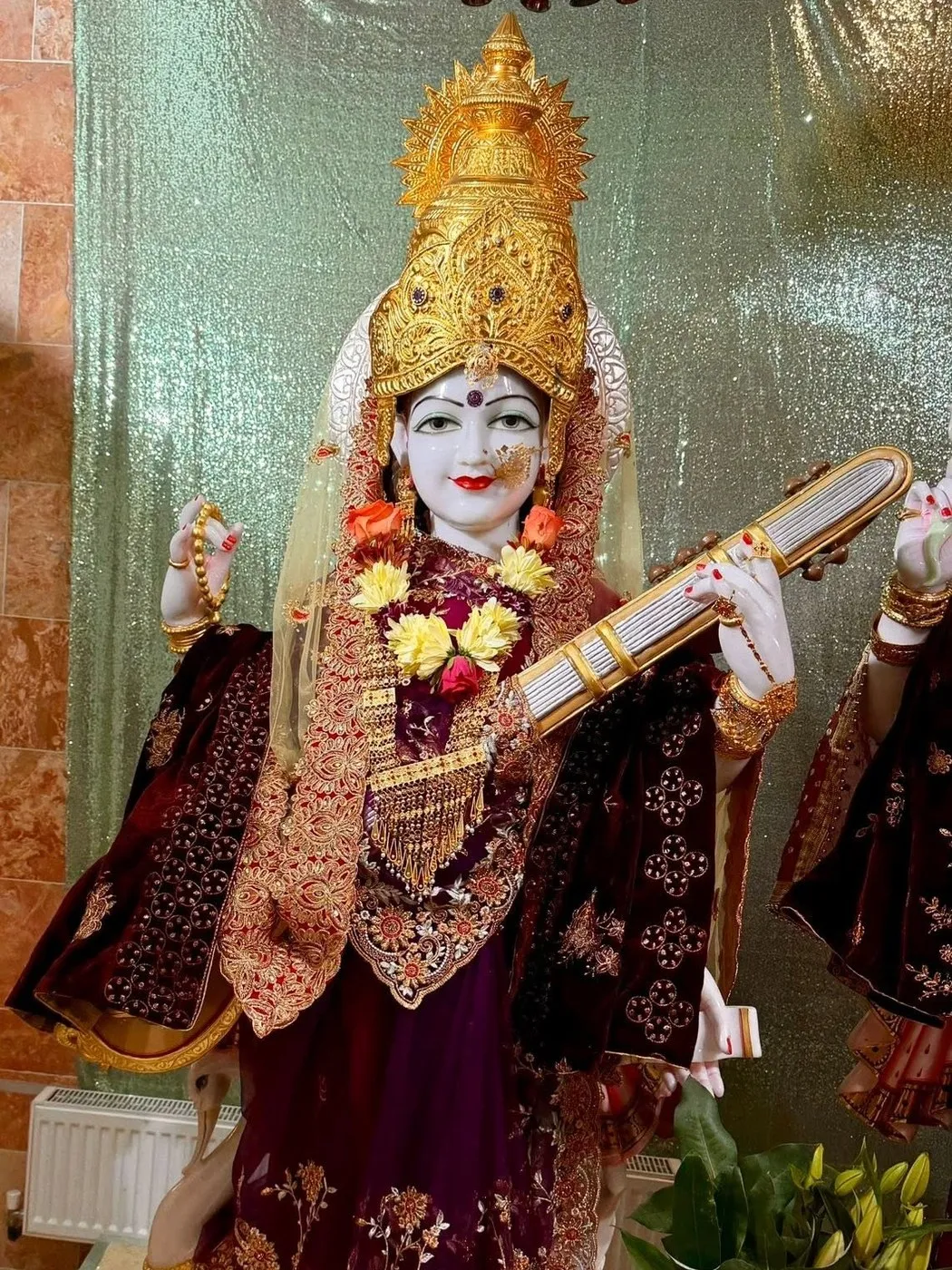
- White and pale silks — clarity and undivided light, though her shringar changes with the seasons like every murti here.
Saraswati at our mandir
Her great day is Vasant Panchami — Saraswati Puja, at the first turning of spring (January–February), when yellow is worn in her honour and students bring their books and instruments for blessing. The final nights of Navratri are traditionally hers as well: after the Mother’s protection and abundance, her wisdom completes the nine.
And she holds one of the loveliest ceremonies we perform: Vidyarambh, a child’s very first letters, written in her presence — as fitting a beginning as a Hindu childhood has. Our priest arranges Vidyarambh through the year, and especially at Vasant Panchami.
Shringar
Maa Saraswati through the year
The same murti, dressed anew through the year. See the full gallery on Maa's Shringar.
10 shringar
Questions people ask
Why do students pray to Saraswati?
Because she is the Mother of everything learning requires: knowledge itself, memory, speech, and the calm concentration of music. Students come to her before exams, musicians before performances, and children are traditionally taught their very first letters in her presence — a ceremony called Vidyarambh, which our priest performs at the mandir.
What is the veena she holds?
The veena is one of India's oldest stringed instruments, and it is Saraswati's constant attribute — so much so that a murti holding a veena is almost always her. It stands for the harmony of true knowledge: learning that is tuned, practised and beautiful, not merely accumulated.
Why is she dressed in white so often?
White is the convention for Saraswati across most of India — the colour of clarity, simplicity and undivided light. Our murti wears the silks of the season like every deity in the mandir, but her palette often returns to whites, creams and yellows, especially at Vasant Panchami when yellow is worn in her honour.
Go deeper
What is Hinduism?
A clear introduction to Hinduism for newcomers — one God or many, what Hindus actually believe, the scriptures, and the ideas of karma, dharma and moksha.
Read →Navratri — nine nights of the Mother
What Navratri means, what happens across the nine nights, kanya pujan, and how it's observed at a Kali mandir in the West Midlands.
Read →One God, or many? Understanding Hindu deities
Are Hindus polytheistic? The honest answer to the question every visitor asks — and why the question itself is shaped by the wrong assumptions.
Read →