Right of the main altar
Maa Bhameshwari माँ भमेश्वरी
Revered in the tradition of the Bham lineage as an avatar of Kali Mata — hers is the first UK temple.
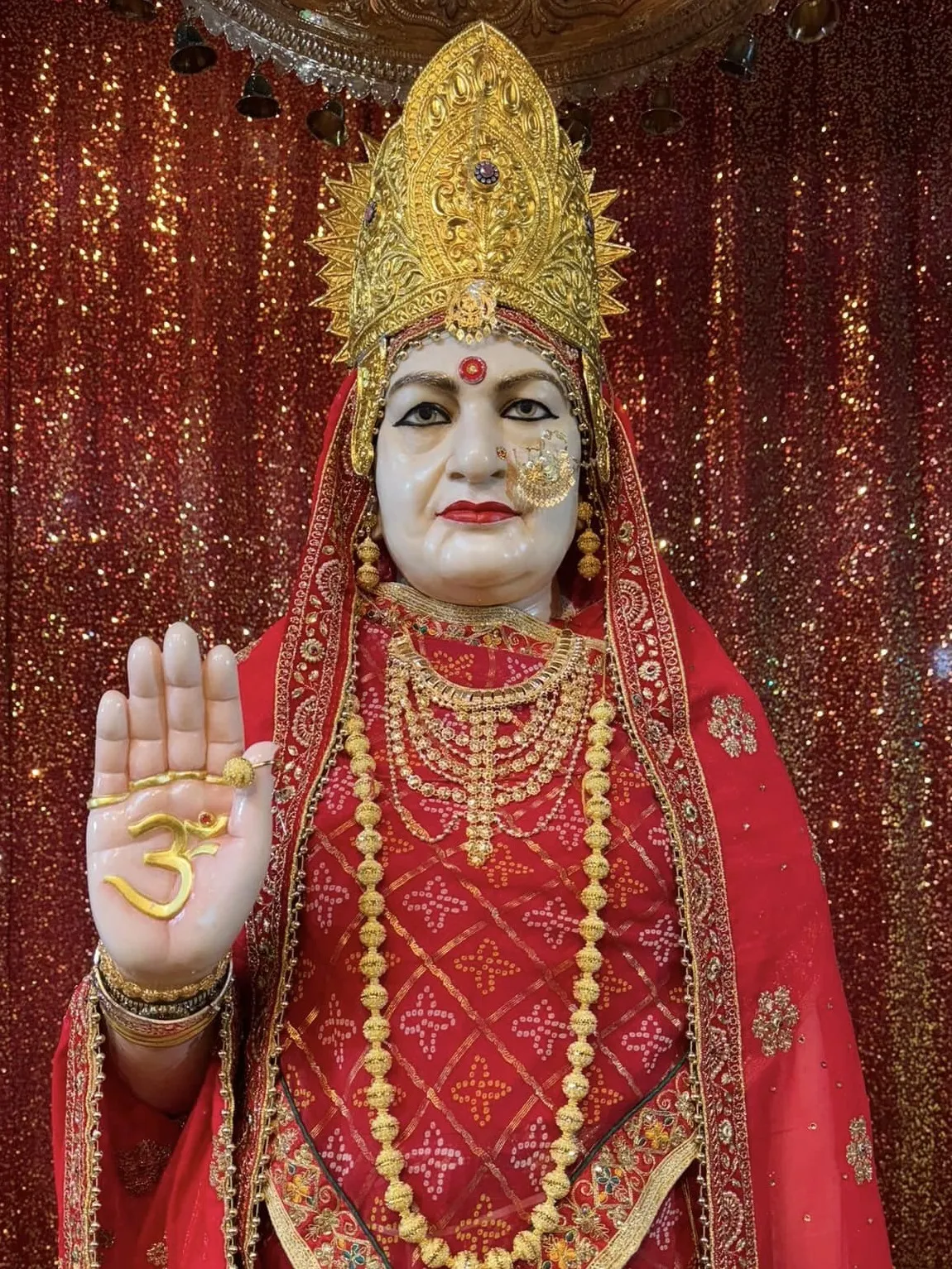
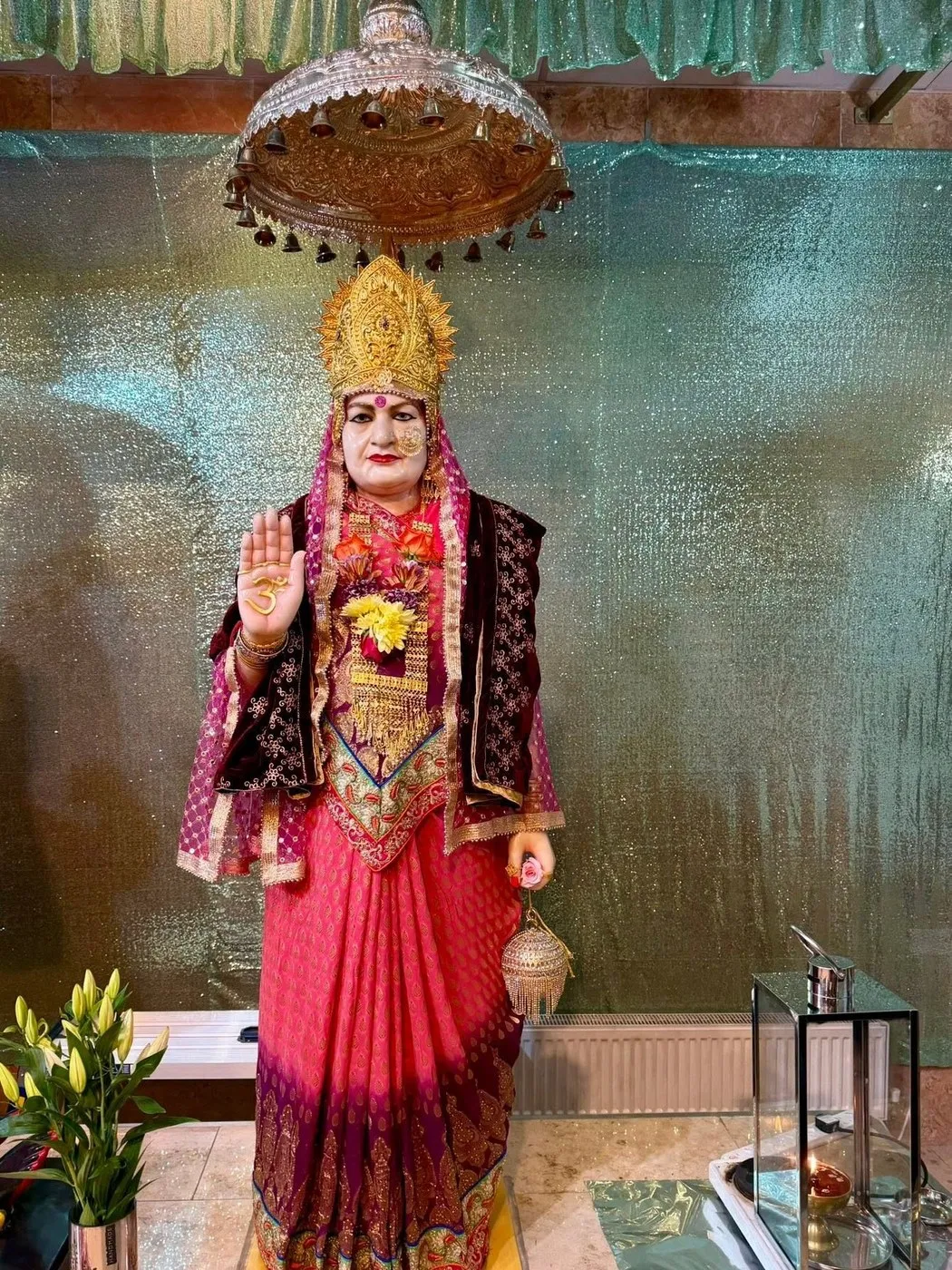
To the right of Maa Kali on our main altar stands Maa Bhameshwari — her hand raised in blessing over everyone who comes through the door. This mandir is the first temple in the United Kingdom to carry her name, and her presence beside Kali Mata is the heart of what makes our mandir itself.
The tradition of the Bham lineage
Our lineage tells that in the village of Bham, in the Hoshiarpur district of Punjab, the Divine Mother took human birth — a girl who would be revered as Maa Bhameshwari, an avatar of Bhagwati, of Mahakali herself. In 1958 the foundation stone of her temple was laid at Bham, and from that place grew a mission of worship, seva and langar carried by the Sri Bhameshwari Missionary Trust, with temples today in Punjab, Delhi and Haridwar.
Every summer the mother temple holds its great samagam — days of havan, kanya pujan, Bhagwati jagran and bhandara — and our mandir keeps the same rhythm of devotion here in England: the jyot, the jagran, the open door, and food for everyone who comes.
Her tradition was carried forward with great devotion by her chief disciple, the late President Mata Usha Rani Ji. Our story tells more of the lineage.
Reading her form
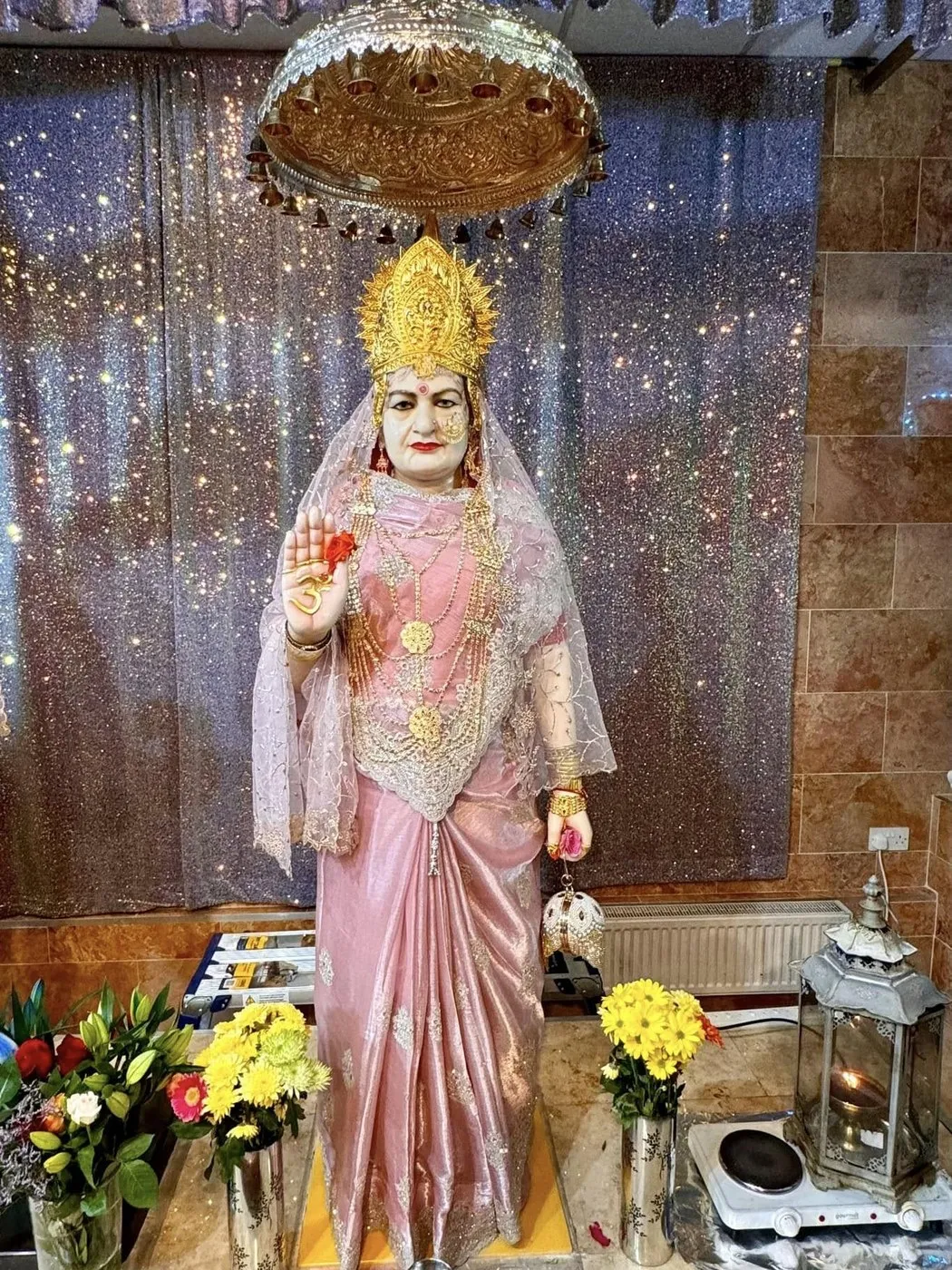
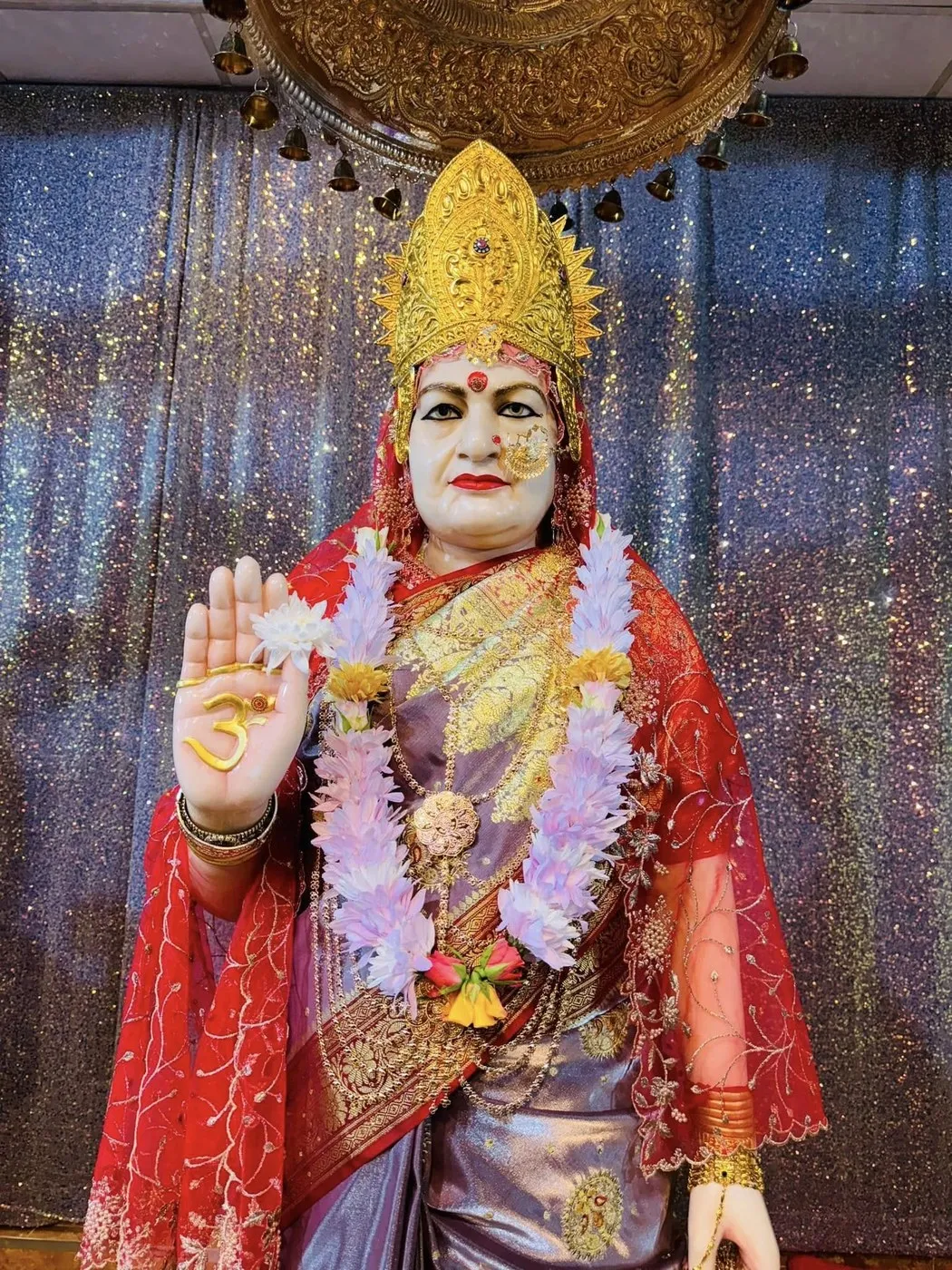
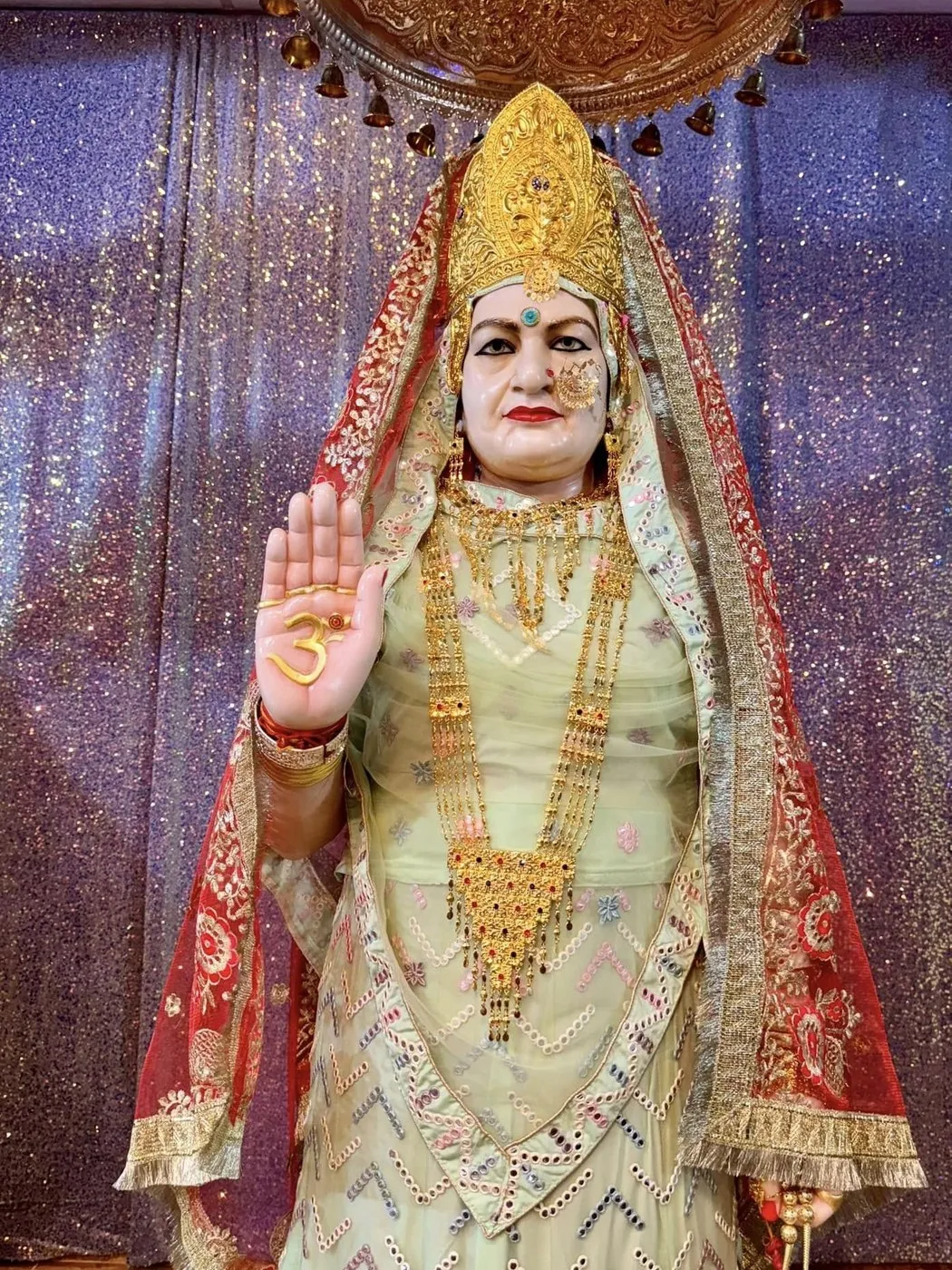
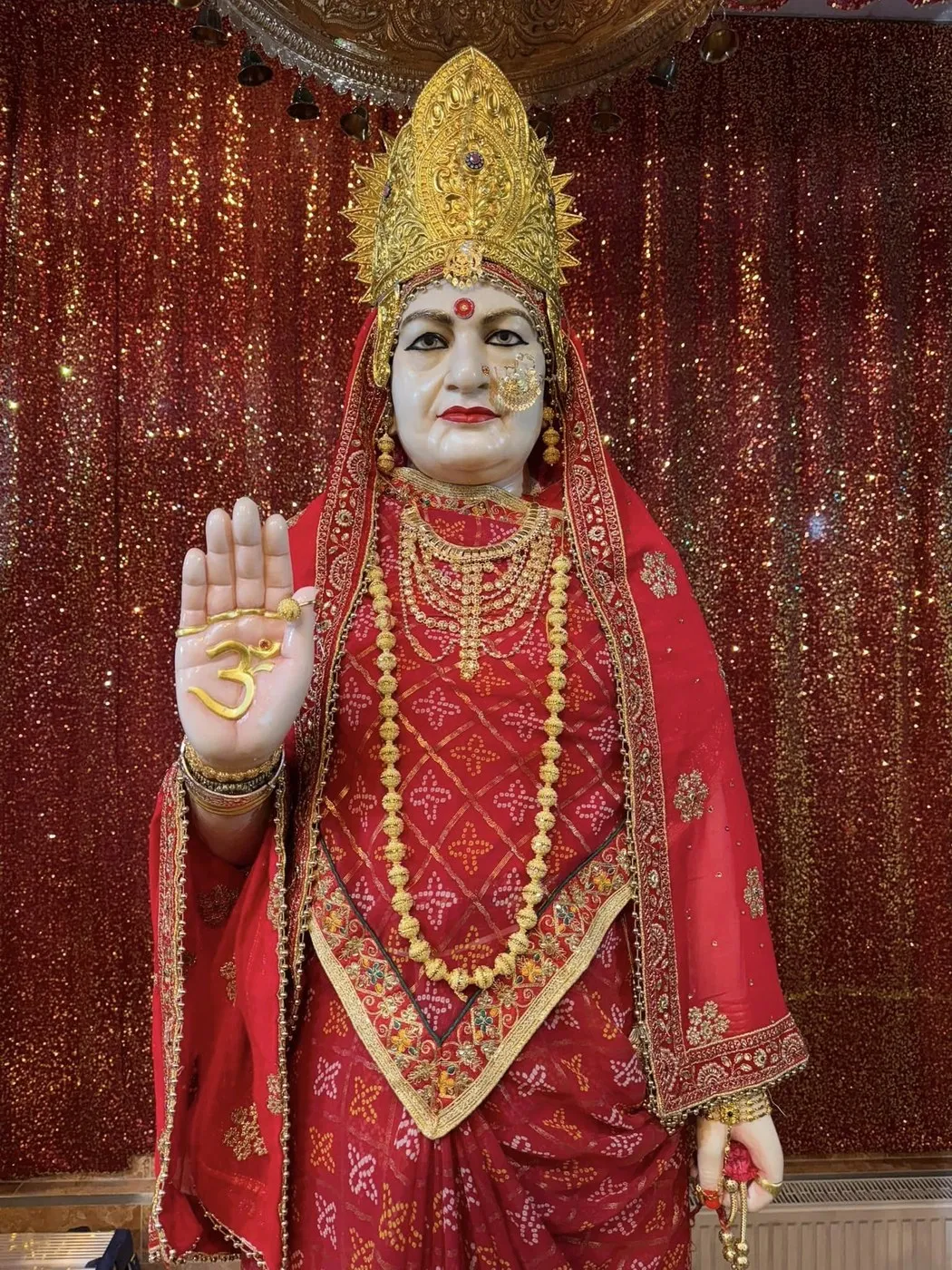
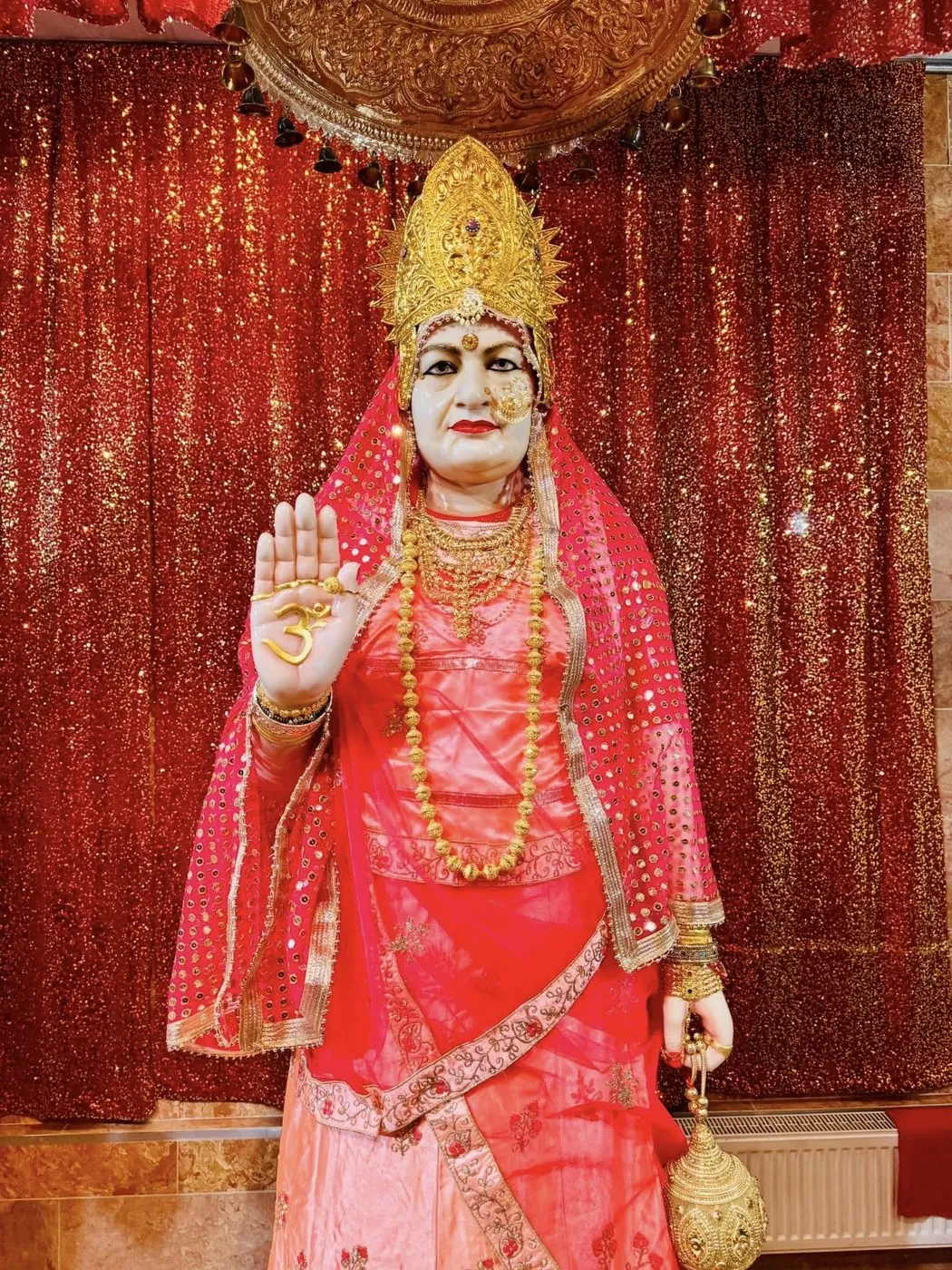
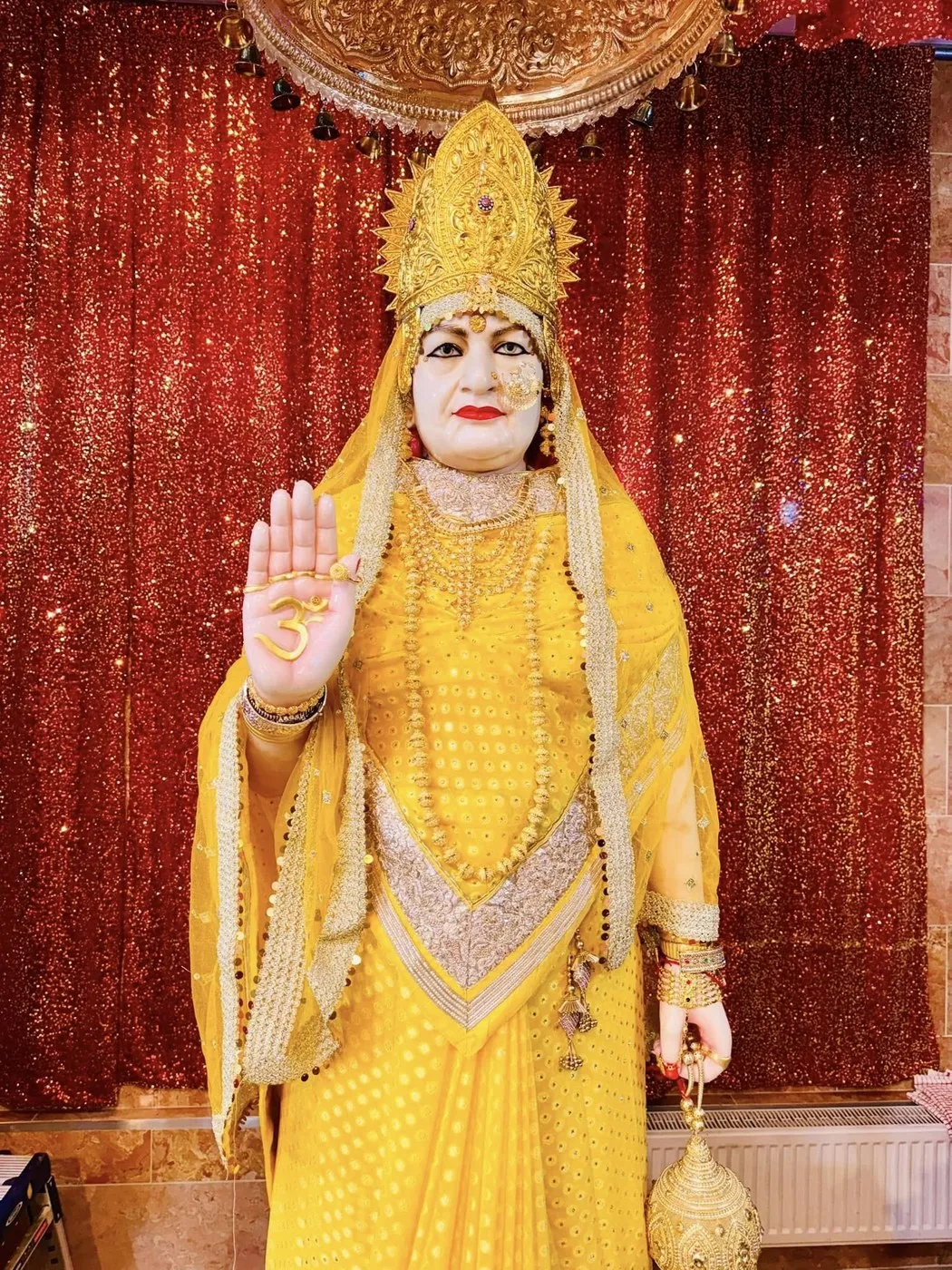
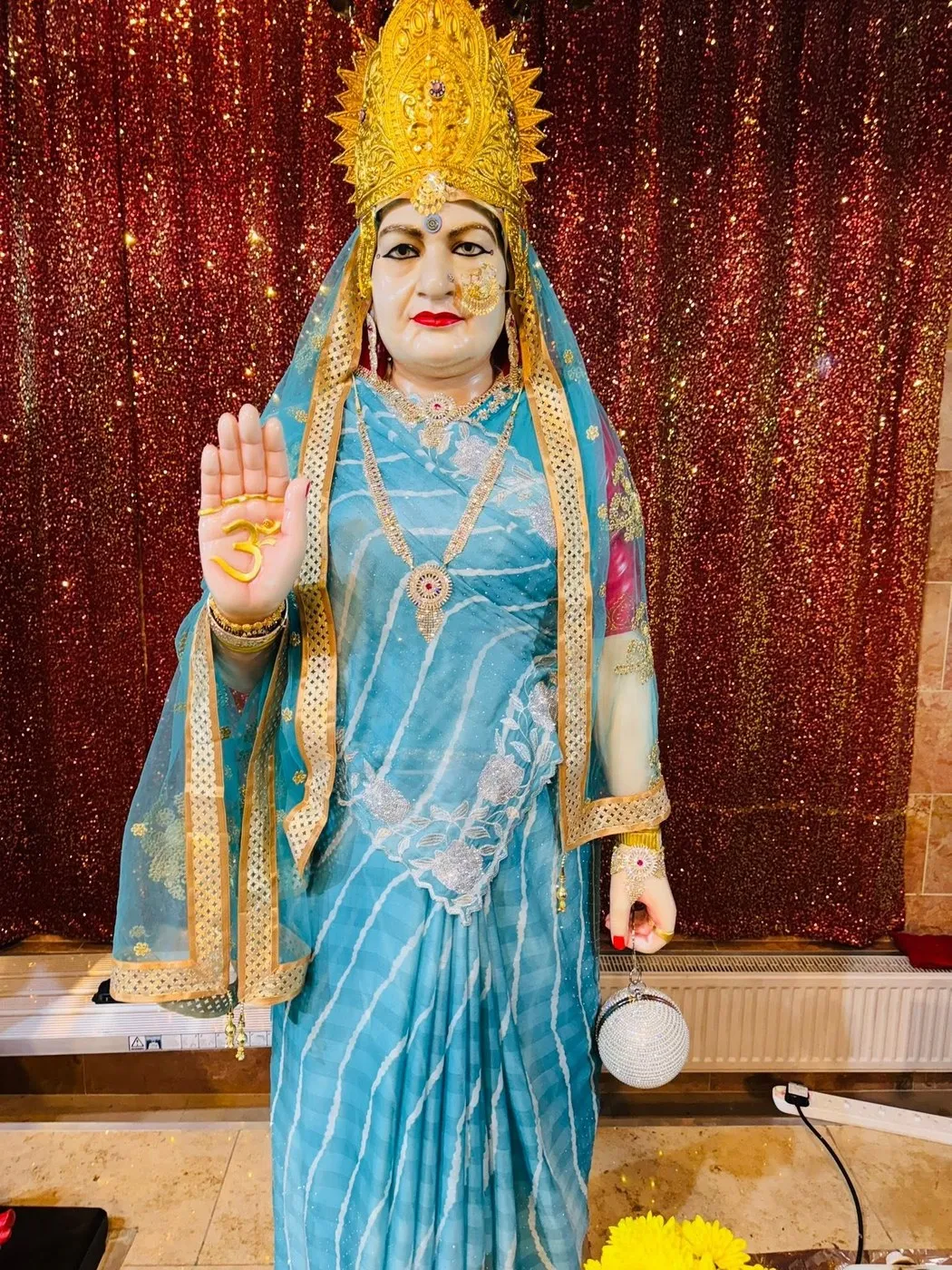
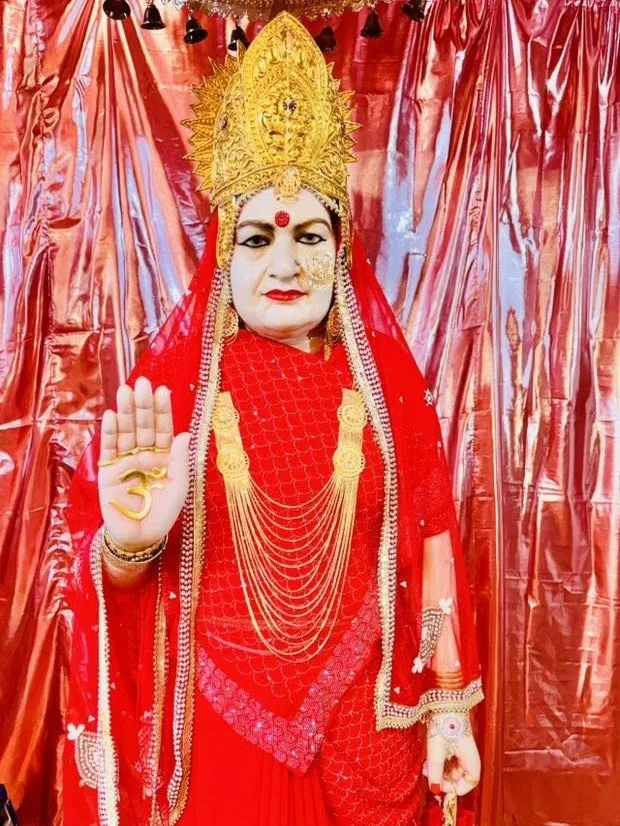
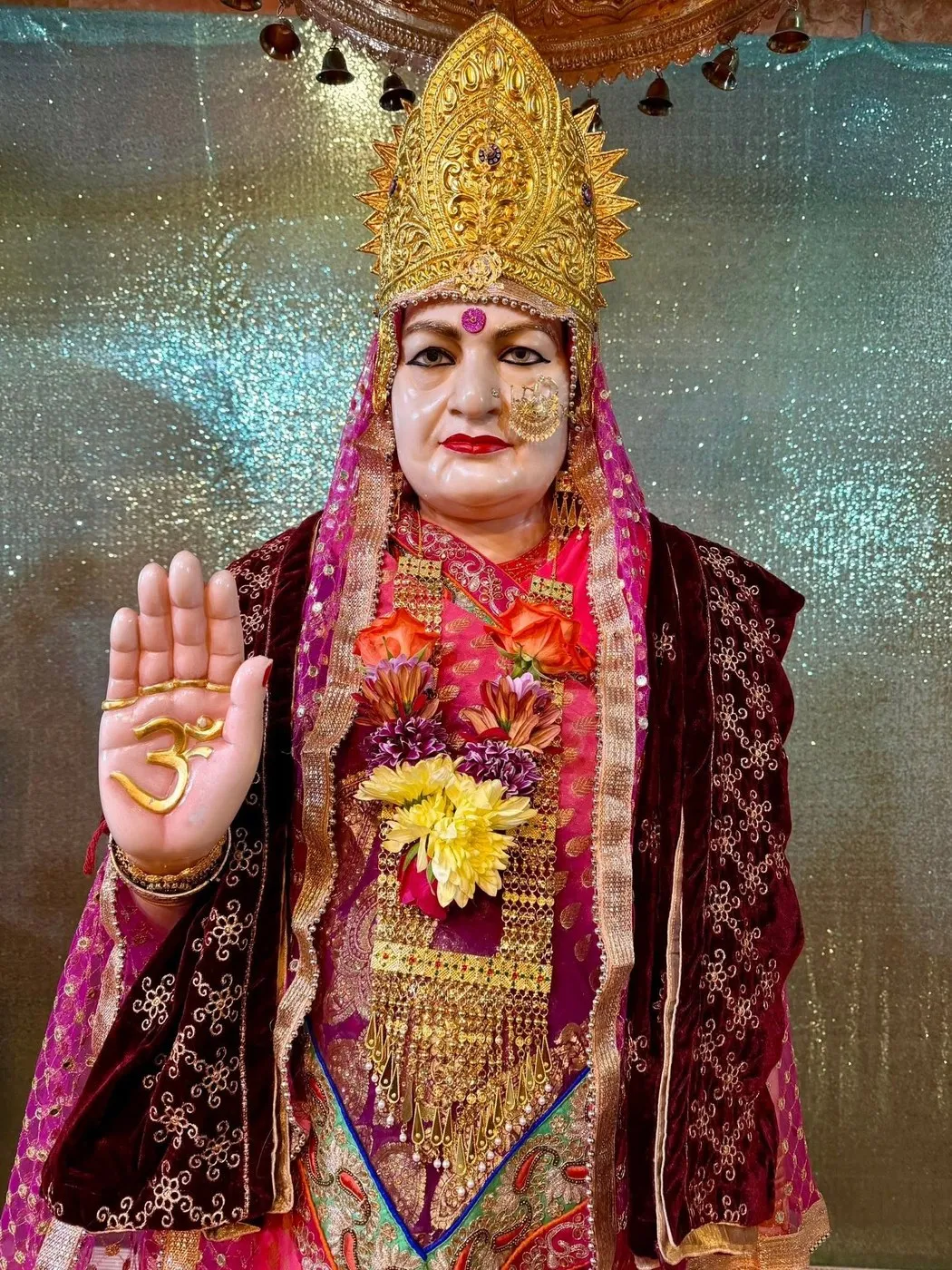
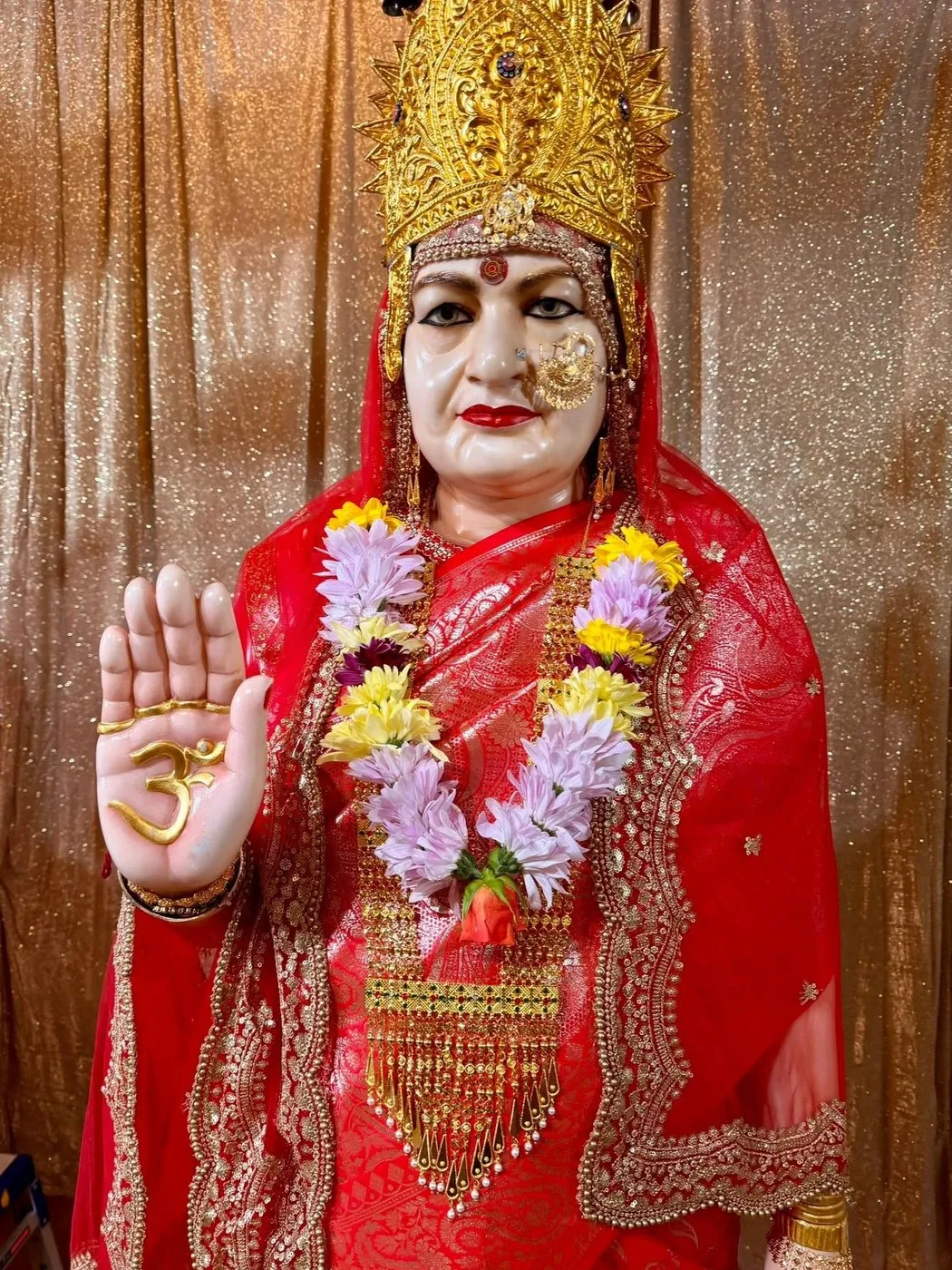
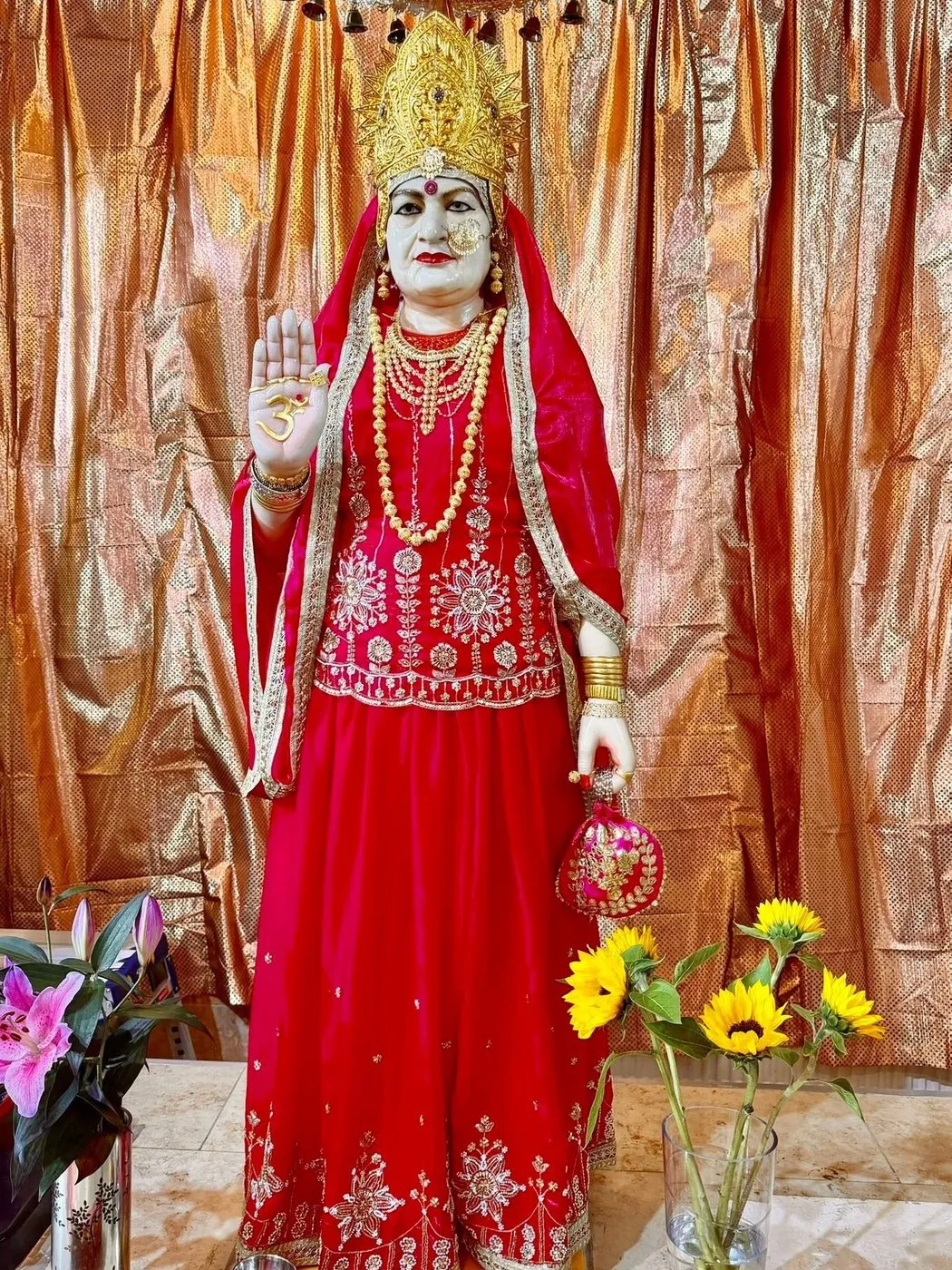
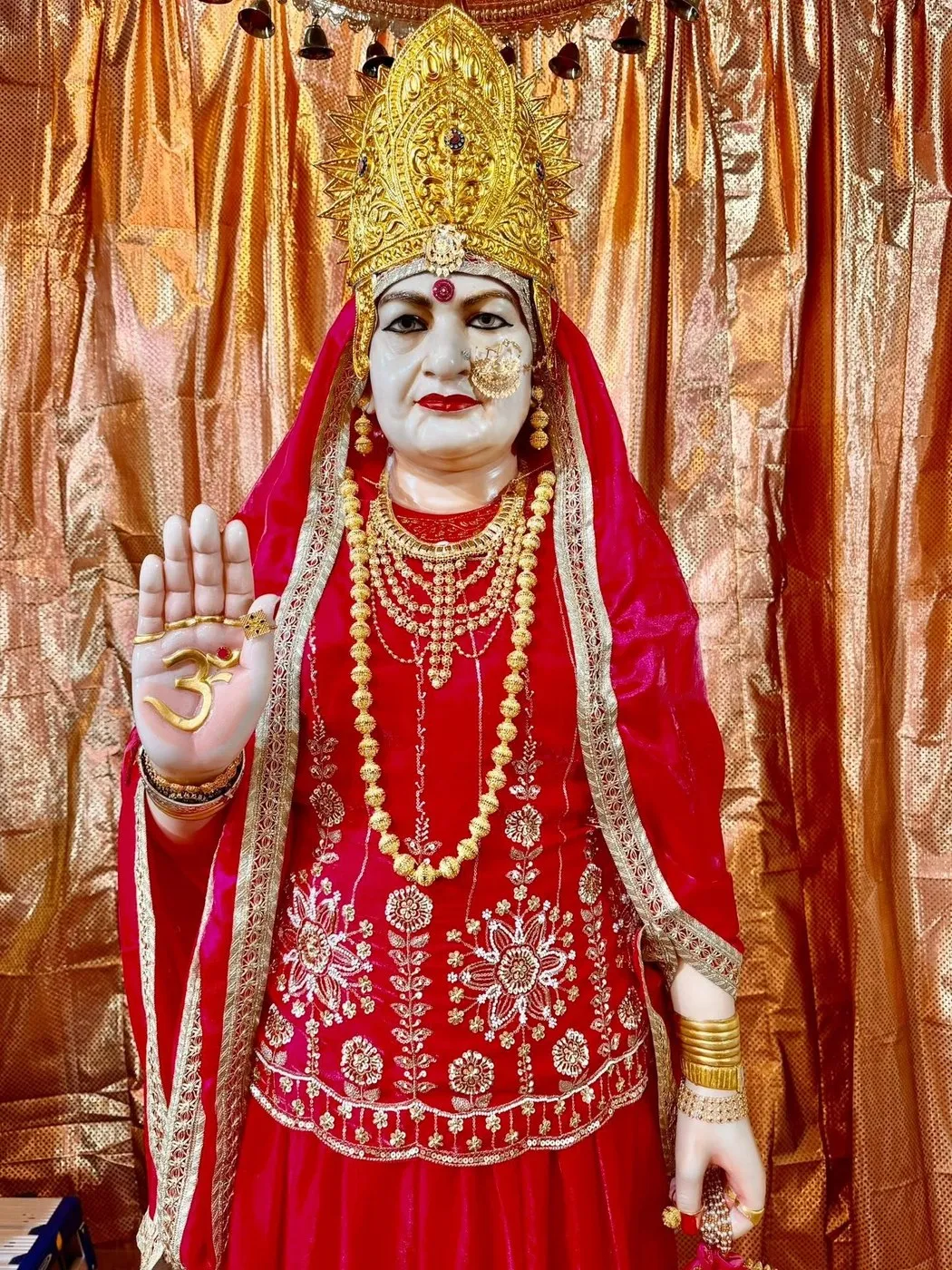
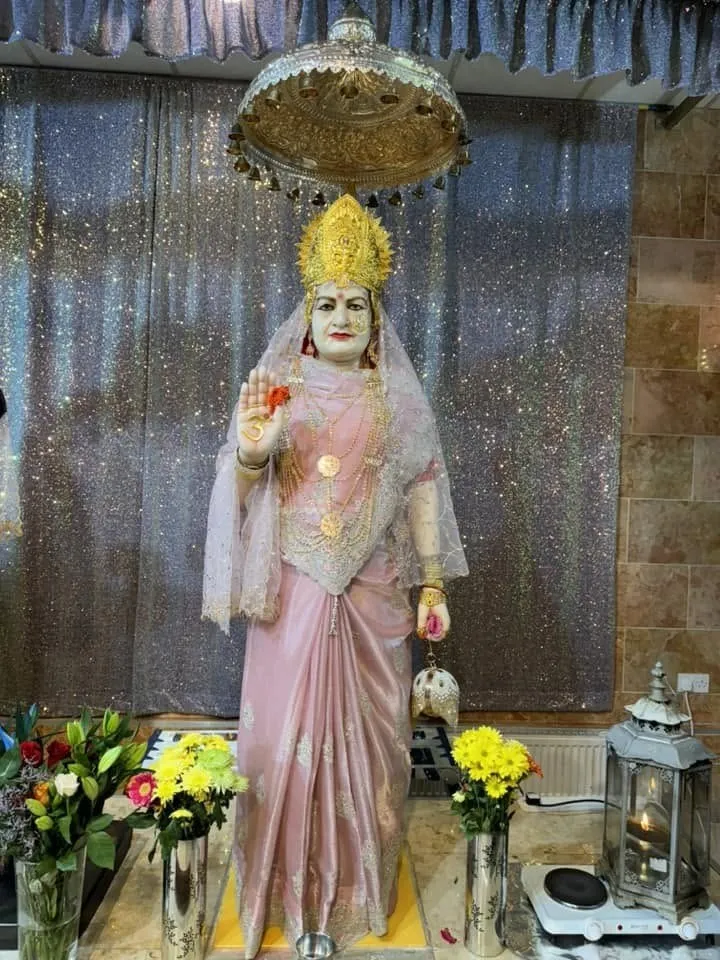
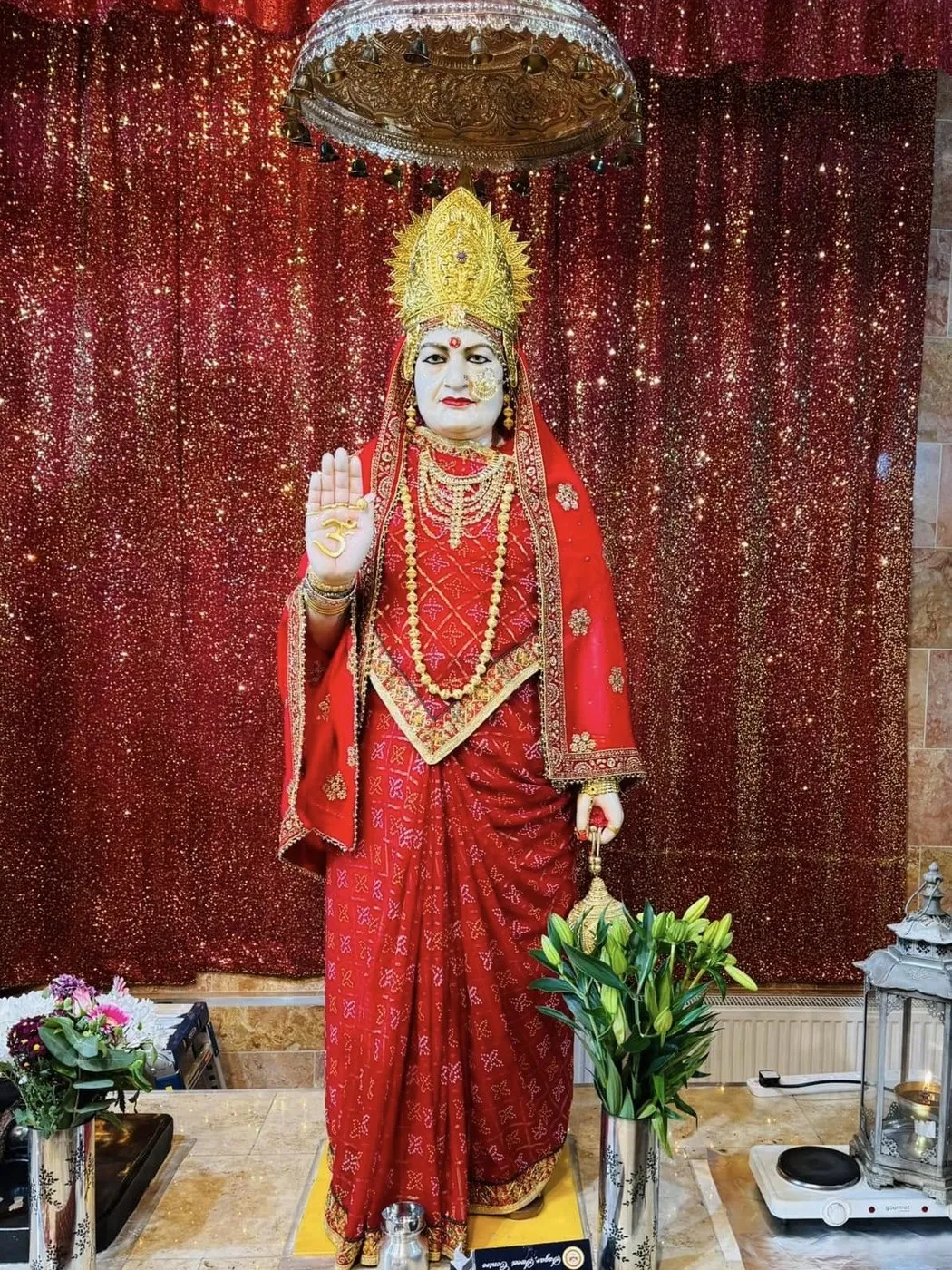
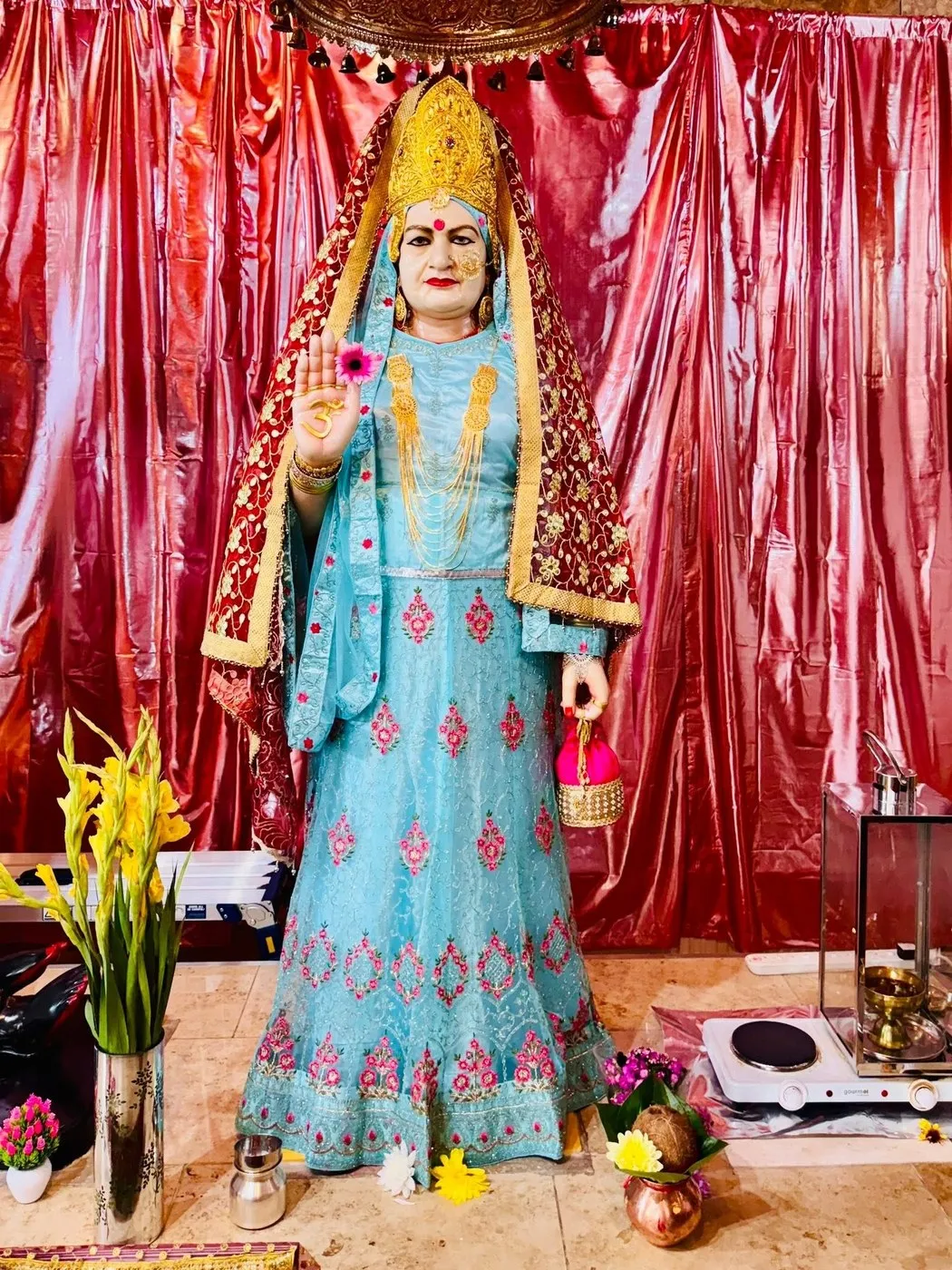
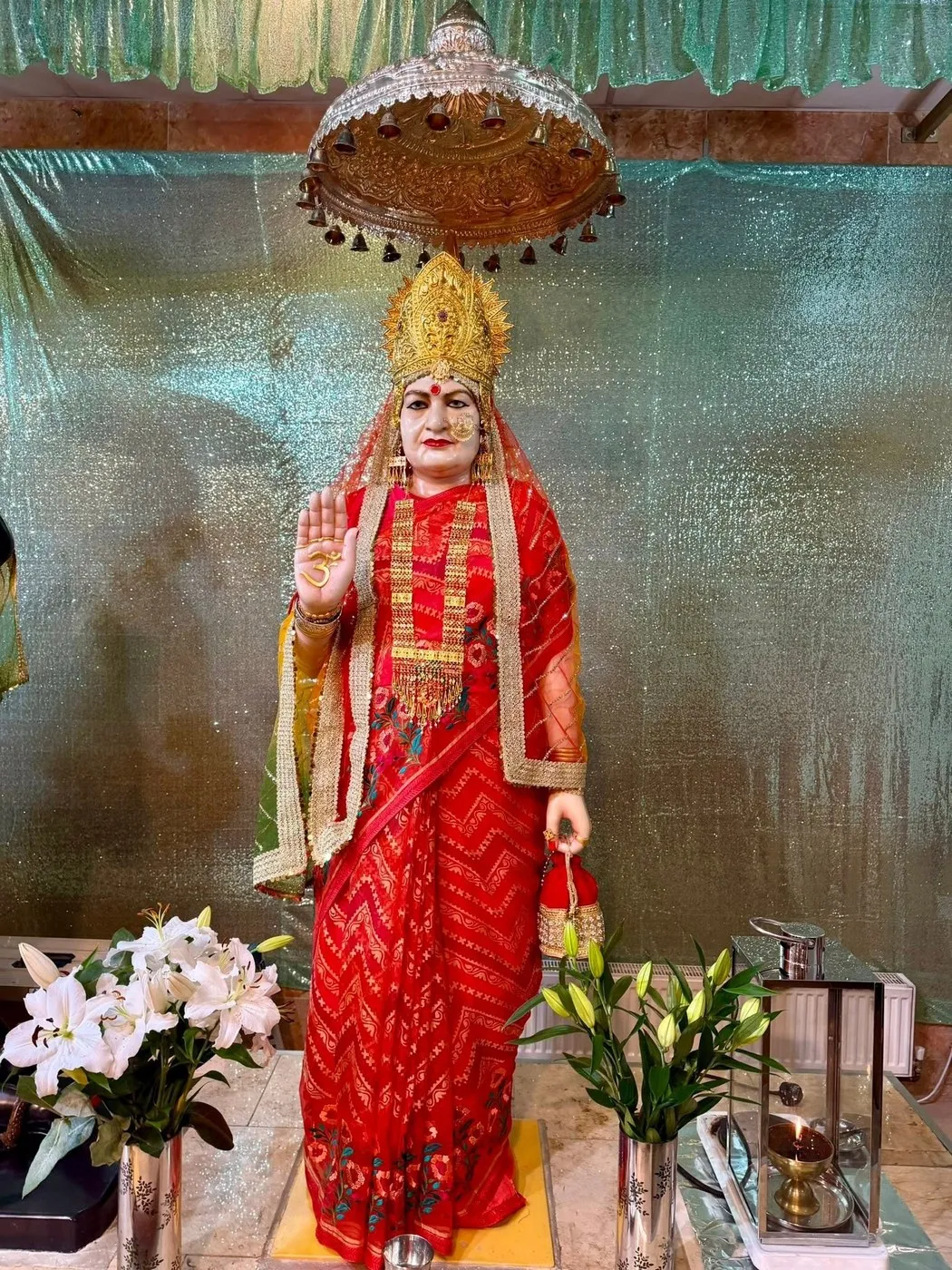
Maa Bhameshwari’s murti is unlike the other Devis on the altar, and deliberately so. She is shown in human form — two arms, a sari, no weapons — because the tradition holds that the Mother walked among her devotees as one of them. Her right hand is raised in blessing: the same abhaya — “do not fear” — that Maa Kali’s raised hand gives, offered in the gentlest possible form.
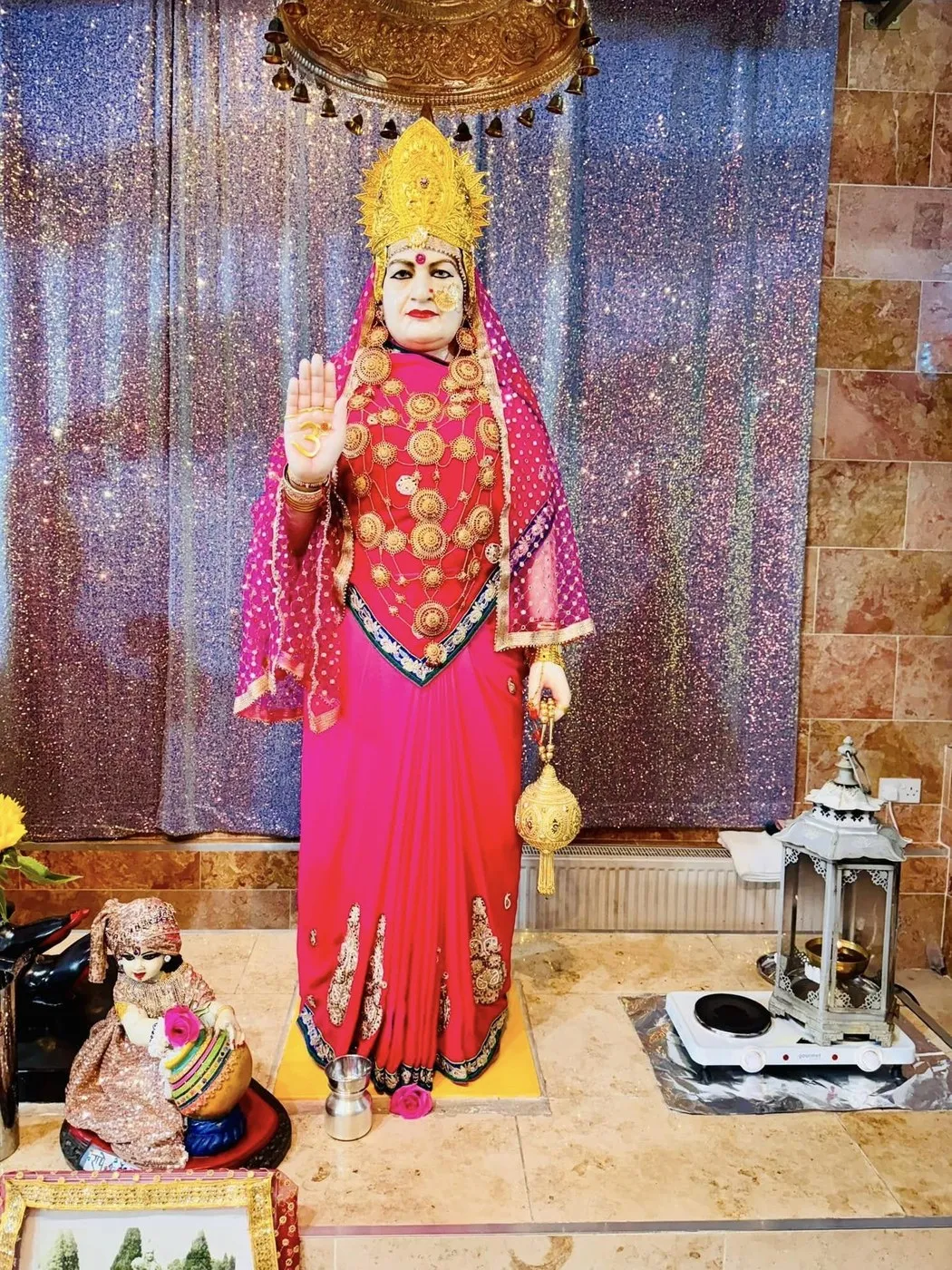
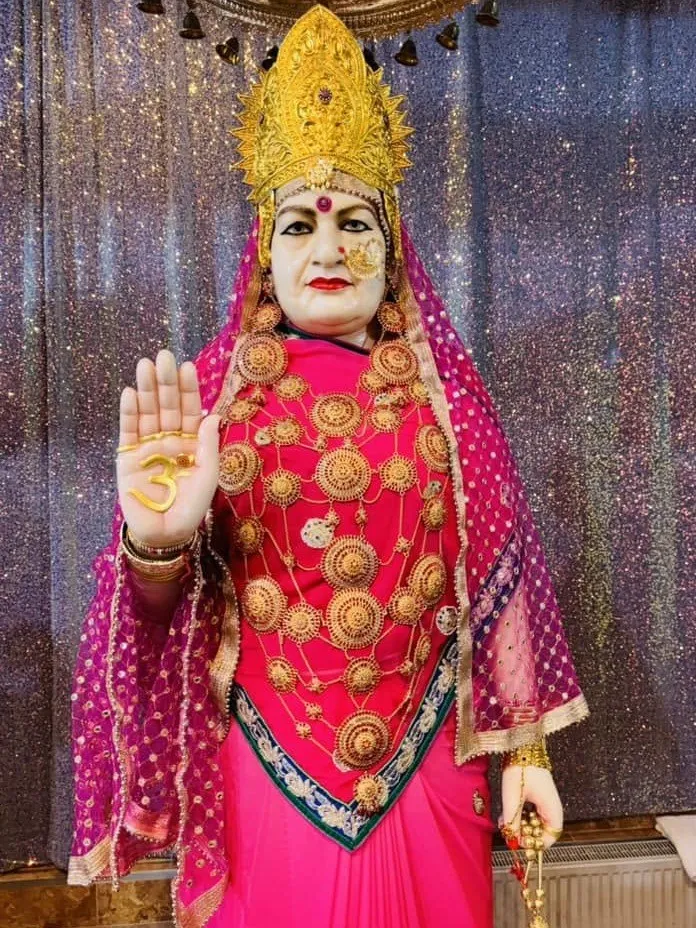
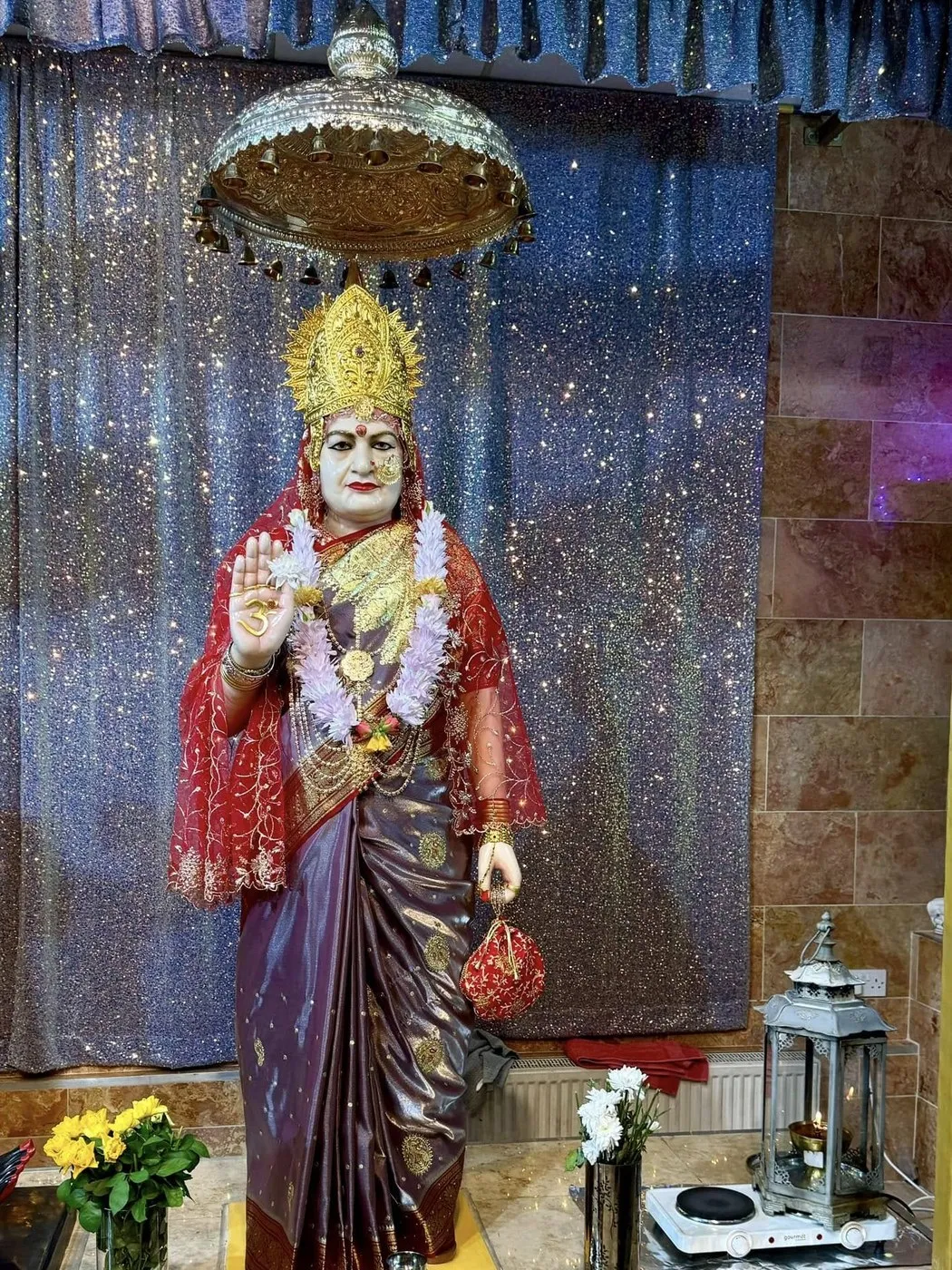
She is dressed with the same devotion as every murti in the mandir, and her shringar through the year is among the richest we keep — crimson, cream and gold, pale rose, the yellow of spring.
Maa Bhameshwari at our mandir
She is honoured at every aarti, every day — 11am and 7pm — and every jagran sung in this mandir rises to her as to Kali Mata, for in our tradition they are one Mother. Devotees bring her the chunni, the coconut and the jyot, and seek her blessing for their families exactly as the sangat at Bham has done for over sixty years.
If you are new and unsure how to offer darshan, ask anyone — being shown the way is how everyone here began.
Shringar
Maa Bhameshwari through the year
The same murti, dressed anew through the year. See the full gallery on Maa's Shringar.
20 shringar
Questions people ask
Who is Maa Bhameshwari?
In the tradition of the Bham lineage, Maa Bhameshwari is revered as an avatar of Kali Mata who took human birth in the village of Bham, in the Hoshiarpur district of Punjab. The foundation stone of her temple at Bham was laid in 1958, and from it grew a mission of worship, seva and langar that continues today — including this mandir, her first temple in the United Kingdom.
Is Maa Bhameshwari a goddess?
Her devotees venerate her as the Mother herself — an avatar of Maa Kali — and her murti stands on our main altar beside Kali Mata. Hers is a living devotional tradition: we present her story as our lineage has received and carried it.
Why does her murti look different from the other Devis?
Maa Bhameshwari is shown in human form — two arms, a sari, her right hand raised in blessing — because the tradition holds that the Mother walked among her devotees in human form. The raised hand is the same promise Kali's raised hand makes: do not fear.
Go deeper
Who is Maa Kali?
Who Maa Kali is, what her fearsome imagery actually means, why she stands on Shiva, and how she is worshipped — explained by a Kali mandir in the West Midlands.
Read →Shaktism — worshipping God as Mother
Shaktism is the Hindu tradition that holds the Goddess to be ultimate reality itself. What Shaktas believe, where it comes from, and why a Kali mandir stands in Willenhall.
Read →What happens at a Mata Ka Jagran?
An all-night vigil in praise of the Mother — hour by hour, what actually happens at a jagran, and the difference between a jagran and a mata ki chowki.
Read →