Centre of the main altar
Maa Kali माँ काली
The Divine Mother in her most powerful form — the presiding Devi of our mandir.
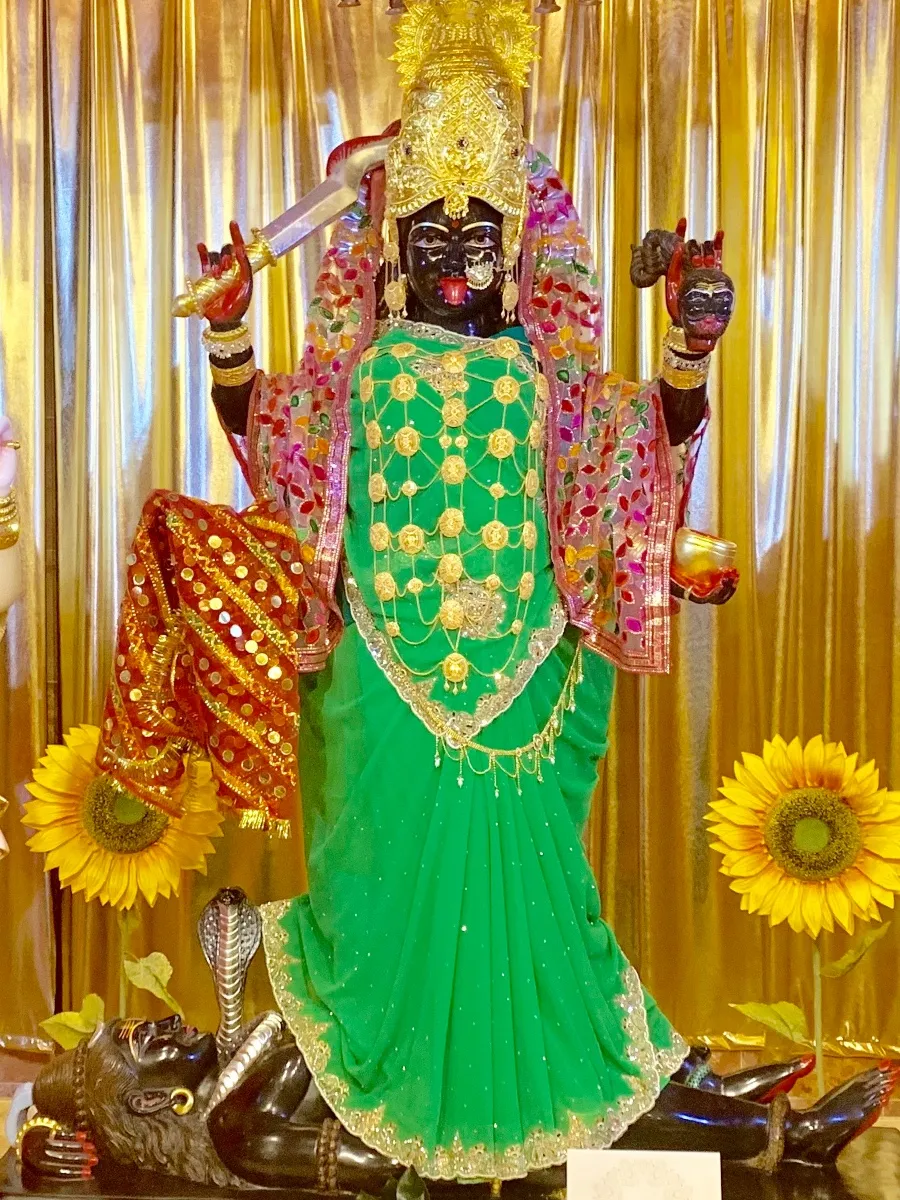
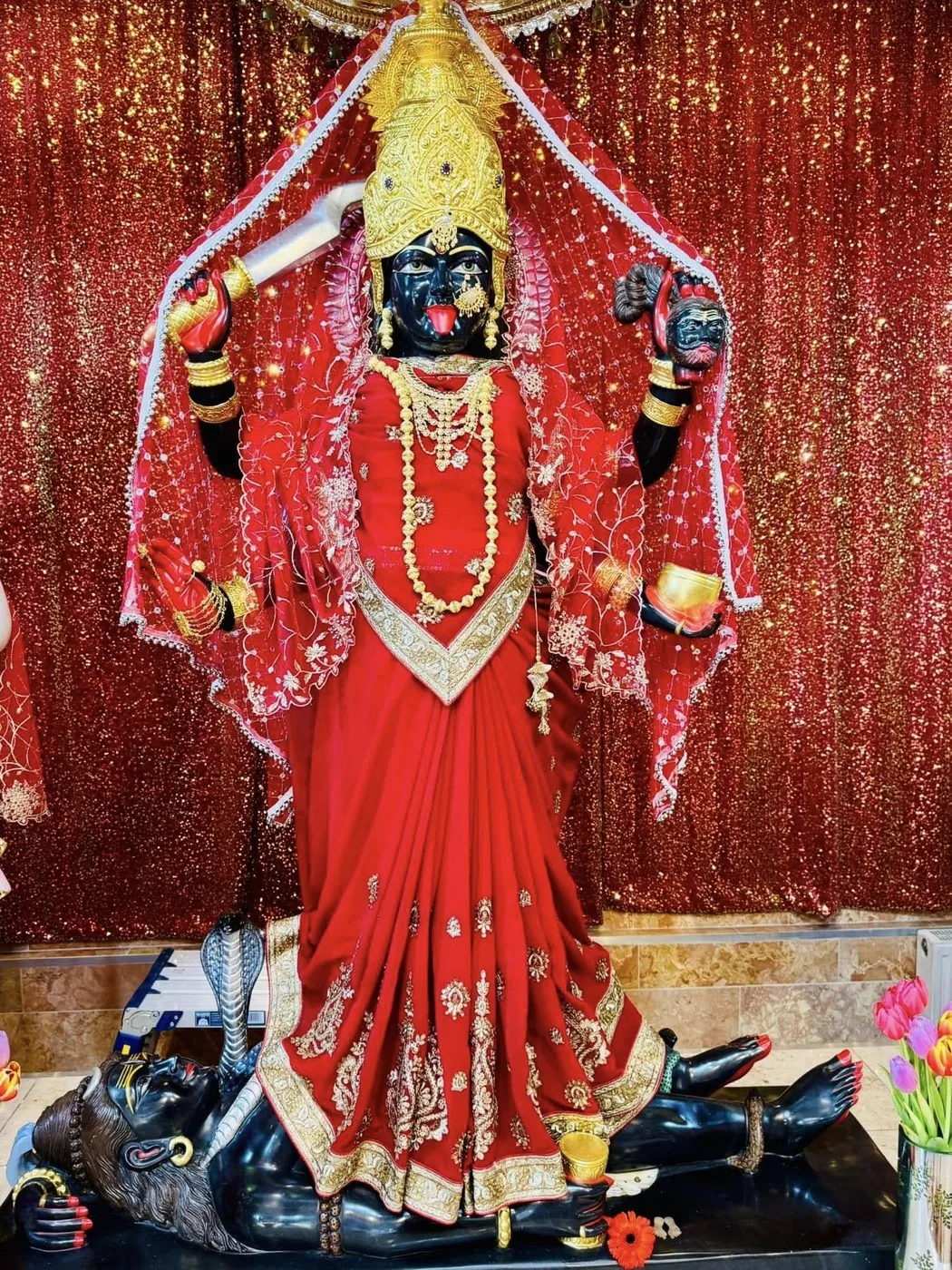
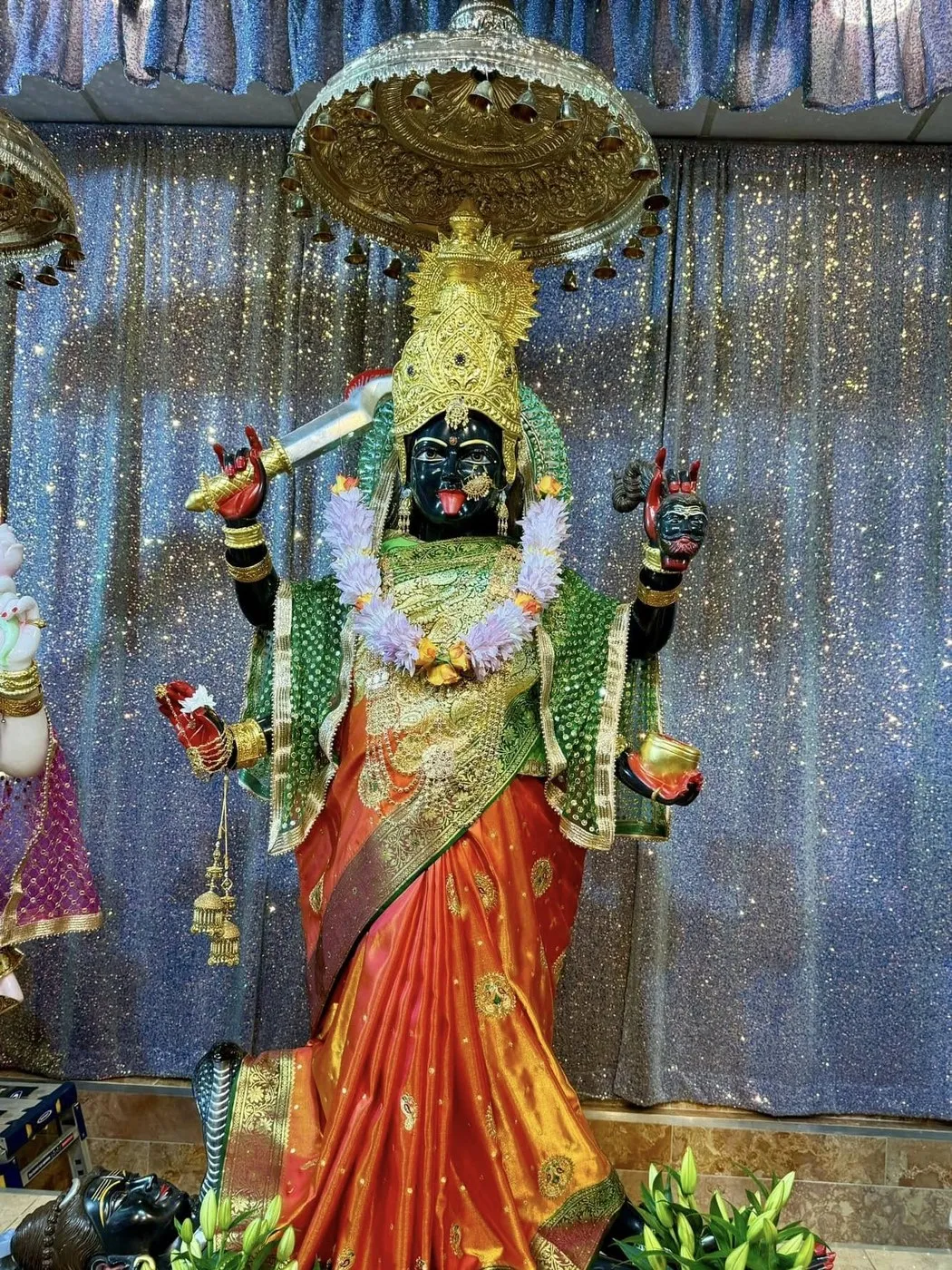
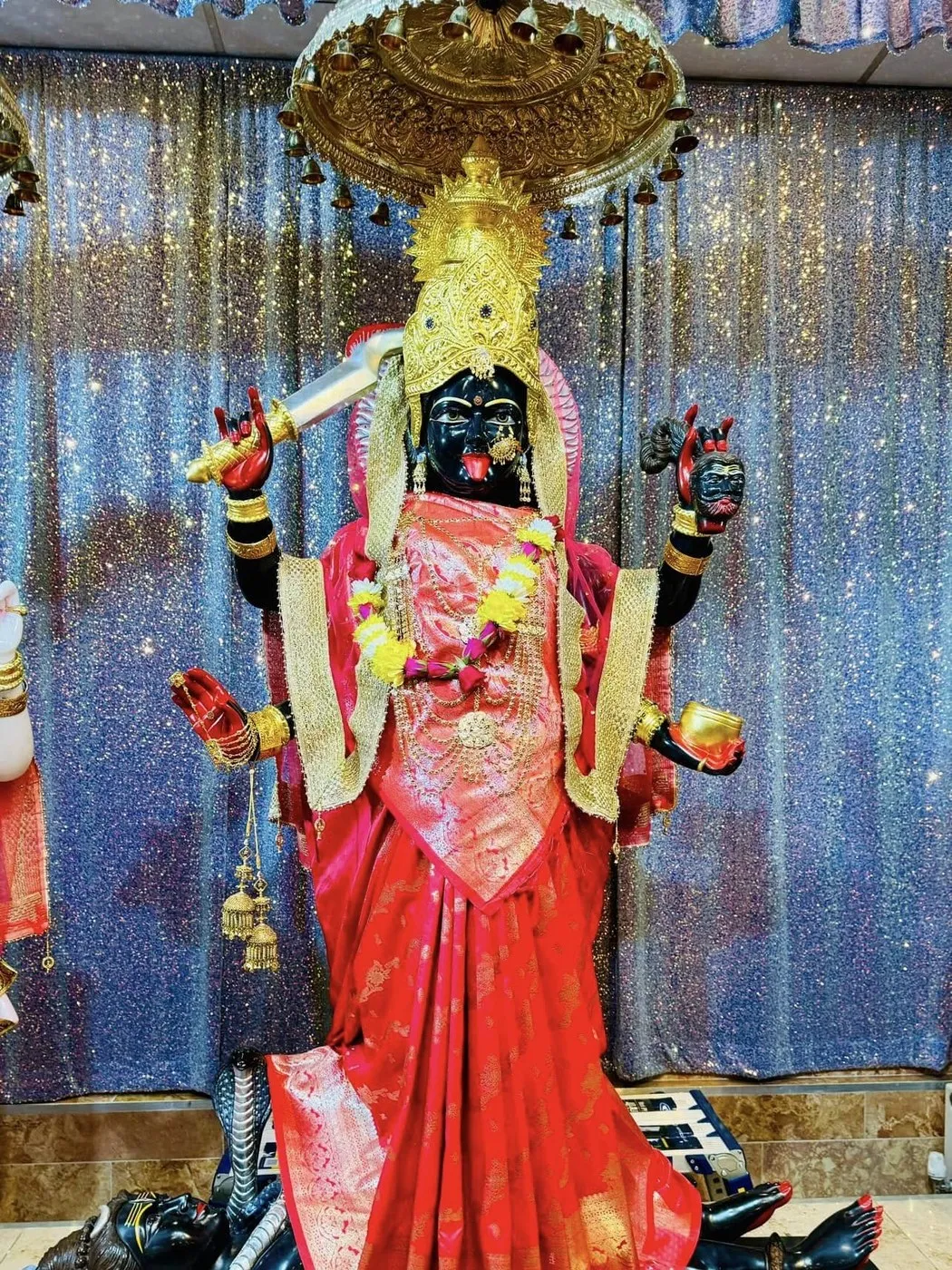
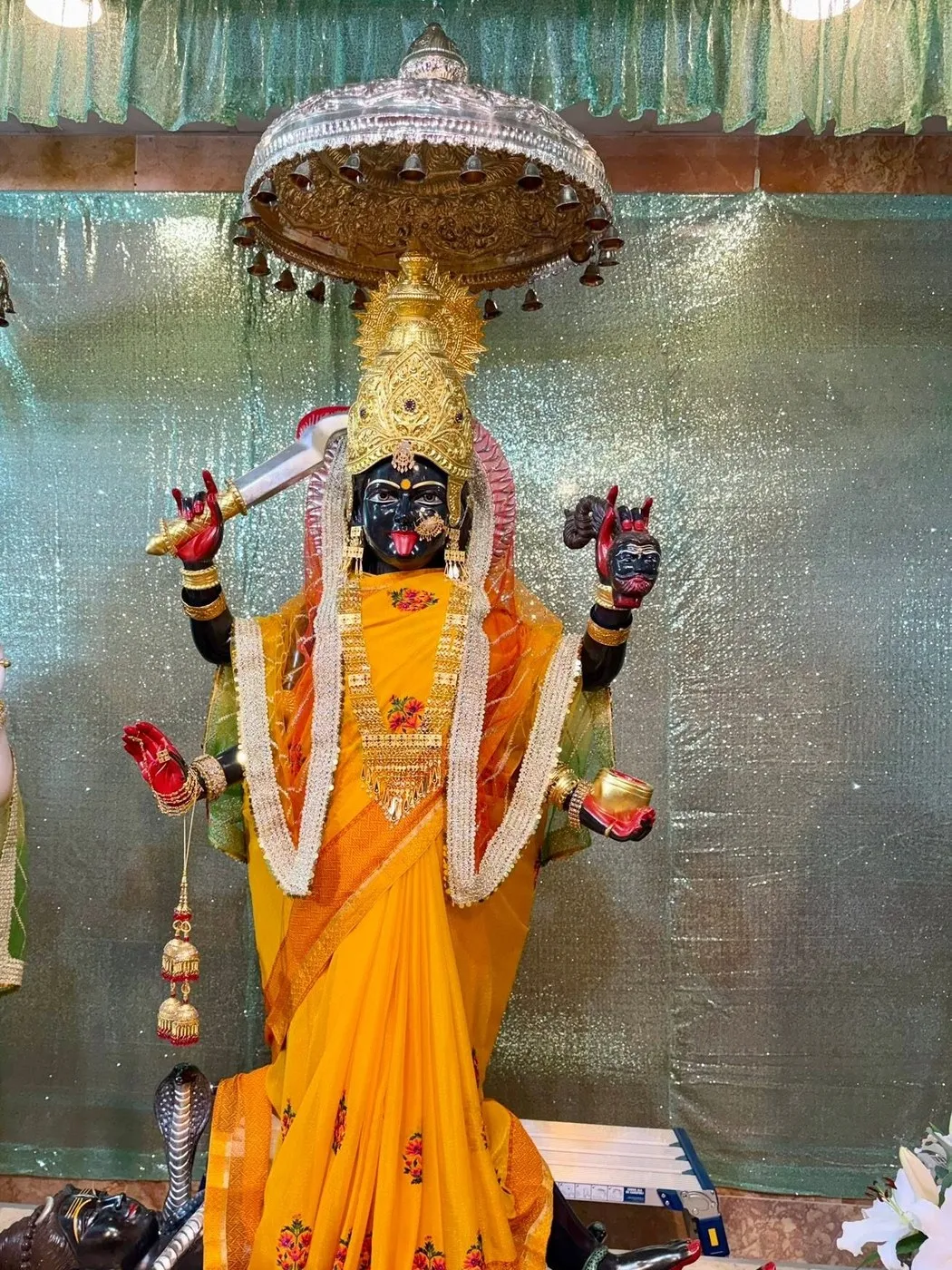
At the centre of our main altar, beneath her silver chhatra, stands Maa Kali — the reason this mandir exists, and the Mother to whom its daily aarti rises.
Who she is
Kali is the Divine Mother — Shakti, the living power of the universe — in her most concentrated form. Her name comes from the Sanskrit kāla, which means both time and black: she is time itself, that which eventually receives everything that is born, and the darkness into which all forms dissolve. What she destroys is not her children but what harms them — evil, arrogance, and fear itself.
In the great scripture of the Goddess, the Devi Mahatmya, Kali springs from the brow of Durga at the height of battle and devours the demon Raktabija, whose every spilled drop of blood would otherwise have become a new demon. The lesson is loved by her devotees: some things cannot be reasoned with, and it is the Mother who ends them.
She is also honoured as the first of the ten Mahavidyas, the great wisdom-forms of the Devi, and in the Shakta tradition of this mandir she is understood as Adi Parashakti — the primordial power, ultimate reality itself.
Reading her form
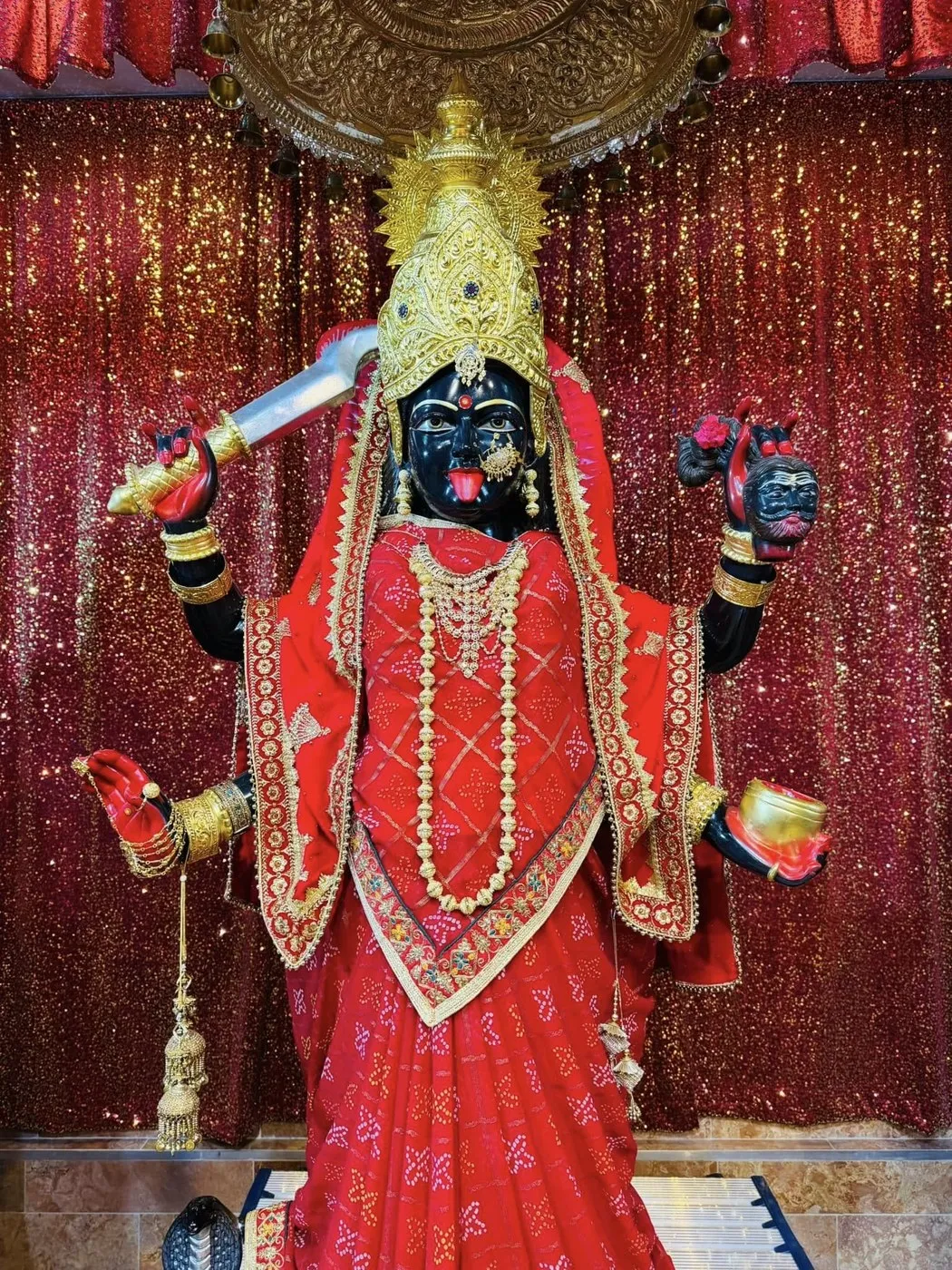
Every element of our murti is a teaching:
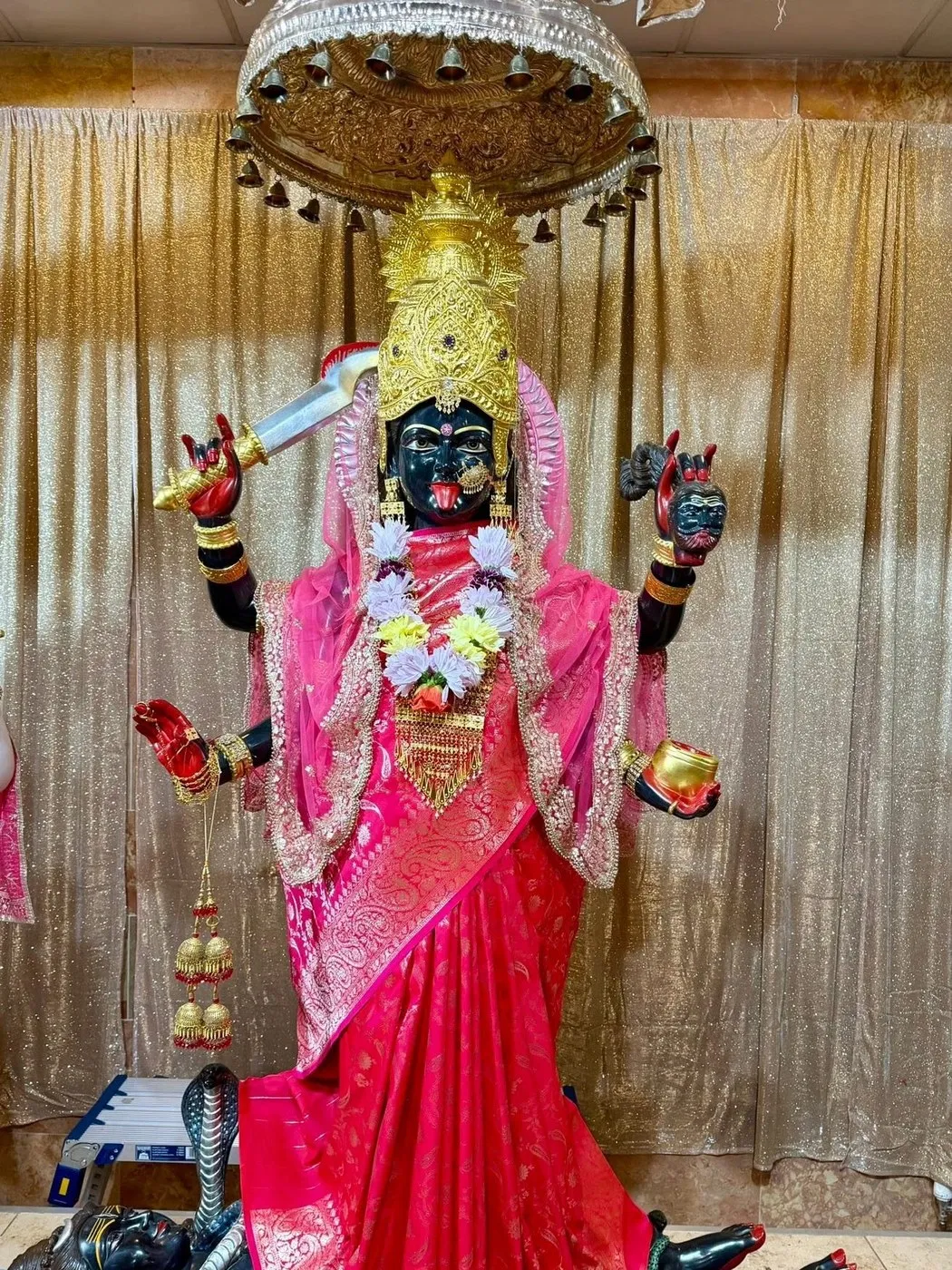
- Her dark colour — beyond all form and description, as the night sky holds every star.
- The sword — it cuts ignorance, and the false idea that we are separate from God.
- The severed head — the ego, severed out of love, again and again.
- Her raised hand — abhaya mudra: “do not fear.”
- Her giving hand — varada mudra: “I grant.”
- Her foot upon Shiv Ji — power moving upon the stillness of pure consciousness; the deepest teaching in the image.
- Her tongue — held between her teeth, and understood in several ways at once.
Our murti follows the benevolent Dakshinakali form — the most widely worshipped Kali across Bengal and the Punjabi Devi tradition alike.
Kali at our mandir
Maa Kali receives aarti every day at 11am and 7pm, and it is before her that our jagrans keep vigil and our Chandi Path is recited. Her great night is Kali Puja, on the new moon of Diwali — while much of the Hindu world lights lamps for Lakshmi, her devotees keep the night with the Mother in the dark.
Beside her stands Maa Bhameshwari, venerated in the tradition of our lineage as her avatar — which is why a Kali mandir stands in Willenhall at all.
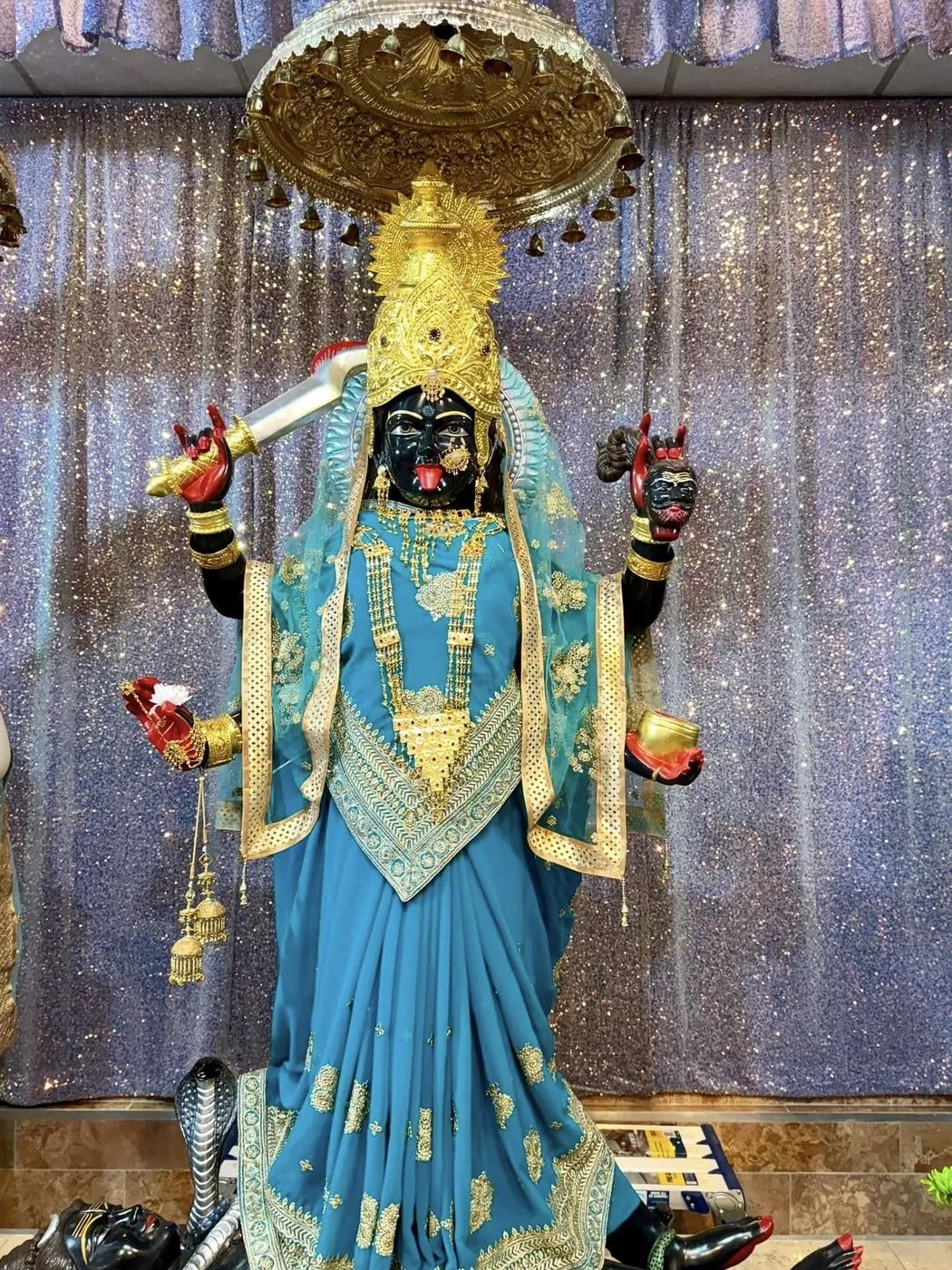
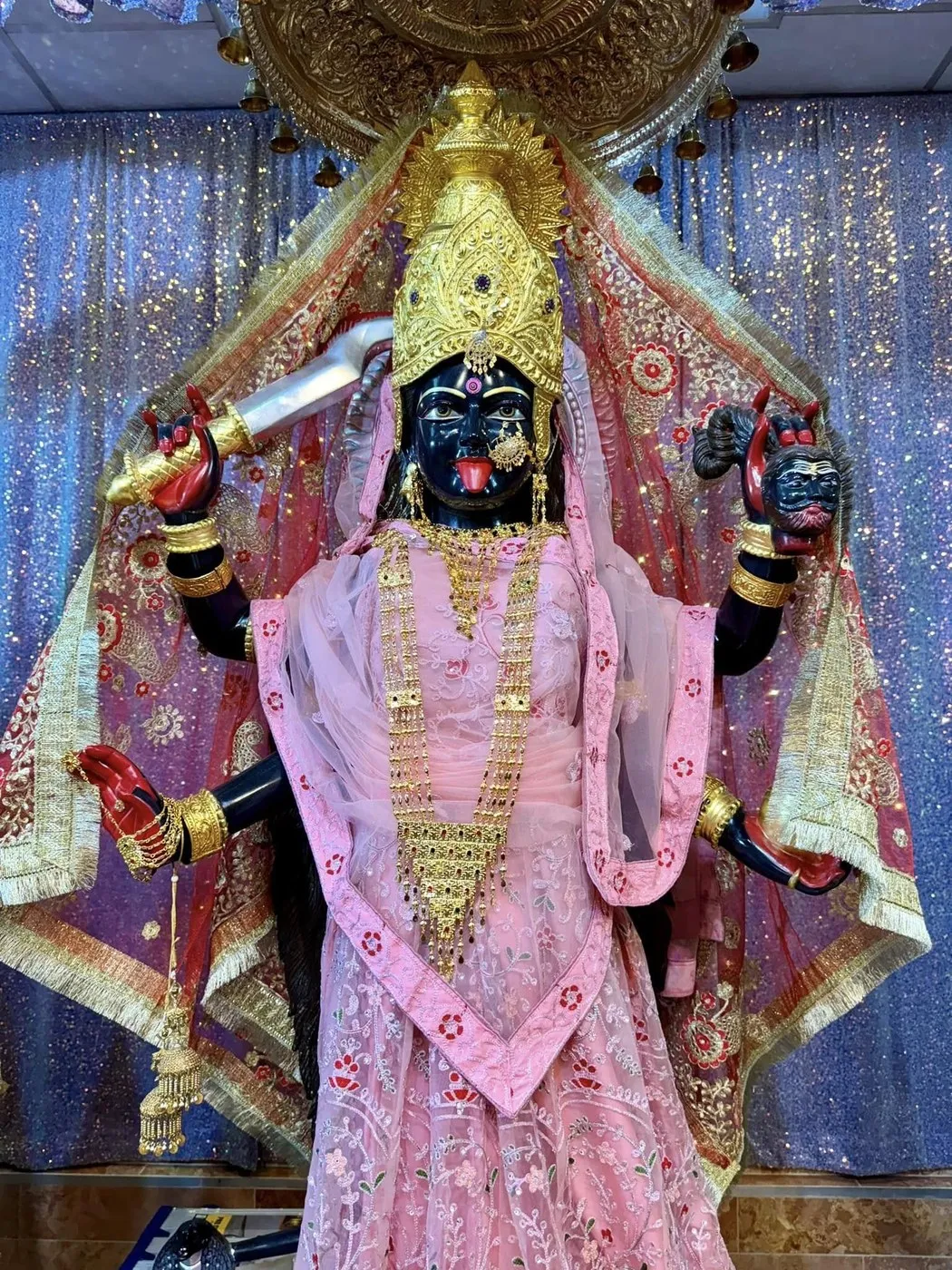
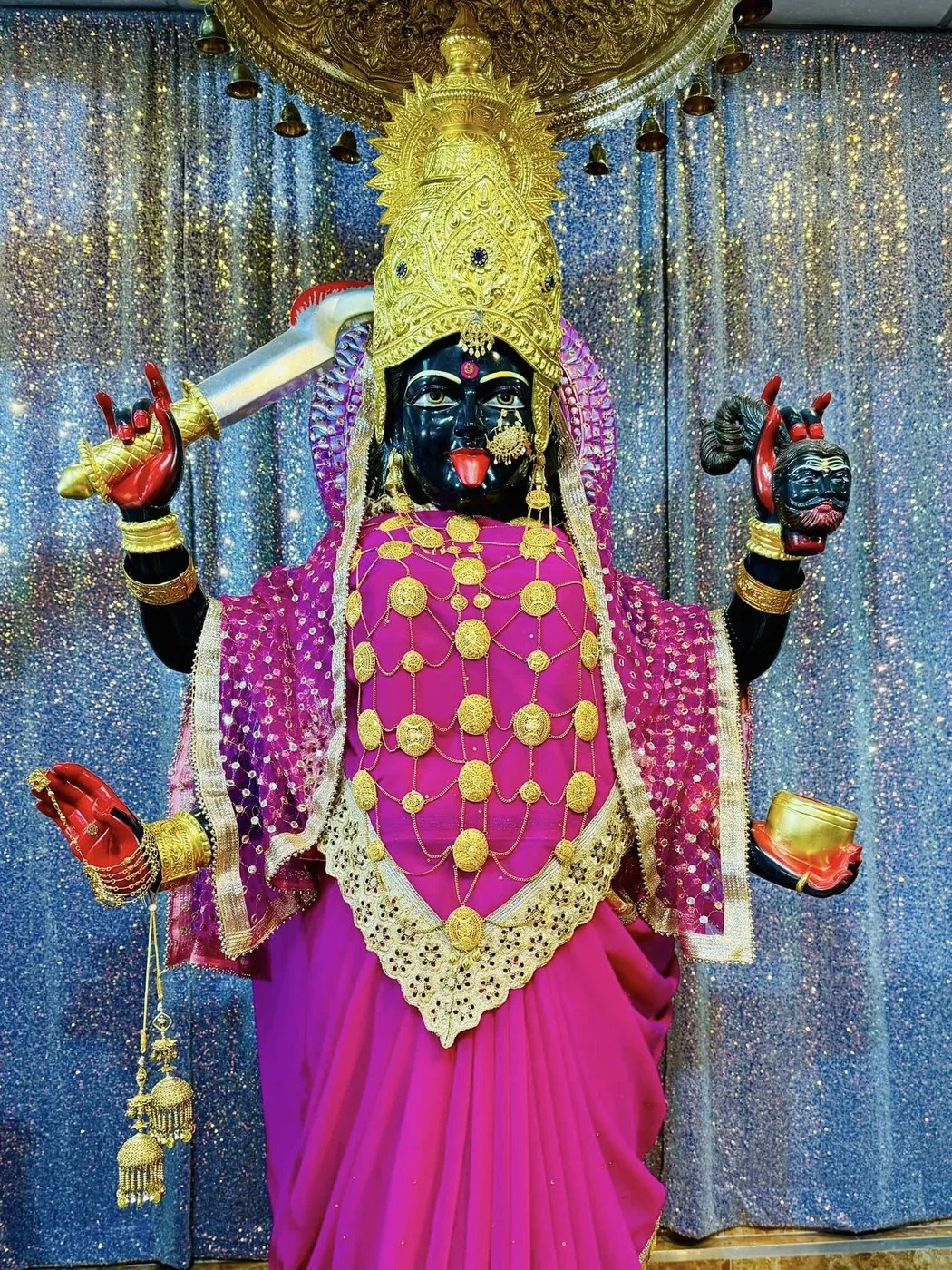
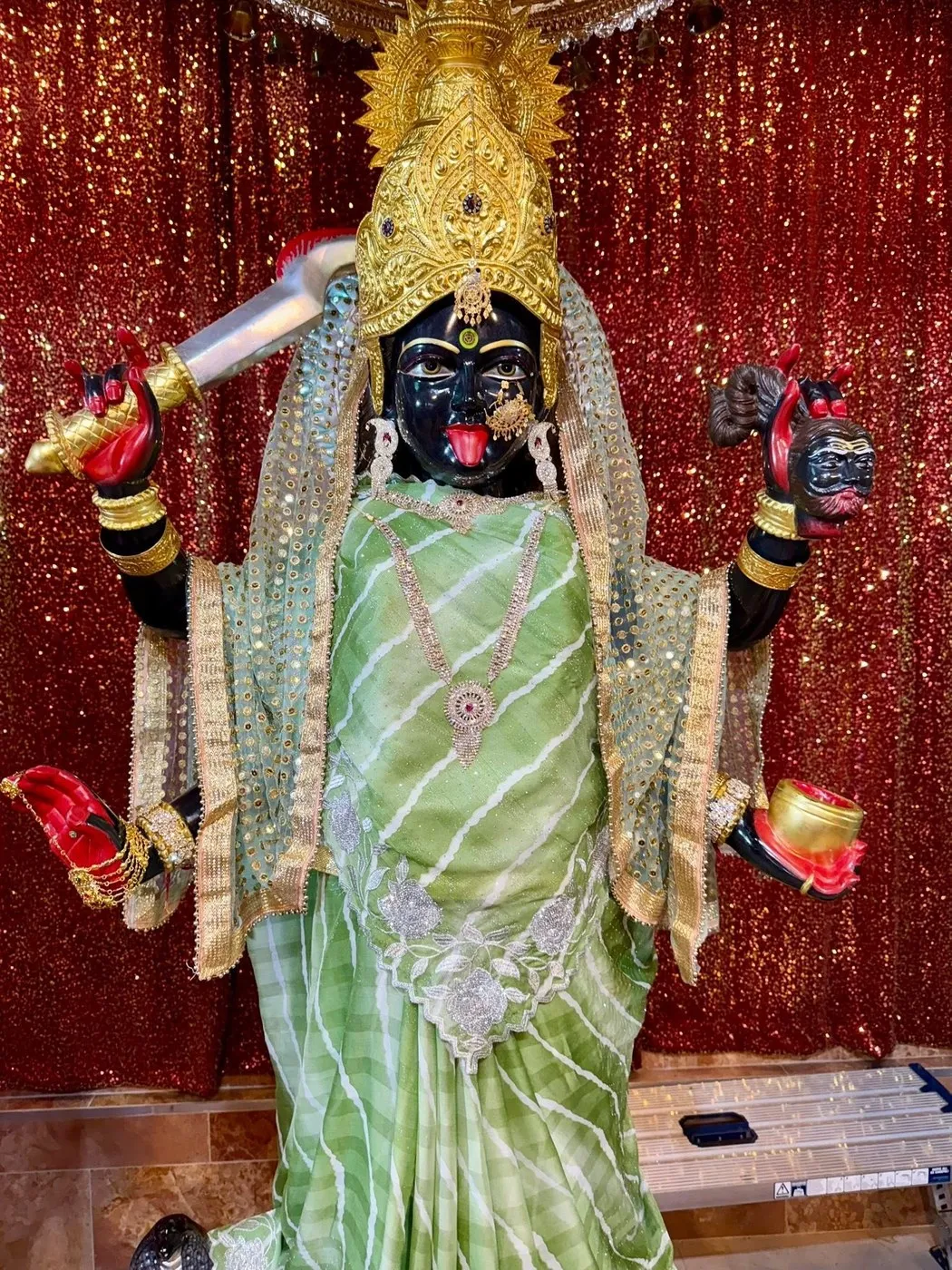
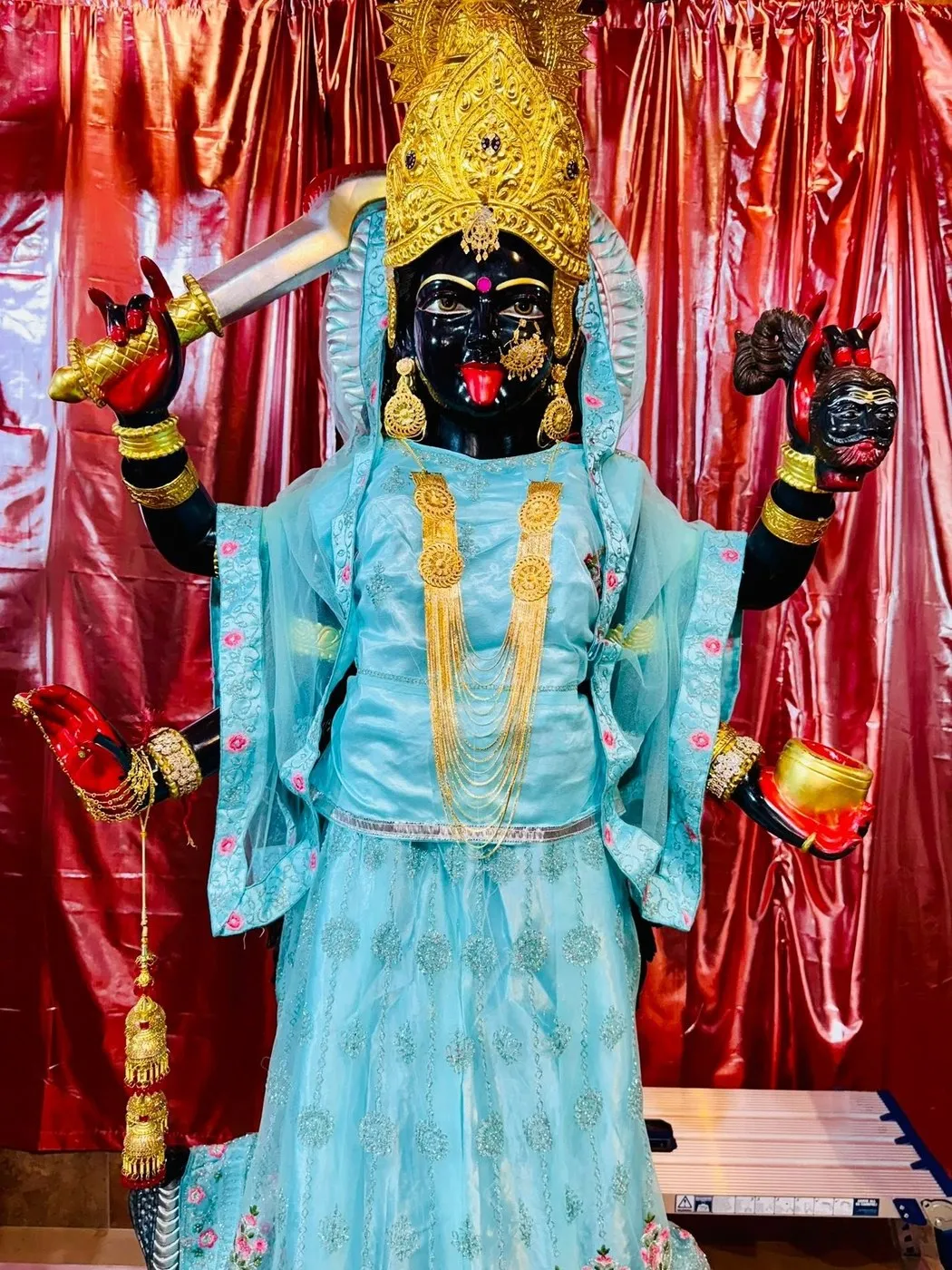
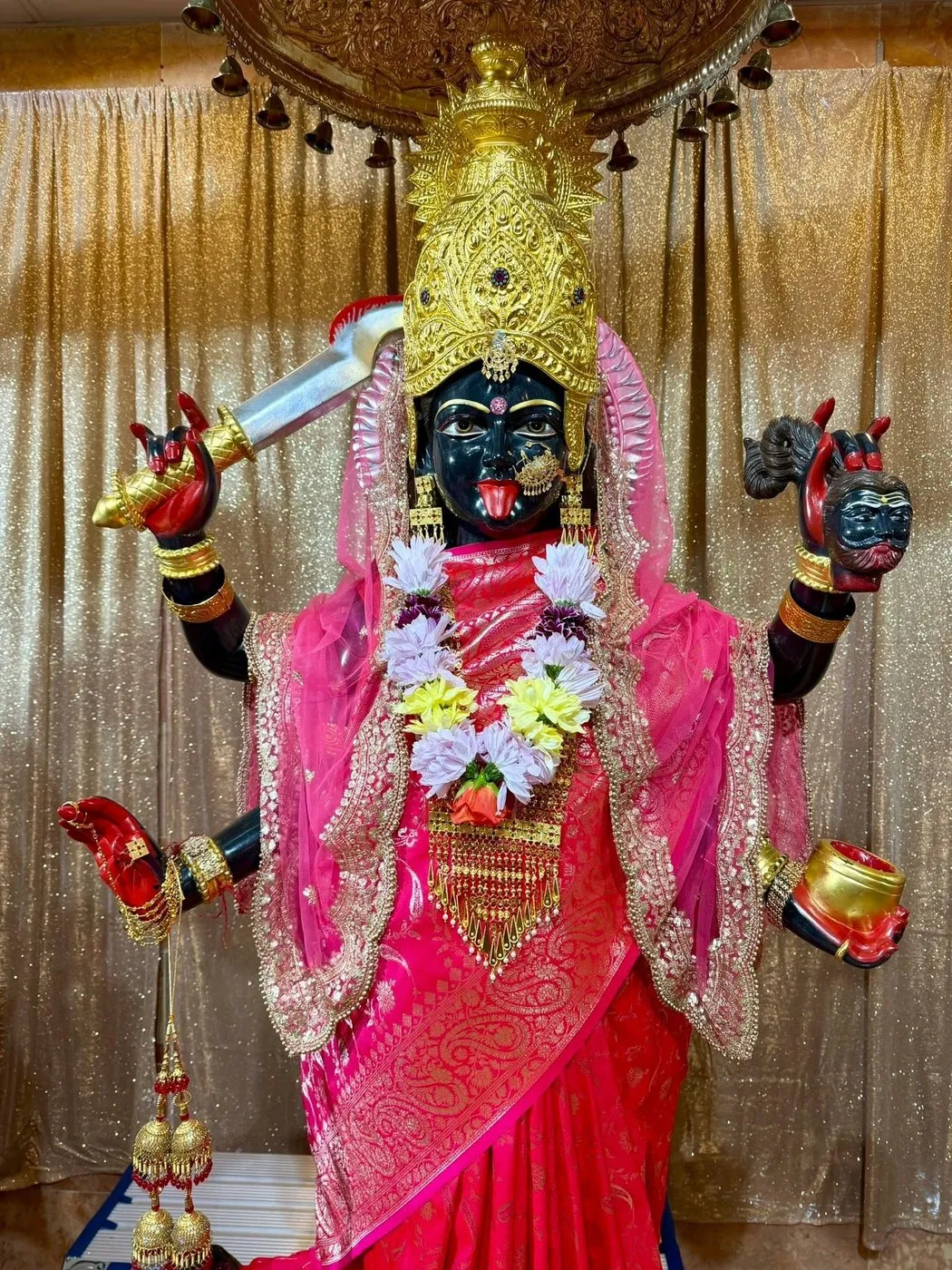
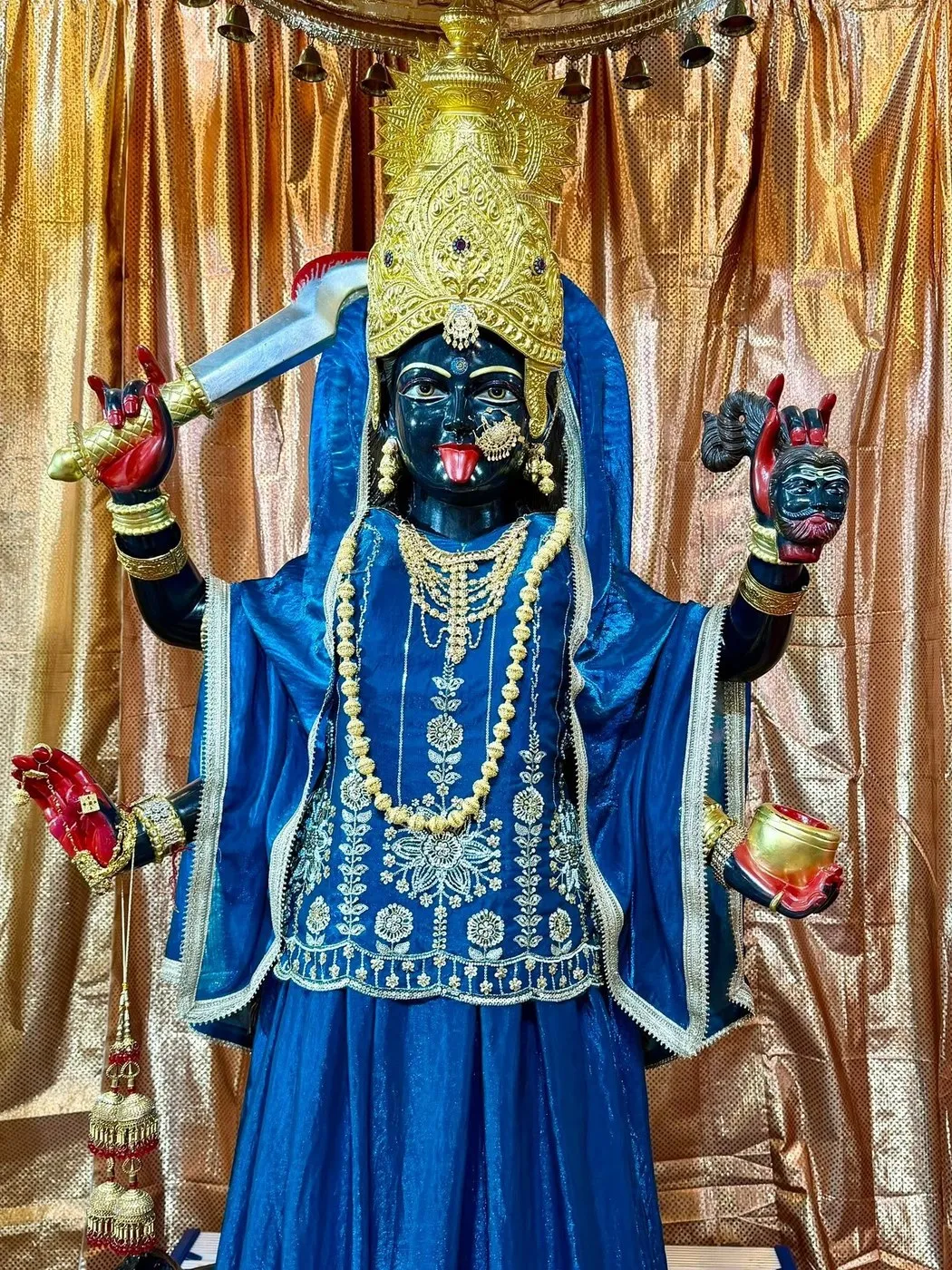
Her shringar — the silks, jewels and flowers she wears — changes week after week. Devotees will tell you: you come for darshan and catch your breath, because Maa is in a colour you have never seen her wear.
Shringar
Maa Kali through the year
The same murti, dressed anew through the year. See the full gallery on Maa's Shringar.
13 shringar
Questions people ask
Is Maa Kali dangerous or evil?
No. Kali looks fearsome because what she destroys — ego, evil, fear itself — does not go quietly. To her devotees she is Maa, the Mother: fierce in protecting her children and boundlessly tender towards them. Her raised hand says 'do not fear'; her lowered hand grants blessing.
Why does Kali stand on Shiva?
In the Shakta understanding, Shiva is pure consciousness — still and unmoving — and Kali is Shakti, the living power that acts. She stands upon him as power moves upon the ground of awareness. The beloved story tells that Shiva lay in her path to calm her battle-fury, and she stopped the moment she recognised him.
Why is Kali's tongue out?
The tradition holds several meanings together: her all-consuming power in battle (drinking the demon Raktabija's blood before it could touch the ground), passion held in check by calm, and — in a much-loved Bengali telling — a mother's startled modesty on finding her foot upon her husband. None of them cancels the others.
Go deeper
Who is Maa Kali?
Who Maa Kali is, what her fearsome imagery actually means, why she stands on Shiva, and how she is worshipped — explained by a Kali mandir in the West Midlands.
Read →Why does Kali stand on Shiva?
The image of Maa Kali standing on Shiva is Hinduism's deepest teaching about power and consciousness — plus the beloved story of the Mother who stopped in her tracks.
Read →Why is Kali's tongue out?
The meaning of Maa Kali's extended tongue — the battle-fury reading, the tantric reading, and the beloved Bengali story of a mother's modesty. All three, honestly explained.
Read →