Left of the main altar
Maa Lakshmi माँ लक्ष्मी
Goddess of prosperity, fortune and auspiciousness — the grace of a flourishing life.
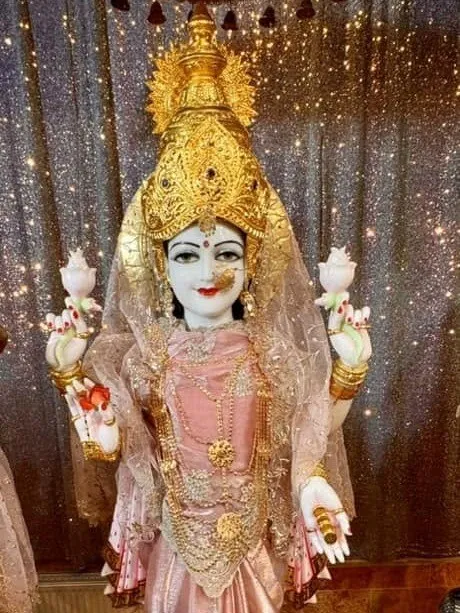
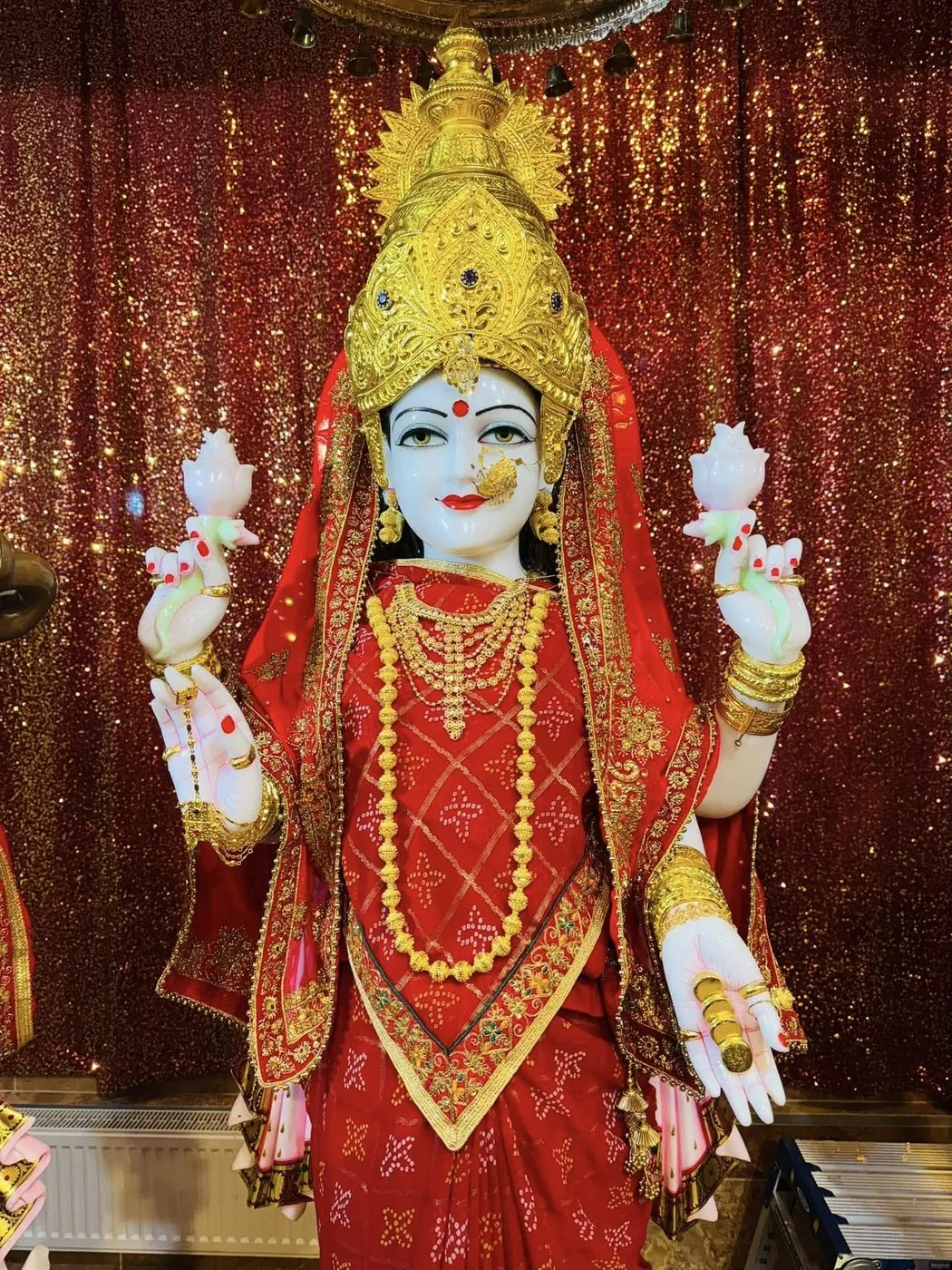
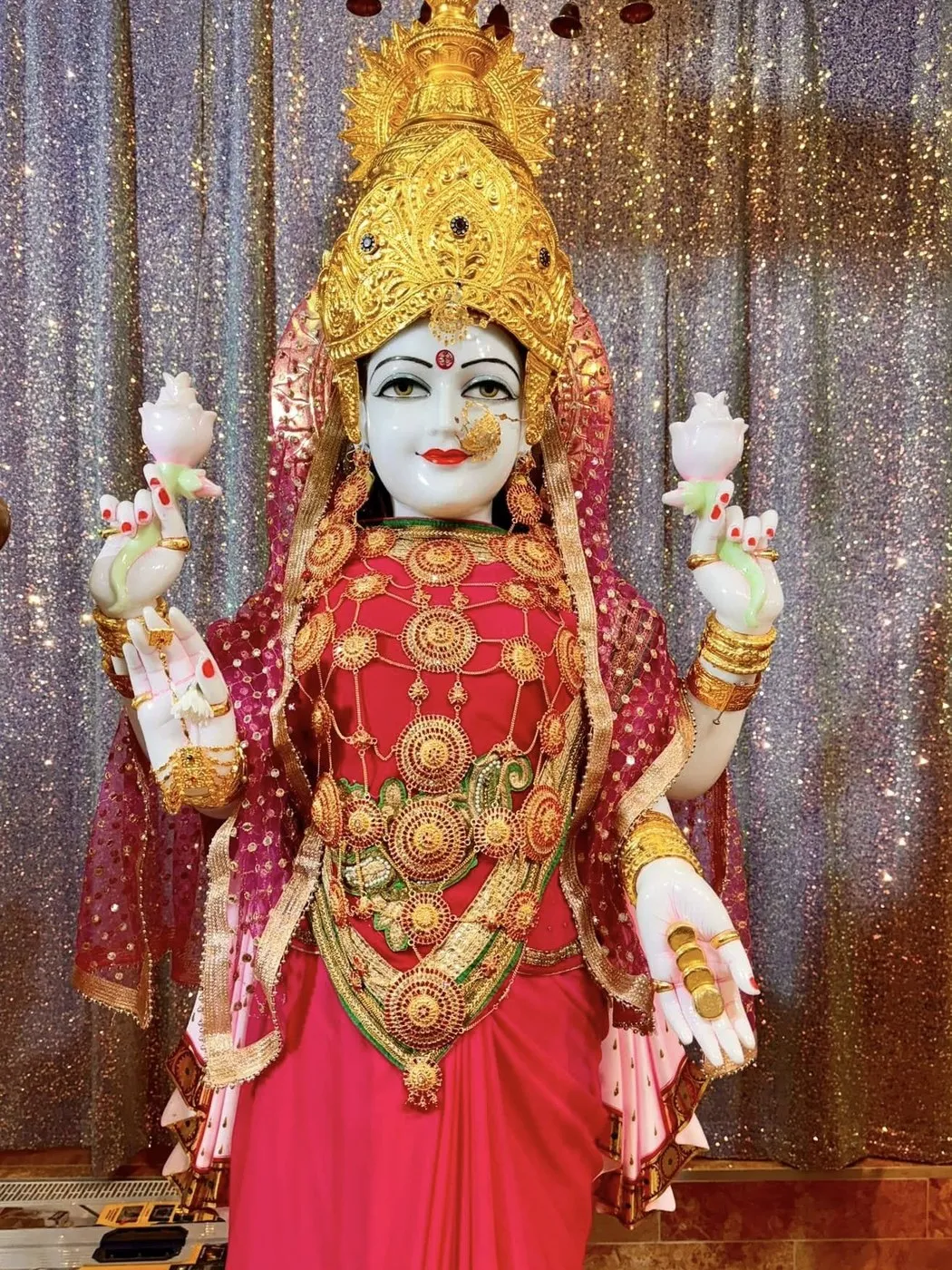
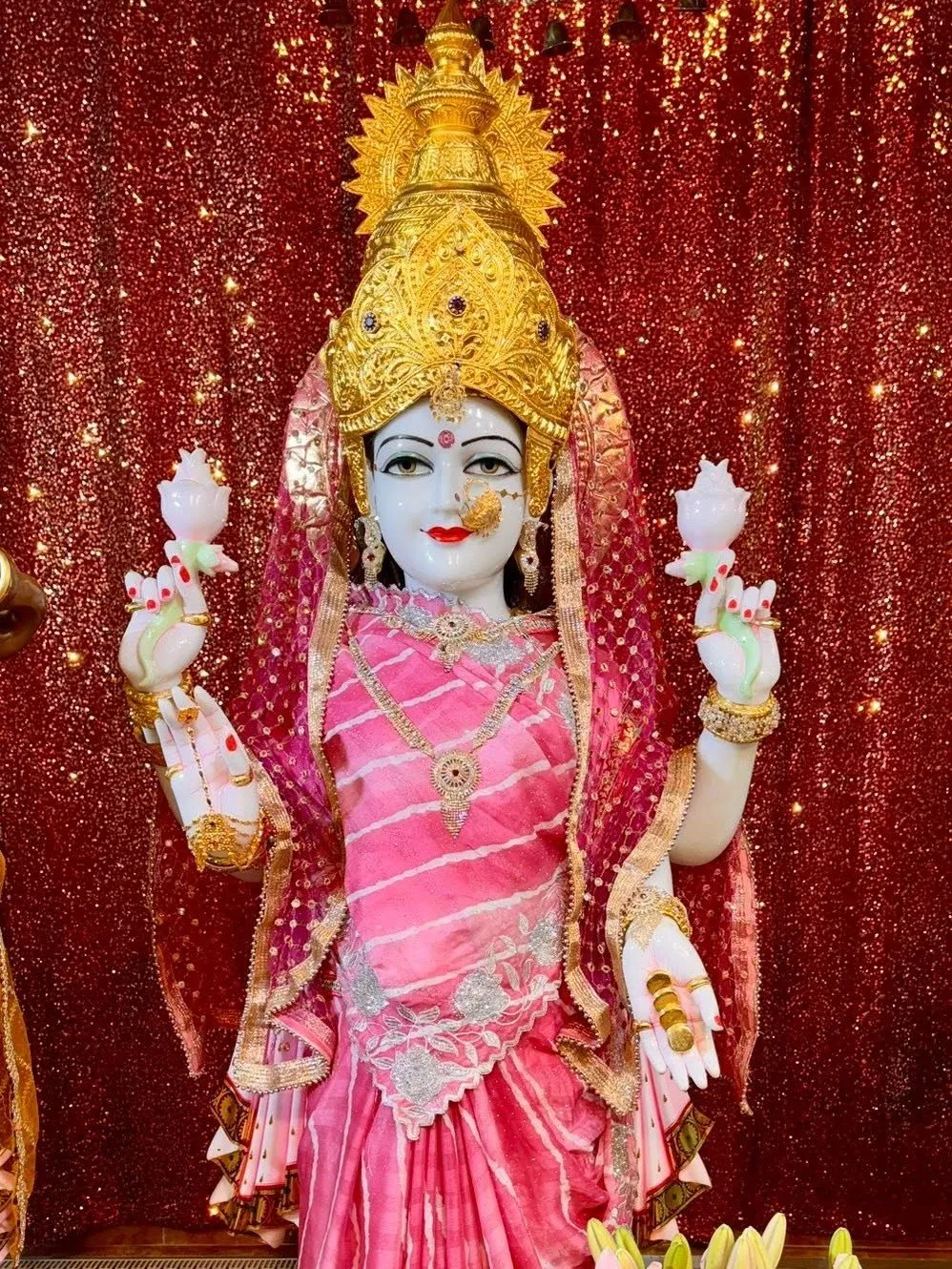
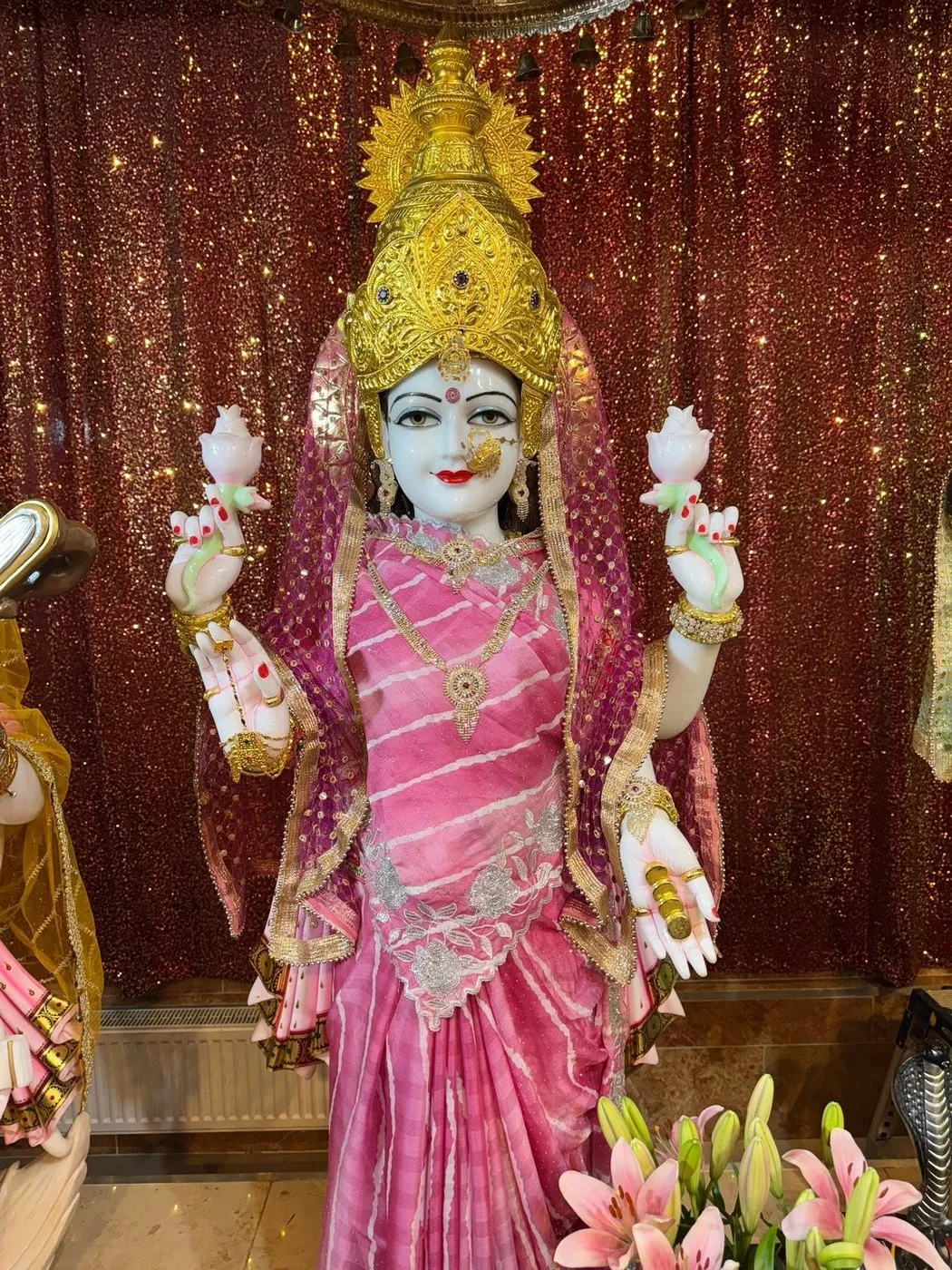
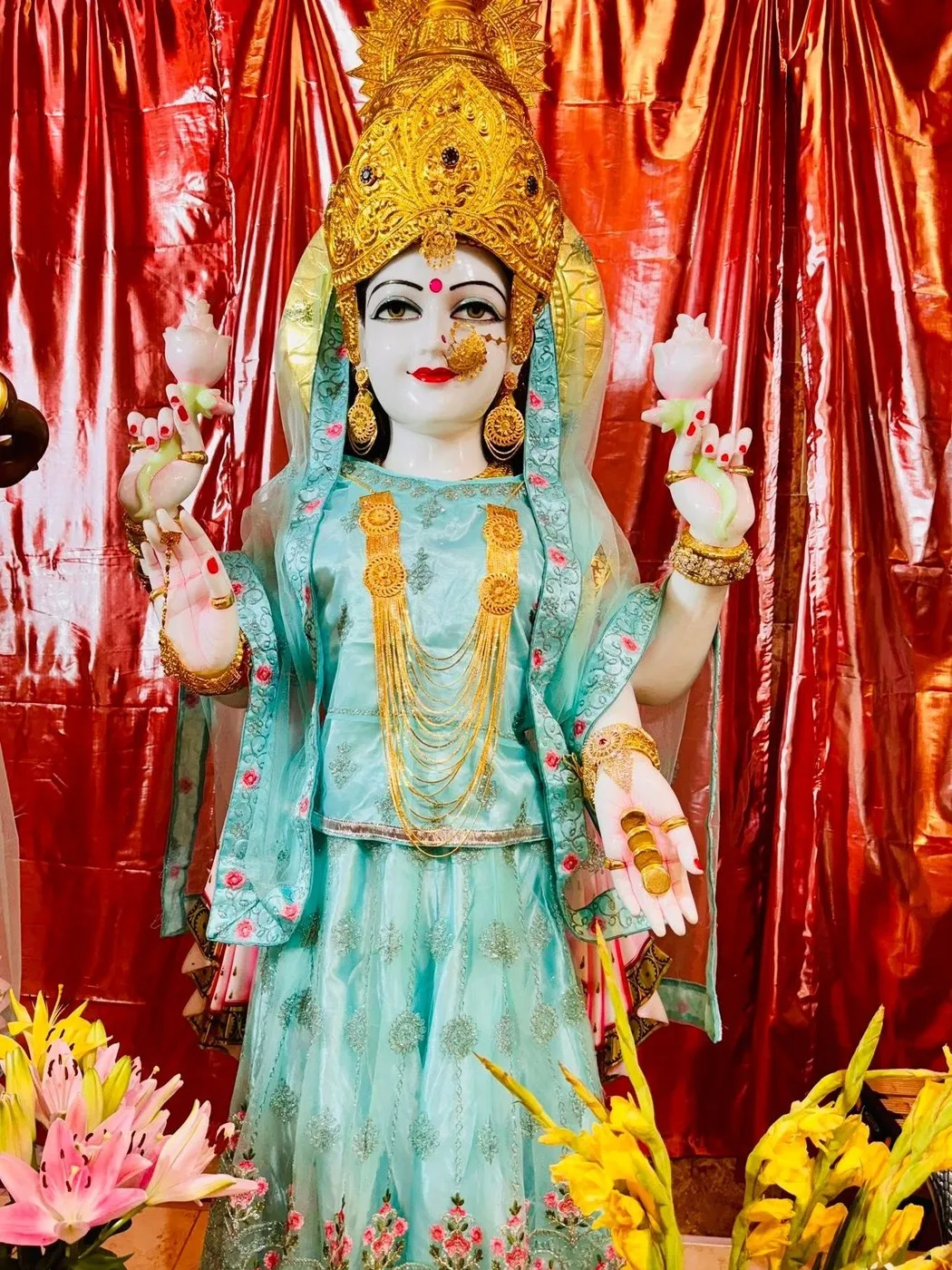
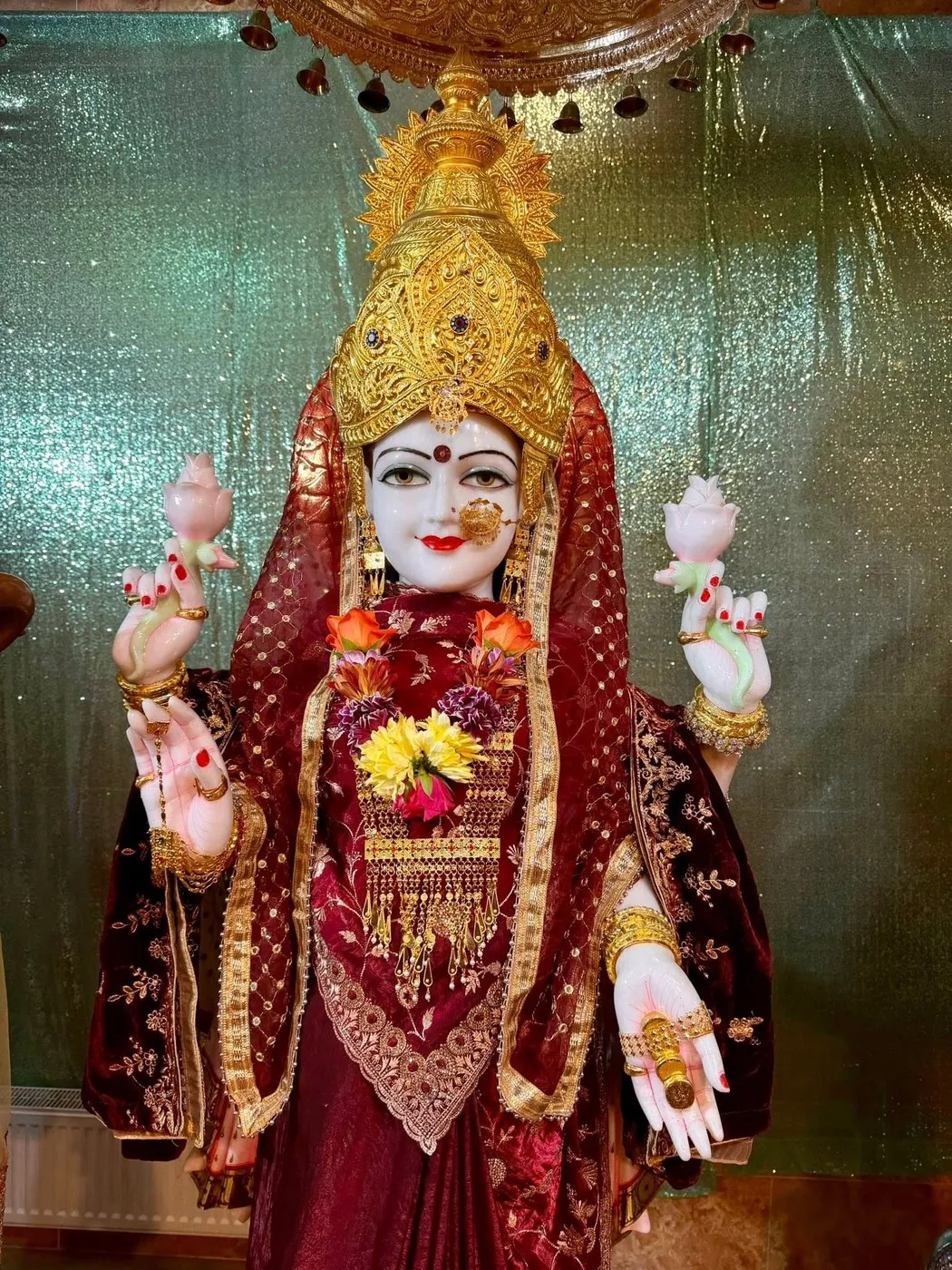
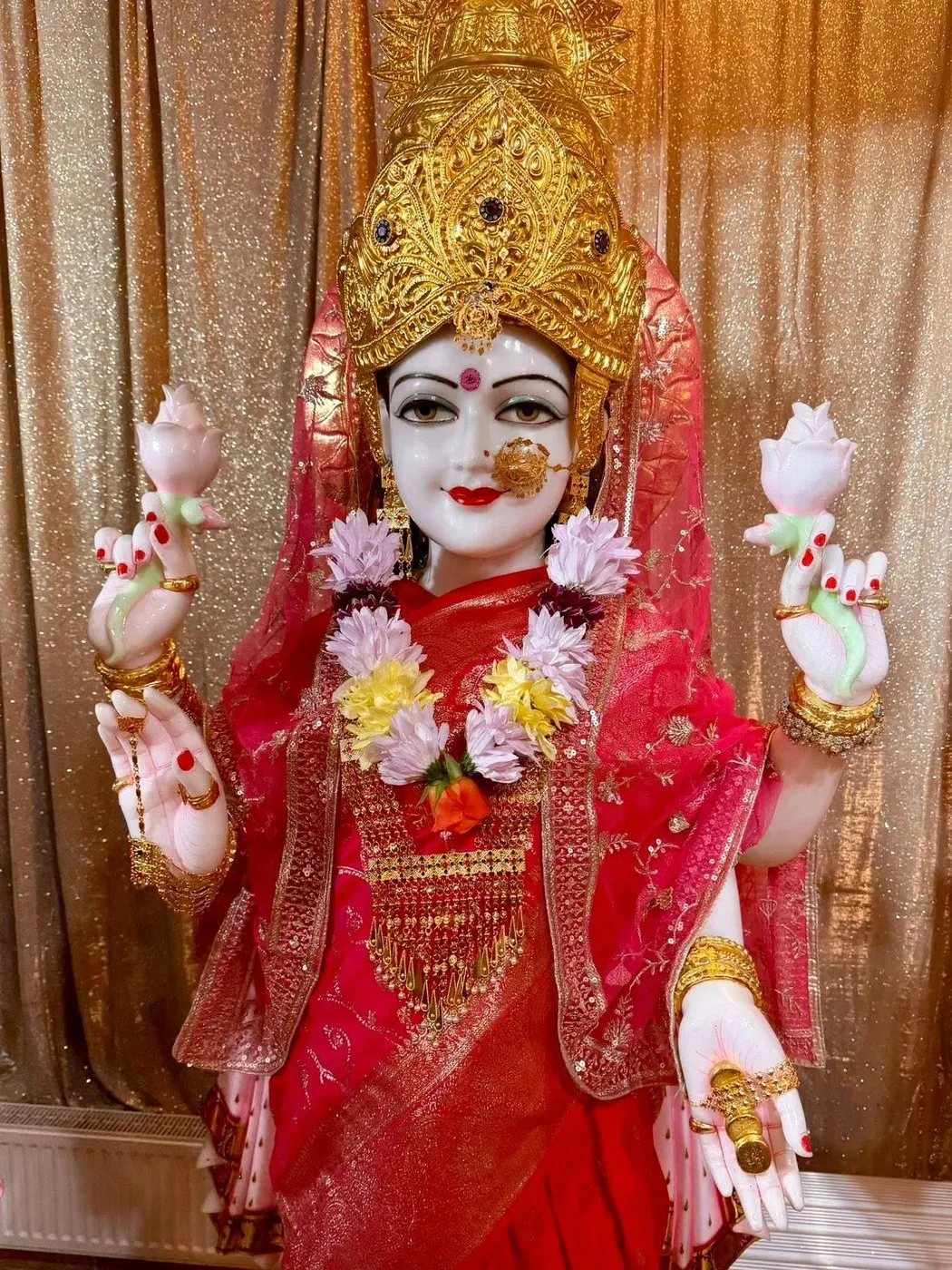
To Maa Kali’s left on the main altar stands Maa Lakshmi — a lotus in each raised hand, gold at her throat, the Mother to whom every household turns for its welfare.
Who she is
Lakshmi is the goddess of prosperity, fortune and auspiciousness — and the word that best carries her meaning is her oldest name, Shri. Long before it became the honorific at the front of names (including our mandir’s), shri meant grace, well-being, the quality of a life that is flourishing. That is Lakshmi’s true gift. Money is part of it; so are health, harmony, a good home and a mind at peace.
In the wider Hindu family she is the consort and shakti of Vishnu, the sustainer — appearing alongside his avatars as Sita with Rama and Rukmini with Krishna. Tradition also loves her eightfold form, the Ashtalakshmi: eight Lakshmis for eight kinds of abundance, from courage to children to knowledge.
Reading her form
- Four arms — the four ends of a rightly lived life: dharma (right conduct), artha (means), kama (joy), moksha (liberation).
- A lotus in each raised hand — grace growing through the world, unstained by it.
- Gold coins, in many depictions, flowing from her lower hand — abundance that gives itself away.
- Elephants flank her in the beloved Gaja-Lakshmi form, pouring water over her — the rains that make the earth generous.
Lakshmi at our mandir
Her great night is Diwali — Lakshmi Puja on the new moon of Kartik — when lamps are lit to welcome her across every threshold. At our mandir the same night is also Kali Puja: the two worships share the darkness, Lakshmi with her lamps and Kali with her vigil, and no Hindu finds that strange. She is honoured too through the middle nights of Navratri, when the Mother’s abundance follows the Mother’s protection.
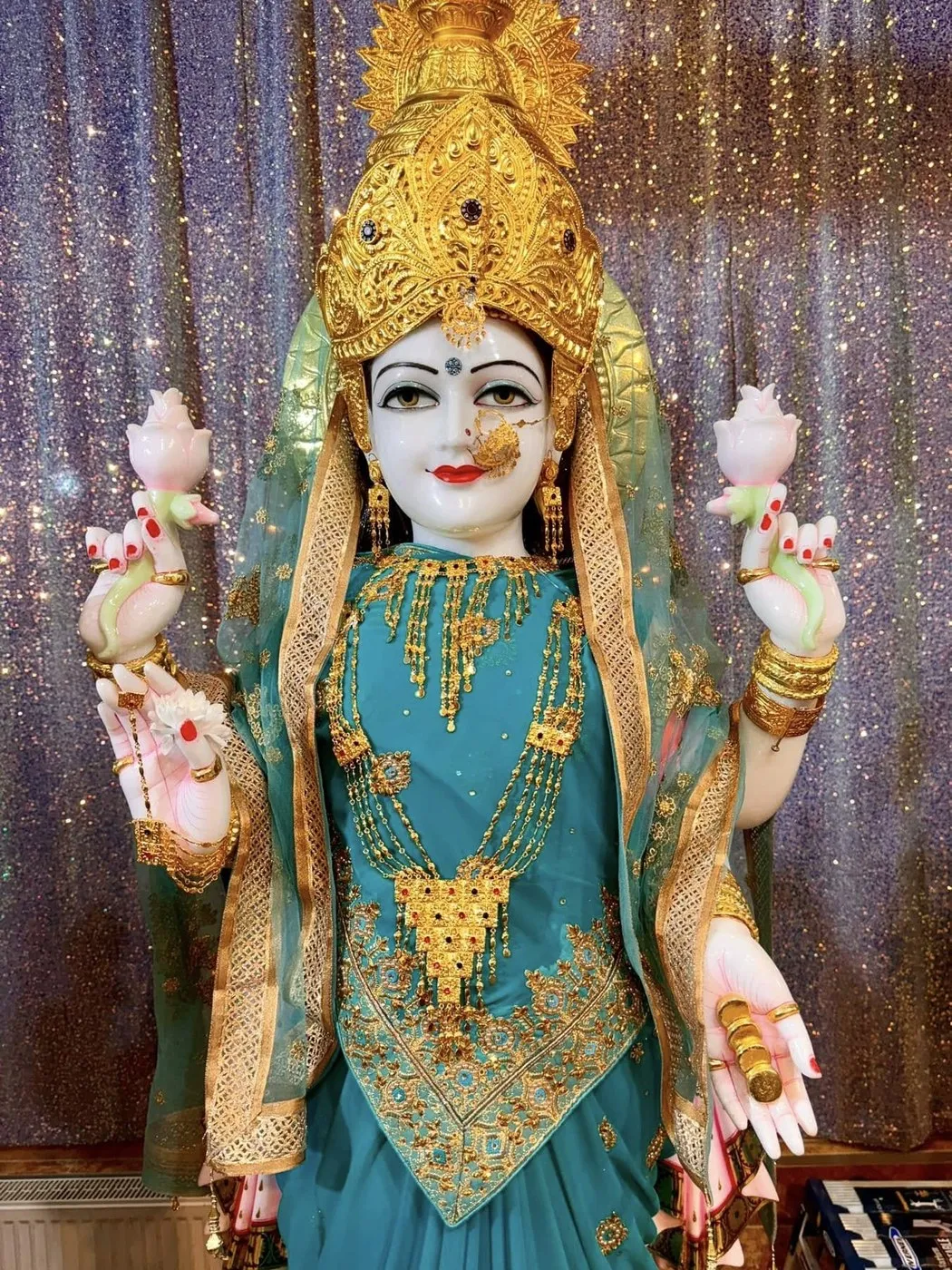
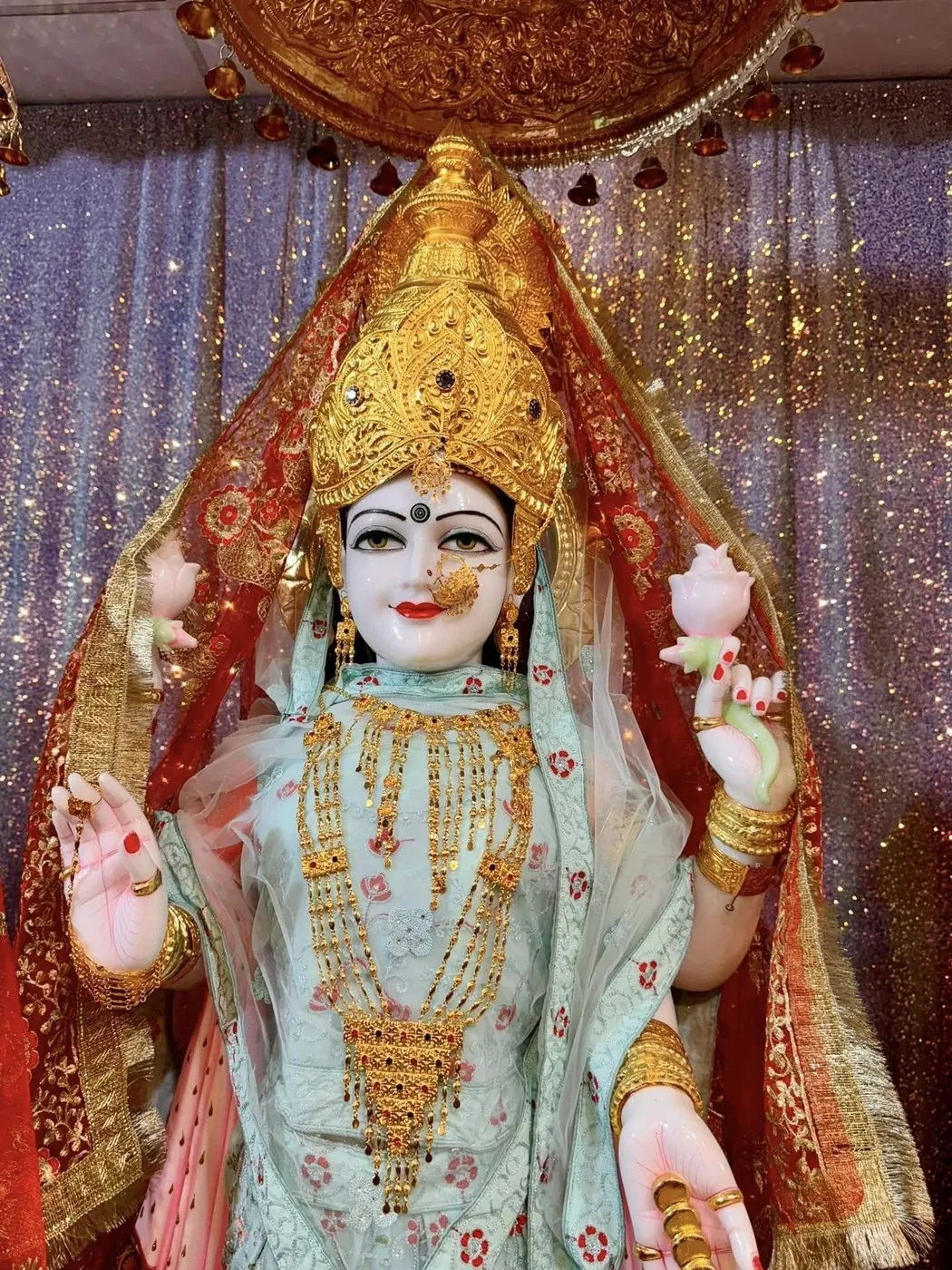
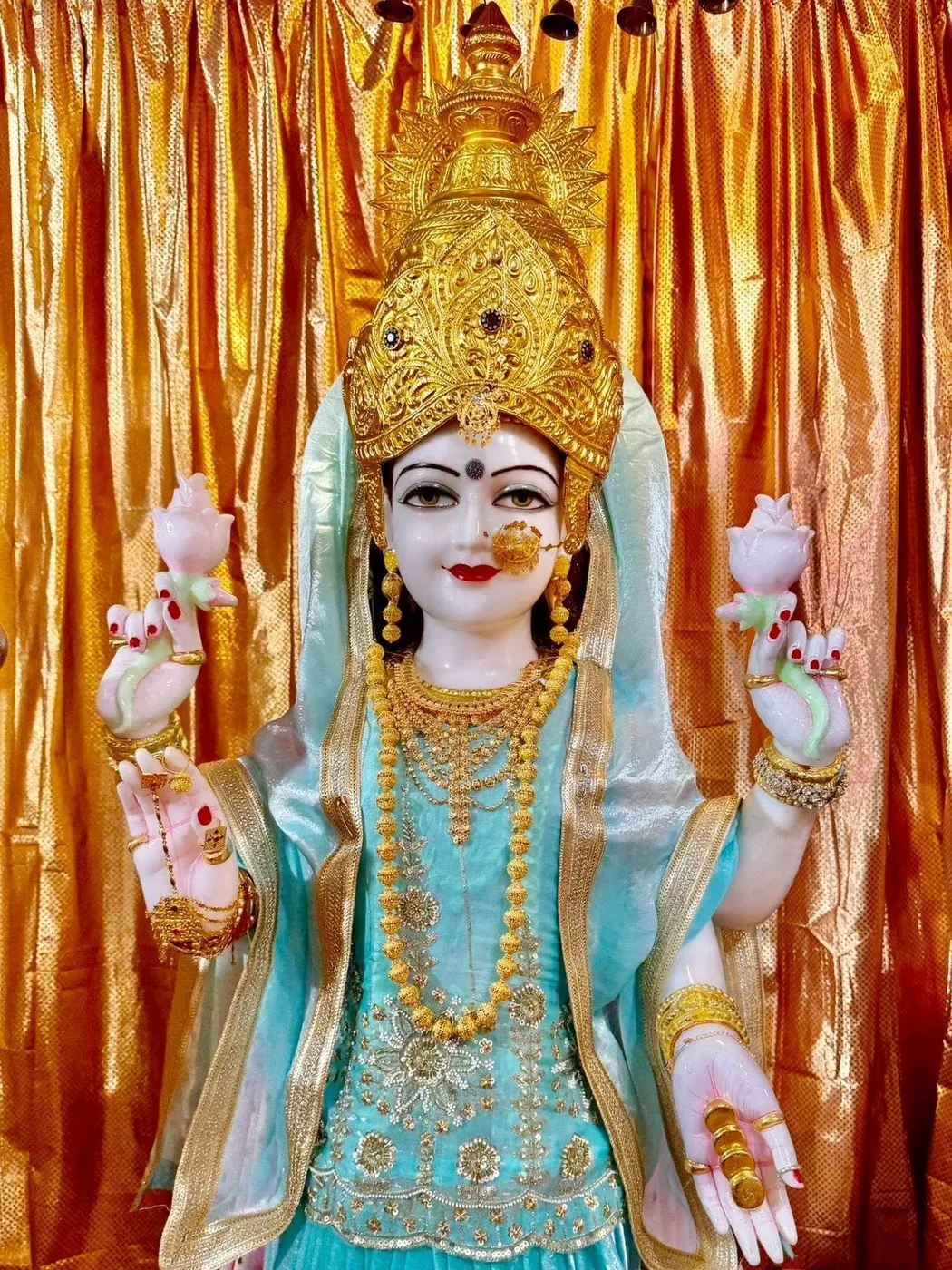
See Maa Lakshmi’s shringar through the year — teal, magenta, crimson and blush, changed week after week with the same devotion as every murti in the mandir.
Shringar
Maa Lakshmi through the year
The same murti, dressed anew through the year. See the full gallery on Maa's Shringar.
11 shringar
Questions people ask
Is Lakshmi only the goddess of money?
No — that is the most common misreading of her. Her older name, Shri, means auspiciousness: well-being, grace and flourishing in every part of a life. Wealth is one of her blessings, but so are a healthy home, a sound marriage, a good harvest and a peaceful mind. Families pray to her for the whole of a household's welfare.
Why do we light lamps for Lakshmi at Diwali?
The tradition holds that on the dark new-moon night of Kartik, Maa Lakshmi visits homes that are clean, lit and welcoming. The lamps on the threshold are an invitation — a way of saying: this house is ready for your blessing. It is the most widely kept Hindu observance in Britain.
What do her lotuses mean?
The lotus rises clean out of muddy water — so it stands for purity and grace that grow through the world without being soiled by it. Lakshmi holds a lotus in each raised hand and is herself seated or standing on one: prosperity, properly understood, keeps its roots in the mud and its flower in the light.
Go deeper
One God, or many? Understanding Hindu deities
Are Hindus polytheistic? The honest answer to the question every visitor asks — and why the question itself is shaped by the wrong assumptions.
Read →Navratri — nine nights of the Mother
What Navratri means, what happens across the nine nights, kanya pujan, and how it's observed at a Kali mandir in the West Midlands.
Read →Why Hindu festival dates are different in the UK
Your Indian calendar says one date; the UK mandir says another. Neither is wrong — here's why Hindu festival dates and timings genuinely differ in Britain.
Read →